
Researched and written by Mike Smith – November 2025
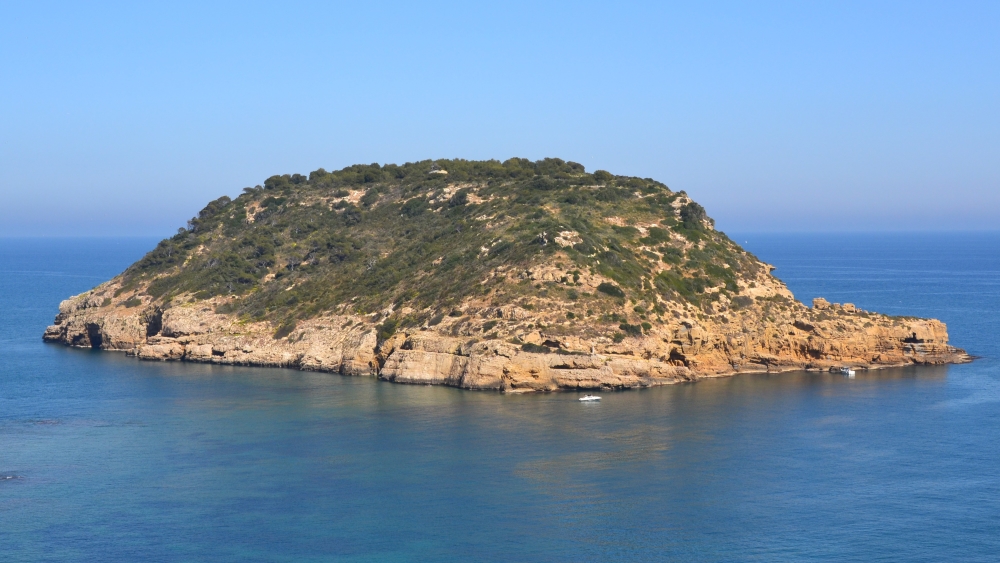
Rising like a quiet guardian from the sparkling waters of the Costa Blanca, the Isla del Portitxol seems to exist in two worlds at once, one bathed in Mediterranean sunlight and another steeped in ancient mystery. To today’s beach-lovers and influencers, it’s a perfect backdrop of turquoise waters and rugged cliffs. Yet long before the age of social media, this little island was already drawing admirers from across the continent for more than two millennia.
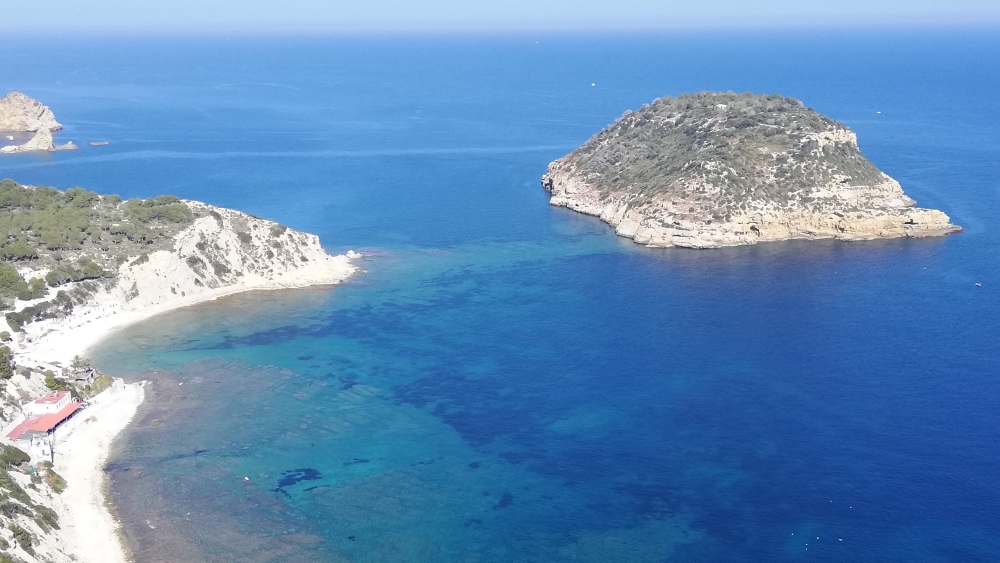
Covering just eight hectares and rising 75 metres above the sea, the island seems tantalisingly close to shore, close enough to make you think you could swim across, yet it remains untouched, privately owned, and officially protected since 2018 as a Bien de Interés Cultural (BIC). Its solitude has kept it timeless.
Archaeologists have uncovered traces of Roman and Byzantine life on the island: the foundations of a grand villa, two tombs dating back to the 6th and 7th centuries, and whispers of the everyday lives of its ancient residents. Beneath the waves, history continues to shimmer. The seabed around the island is a treasure chest of antiquity, fragments of amphorae, marble tiles, and anchors resting like punctuation marks in an unfinished story. “The depths are a history book that we are reading little by little,” said archaeologist José Antonio Moya, during a 2019 research field trip to the island, helping to bring these secrets to light.
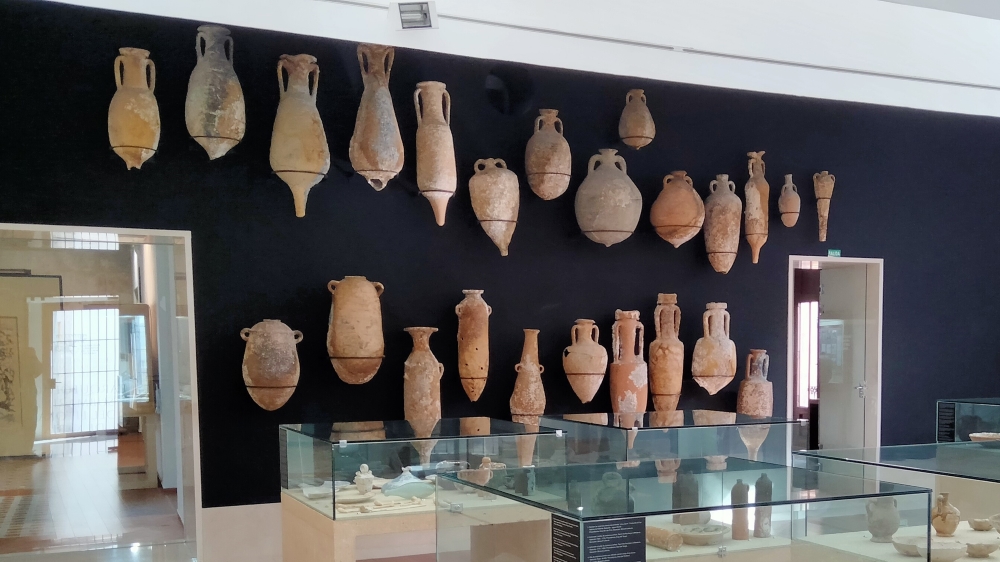
In the days of the Romans, this bay and its small island were more than picturesque scenery; they were a refuge. Ships sought shelter here from storms and the threat of pirates and corsairs prowling the Mediterranean. The name itself, Portitxol, comes from the Latin porticeolu, meaning “small port,” a nod to its ancient role as a haven in turbulent seas.
That legacy resurfaced dramatically in August 2021, when two free divers, Luis Lens and César Gimeno, made a discovery worthy of legend. Glinting beneath the waves, they found eight Roman gold coins and, when archaeologists arrived, they uncovered 53 in total, dating from the late 4th to early 5th centuries. It was one of the largest hoards of Roman gold ever found in Spain or Europe. Experts believe the coins were hidden during a time of upheaval, when the barbarian Alans swept through the Iberian Peninsula as the Roman world began to crumble.
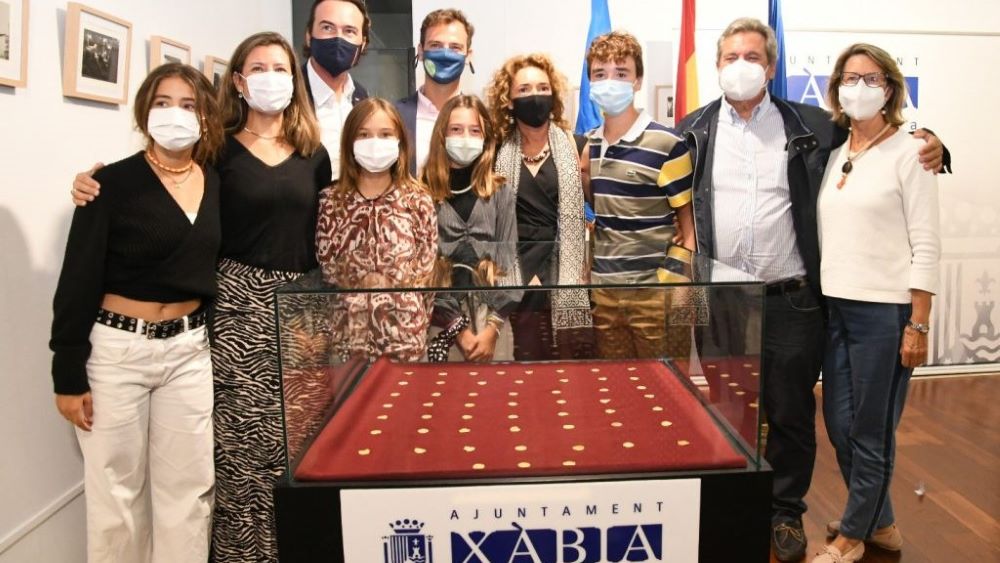
More than 100 ancient anchors have since been identified in the surrounding waters, lying between 13 and 17 metres deep, silent evidence of centuries of seafaring and one of the highest concentration of anchors in the entire Mediterranean. There are even plans to create Spain’s first underwater museum dedicated to these relics, so divers can drift through history itself. Meanwhile, many of the finds on land, from pottery shards to white marble flooring, are now safely displayed in the Soler Blasco Municipal Museum, a tangible bridge to a world long vanished beneath the tides.
Isla del Portitxol remains what it has always been: a sentinel of the sea, quietly keeping its secrets while offering fleeting glimpses of the civilizations that once passed this way. Whether viewed from the beach or glimpsed through a diver’s mask, it is a reminder that the Mediterranean’s beauty has always been more than skin deep.
Further Reading
- 01/08/2023 · Restoration of the 53 coins of the Portitxol Treasure has concluded
- 20/11/2022 · Archaeologists confirm Roman and Byzantine settlements on Portitxol island
- 19/10/2022 · The Portitxol treasure will return to Xàbia after restoration of more than 50 gold coins
- 04/10/2022 · Municipal Museum and University of Alicante to begin archaeological digs on Portitxol island
- 24/05/2022 · Case to protect the Roman coins of Portitxol will cost 12,000 euros
- 01/04/2022 · Regional government re-designates Portitxol island as a protected BIC asset
- 02/12/2021 · Archaeologists present latest details of the Portitxol research project
- 27/09/2021 · Two divers discover 1,500-year-old Roman gold coins on the seabed of Portixol
- 12/03/2021 · A foundation for small islands in the Mediterranean interested in research project in Portitxol
- 10/03/2021 · National Geographic features the underwater discoveries in Portitxol
- 14/12/2020 · Xàbia launches Portitxol island four-year project