
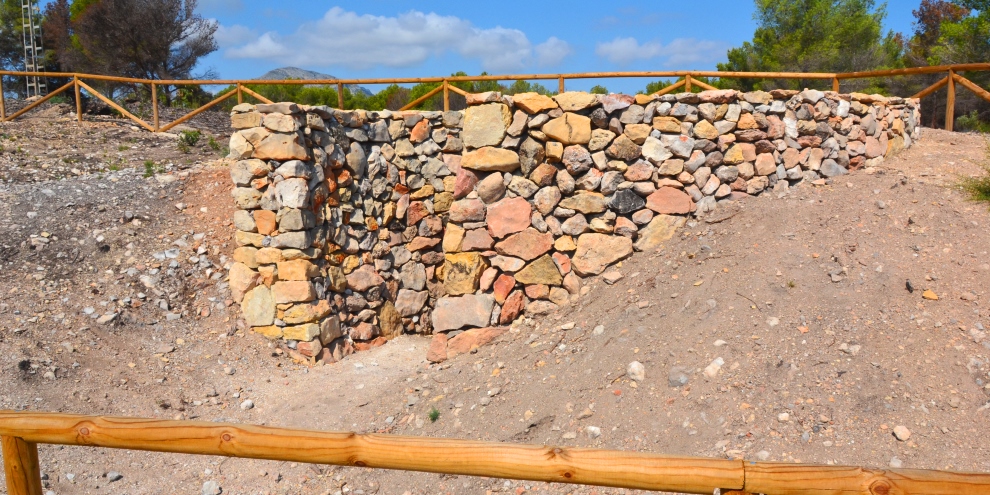
The September 2014 fire dramatically altered the plateau of La Plana, sweeping away much of the tree cover that once offered shade to walkers crossing this broad, open landscape. Yet the fire also revealed something unexpected. Beneath branches and undergrowth lay two old stone structures, hidden for decades and almost forgotten within a single generation. These were lime kilns, once used to produce quicklime for local construction.
Since their rediscovery, the municipality has restored the kilns so they can once again tell the story of an industry with very deep roots. Lime production dates back more than 10,000 years to Phoenician times. In the Xàbia area, the earliest known kilns appear to have been built during the Roman period, near Punta de la Fontana. The lime mortar they produced was used to seal sandstone water tanks along the coast, essential to support the Roman salting industry. Lime burning continued through the Islamic period and well into the Christian era. Most of the kilns uncovered after the fire likely date from the mid-18th century, as many earlier examples were lost when hillsides were terraced for agriculture.
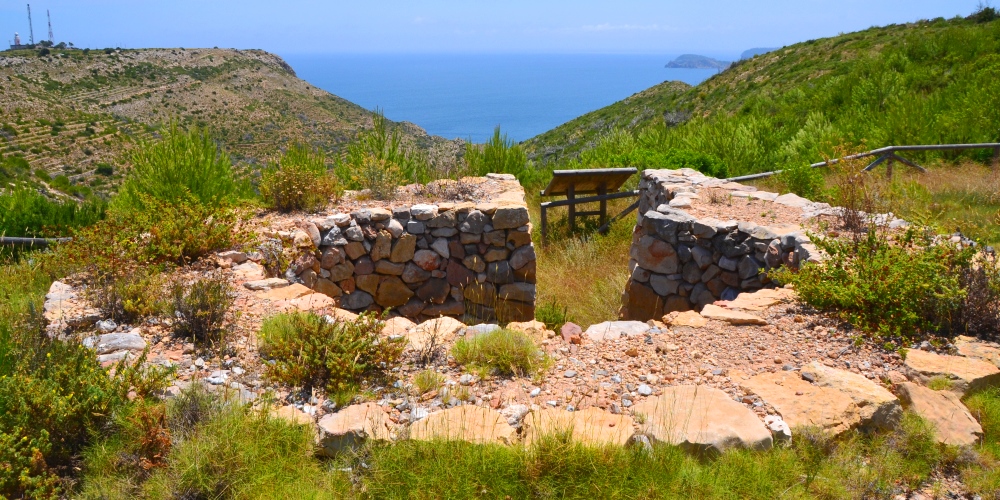
Lime kilns were cylindrical structures, partly dug into the ground and usually built far from towns, close to both limestone and wood supplies. Thick stone walls enclosed a narrow entrance, and the kiln itself was covered with soil, leaving only a chimney for smoke to escape. Just over fifty years ago, more than 50 such kilns were operating across Xàbia, from Granadella to La Plana.
The firing process was overseen by a master “calciner”, who carefully stacked limestone and fuel inside the kiln. Once lit, the fire had to be kept burning continuously for around three days. Temperatures reached close to 1,000 degrees, and producing 12,000 kilos of quicklime required around 15,000 kilos of wood. The calciner stayed on site day and night, feeding the fire as smoke rose steadily into the sky.
After cooling, the quicklime was removed and sold to builders, who mixed it with earth, sand and water to make lime mortar. This material was used in Xàbia’s buildings until the 1960s and is valued for its durability. Over time, the mortar slowly mineralises, increasing the strength and resilience of the structures it binds together.
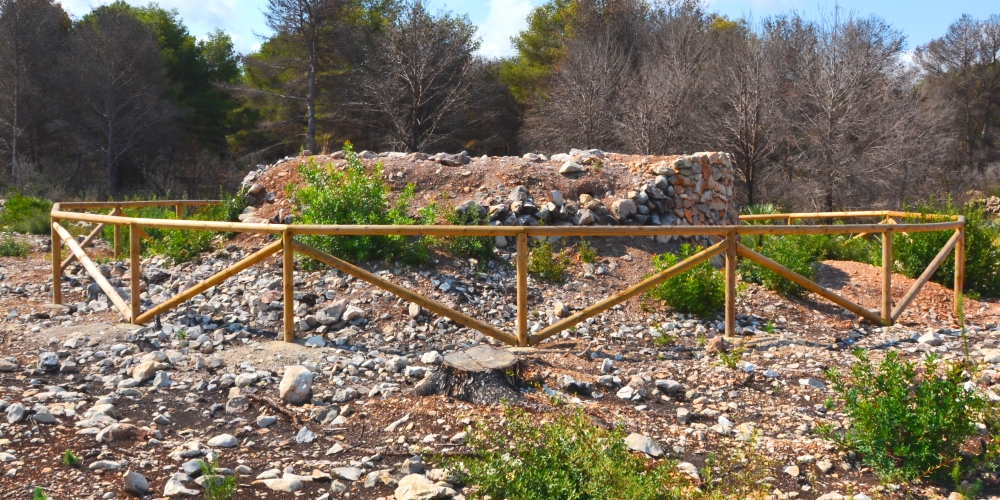
Around half a century ago, Xàbia had 54 lime kilns, most concentrated in La Guardia, Cap Martí and La Plana. Others were found in Granadella, Lluca, Ramblars and Portitxol. Today, only four survive: the Forn de Calç de les Faroleres and the Forn de Calç de la Plana on La Plana, and the Forn de Calç Joan de Golaestreta and the Forn de Calç de la Granadella in the Granadella area.
RELATED LINK: Walking – La Plana (East)