
Researched and written by Mike Smith. Updated November 2025
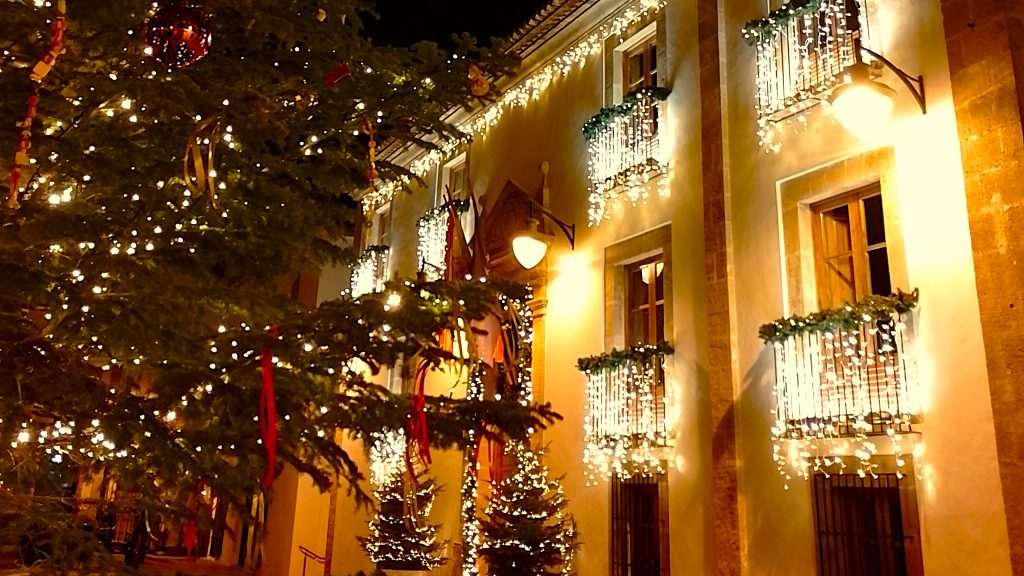
Christmas in Spain is quieter on the surface than the big commercial displays you see in the UK or the USA, but no less special. The season traditionally begins on December 8th, a national holiday for the Immaculate Conception, when many cities and towns switch on their colourful festive lights and shops, bars and restaurants put up their decorations. From that first glow, the country eases into a long, convivial run of markets, nativity scenes, family meals and public pageantry that stretches well beyond New Year’s Eve.
From early December, cities across Spain begin to sparkle. In Madrid, the Plaza Mayor transforms into a traditional Christmas market with stalls selling nativity figurines, musical instruments and festive trinkets. Barcelona’s Fira de Santa Llúcia, held in front of the Gothic Cathedral, is one of the oldest in the country and a haven for handmade crafts and Catalan Christmas curiosities. Seville’s Plaza de la Encarnación hosts a charming market beneath the Metropol Parasol, while Zaragoza’s Plaza del Pilar becomes a winter village complete with a life-sized nativity and ice rink.
Closer to home, Valencia promises to shine brighter than ever this festive season. From 21 November 2025 to 6 January 2026, the city will be transformed by a spectacular display of lights and decorations. Across all districts and outlying neighbourhoods, 45 Christmas trees will be installed whilst over 270 decorative arches will span streets across the city. But the star of the show remains the towering fir tree in Plaza del Ayuntamiento, this year reaching 25 metres and dressed in a brand-new design of stars and ornamental motifs. Surrounding trees will glow with garlands and three-dimensional lights, and the town hall itself will be bathed in a special illumination.
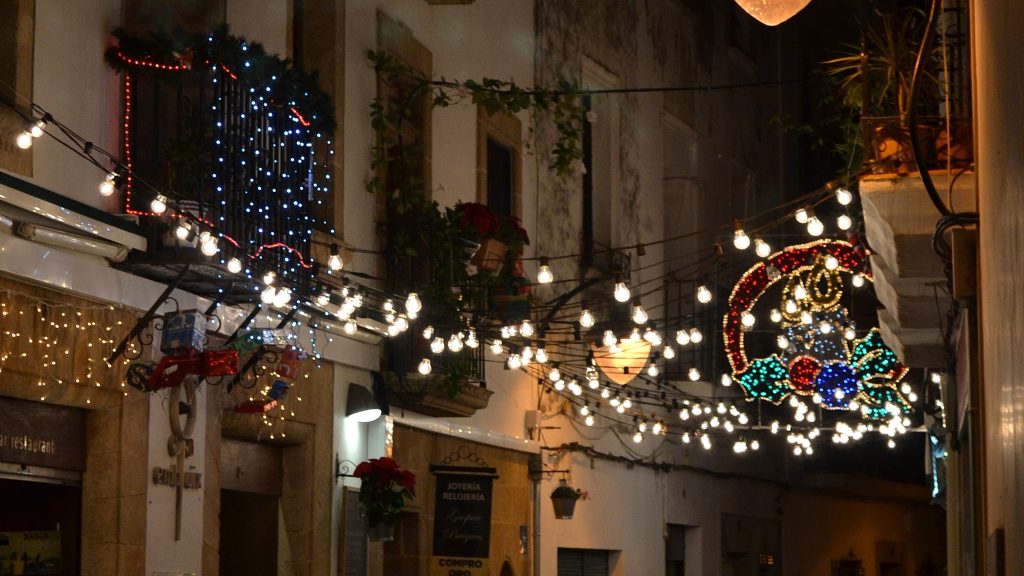
Xàbia’s Christmas is deliberately smaller in scale than the big cities, and that intimacy is part of its charm. The town brightens as strings of warm lights appear across the historic centre, the port and the Arenal, and a steady succession of community events quietly stitches the weeks together. In recent years, there have even been visits from Papa Noél to meet excited children.
Rather than a single headline spectacle, Xàbia offers a pleasing rhythm: daytime workshops and markets, evening music and community performances, and belénes and lights to sustain the mood. It’s the sort of festive programme that rewards slow wandering, a warm cup of coffee or hot chocolate from a bar, a treat from a market stall, a friendly nod to neighbours, all showing how a smaller town can hold all the pleasures of the season without the crush.
Spanish Traditions: El Bélen – the Nativity Scene
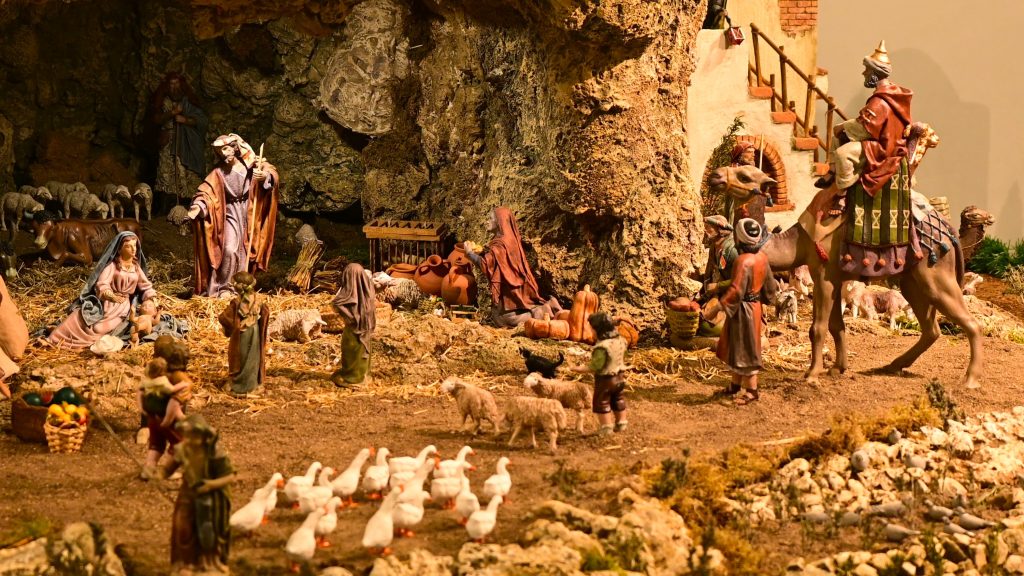
The belén is Spain’s nativity scene: a miniature Bethlehem that spreads across floors, tables and public squares, gathering the holy family, shepherds, animals and a whole imagined village into one devotional theatre.
What began with St Francis of Assisi’s simple crib in the 13th century grew over the centuries into a distinct Spanish craft and hobby. Artisans known as belenistas perfected tiny costumes, painted faces and landscape tricks, such as water, moss, tiny wells and moving figures, so that by the 18th and 19th centuries these scenes had become elaborate community showcases as well as household tradition.
In many homes and towns the belén is not merely an ornament but the season’s focal point; in some places it even takes the place of a Christmas tree, while markets and specialist fairs sell figures and accessories so families can add a new piece to their scene year by year.
Hidden among the huts and palm trees you’ll often find “El Caganer“: a small, crouching figure doing its business, often traditionally dressed in a red barretina cap. Far from irreverent vandalism, the Caganer is a centuries‑old touch of earthy humour, a fertility symbol, a leveller of hierarchies and a children’s game to spot the cheeky figurine tucked away in the model village.
Spain also boasts monumental beléns: oversized, meticulously lit recreations that draw crowds. Some of the most celebrated large displays are in the Valencian region, with Xàtiva’s monumental belén presented as one of the biggest in the country and Alicante producing record‑breaking, giant figures that have even entered the Guinness listings for scale and height.
So is the belén threatened by the Christmas tree? Not really. The two traditions live side by side, sometimes one replaces the other in private homes, sometimes they coexist, but the belén’s combination of craft, local detail and communal devotion gives it a resilience that keeps it central to Spain’s seasonal calendar. It remains a place where artistry, faith and a little mischief meet each year.
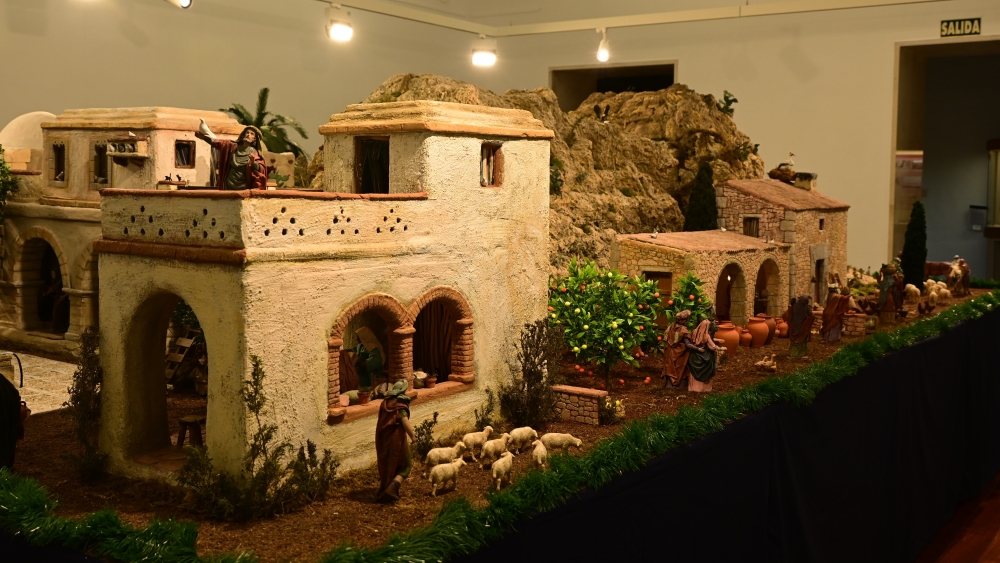
The grandest of Xàbia’s nativity scenes is displayed in a municipal building, most recently in the Soler Blasco Municipal Museum, although there are often smaller creations inside the town hall and in the tourist office or the Casa del Cable in the port. And let’s not forget the private nativity scenes which illuminate many of the windows of the historic centre, some small in stature, others grand affairs which take over the entire window. Families and friends often take a slow wander through the narrow streets to admire these creations, some of which will go on to win prizes.
Many towns and cities have a dedicated association which creates the municipal nativity scenes for the town halls and in Xàbia, it is the Betlemistes de Xàbia, a small but very dedicated group of people of all ages who spend much of their year thinking about nativity scenes and how they are going to put together their next great creation. Sometimes they sell figures and scenery from stalls at various street markets in the town, not only providing the resources for families to build their own nativity scene, but also raise some much-needed funds to finance their amazing creations.
Spanish Traditions: El Gordo – Spain’s Christmas Obsession
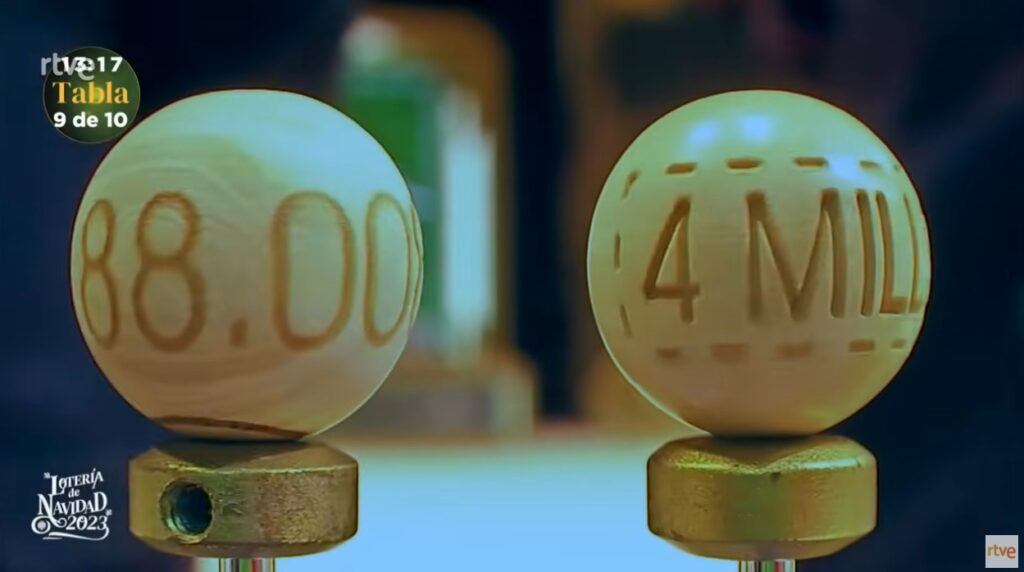
December 22 is the day the country holds its breath for El Gordo, the Christmas National Lottery whose name – the Fat One – hints at its scale and spectacle. More than a simple gamble, the draw is a national ritual: families, neighbours and workplaces buy in together, small communities pool their hopes and the whole country tunes in to a slow, ceremonial broadcast from Madrid.
The format helps explain why it feels so communal. Tickets are expensive so people usually buy décimos – one‑tenth shares – meaning a win is shared as easily as a slice of cake. Each ticket number is printed in several series, and those series are often associated with particular towns; when a winning number belongs to a locally sold series, whole streets or villages can celebrate together.
The draw itself is theatrical and deliberately old‑fashioned. For hours on live television children chant the winning numbers as they are drawn from large rotating spheres, wooden balls clacking into view one by one. The pace is hypnotic, the prizes many and distributed across thousands of tickets rather than concentrated in a single jackpot, which is part of El Gordo’s social charm: it creates small windfalls for many rather than massive riches for a few.
Beyond money, El Gordo is about hope and habit. Office pools and family décimos create stories to tell at the Christmas table, neighbourhood tobacconists become informal clearing houses of gossip and dreams, and even the act of buying a share has become a seasonal custom for many Spaniards.
Click here to discover more about Spain’s Christmas Obsession >>
Spanish Traditions: El Turrón
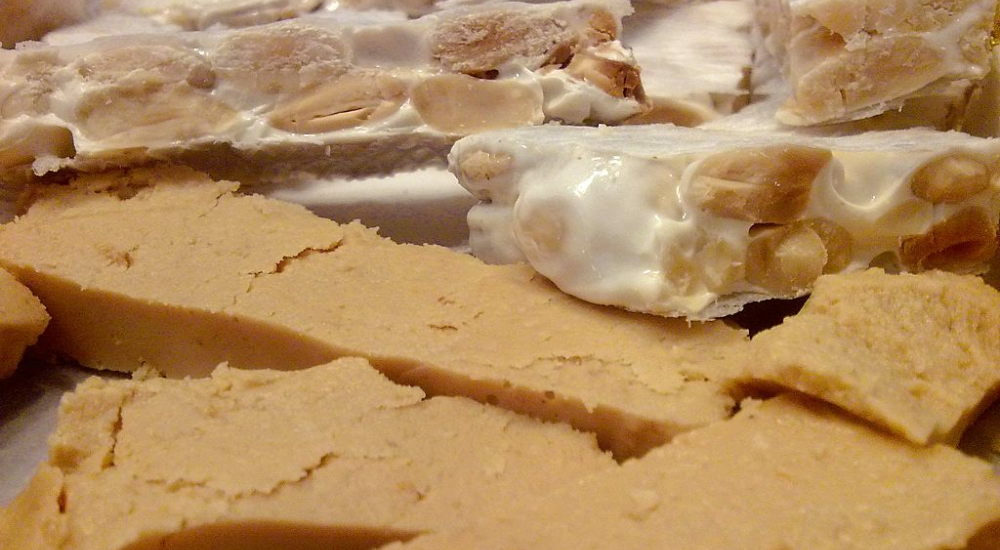
Turrón is that unmistakable slice of Christmas in Spain: a toasted‑almond nougat whose texture can range from brittle and crunchy to soft and melting, and whose aroma of honey and roasted nuts seems to announce the season long before the lights come on.
Its story is a long one, braided with Mediterranean trade and the legacy of Al‑Andalus; historians trace the sweet’s roots to Moorish confectionery and to towns in the Alicante/Jijona area where almonds and honey were combined and refined into the varieties we now associate with Christmas.
Two classics dominate: the hard Alicante turrón, studded with whole toasted almonds for a satisfying snap, and the soft Jijona version, ground to a creamy, almost buttery paste that melts on the tongue. Modern makers have multiplied the options – chocolate coatings, pistachio or orange zest, and inventive craft versions – but the simple almond‑and‑honey formula remains the emotional centre of the tradition.
Production is local and national at once: small artisan workshops sit alongside larger factories in the Valencian region, and bars of turrón travel from there to supermarket shelves across Spain and into gift boxes abroad. It is commonly offered after festive meals, tucked into hampers and given as a seasonal present, which helps explain why turrón is both a comfort‑food memory for older generations and a discovery for newcomers to Spanish Christmas tables.
Part tasting, part ritual, turrón keeps Christmas anchored to the senses – the crack of a brittle tablet, the slow surrender of a soft slice, the shared box on a family table – and in that way it remains as central to Spain’s holidays as any carol or candlelit mass.
Click here to discover more about Turrón >>
Spanish Traditions: Nochebuena – Christmas Eve
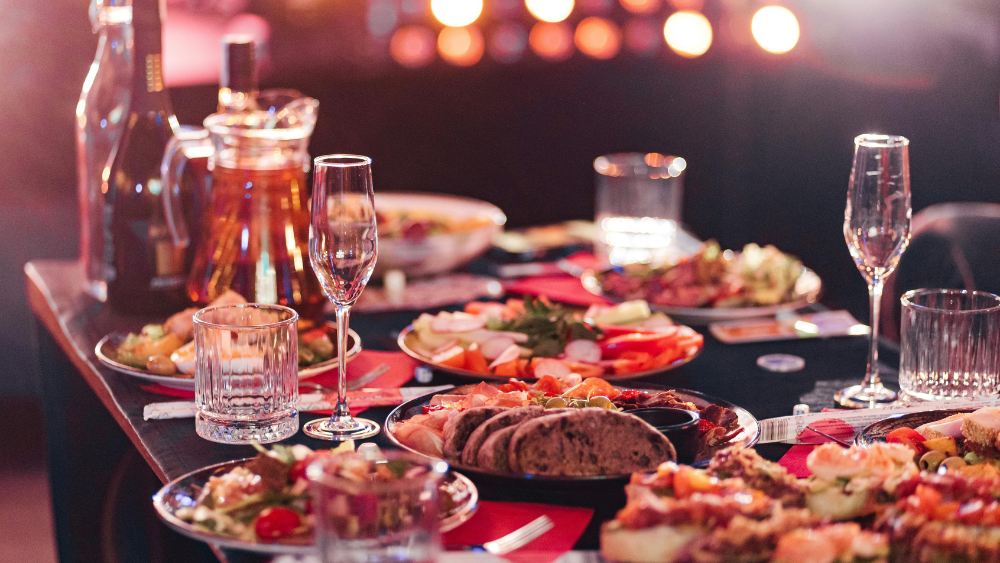
Nochebuena is where the Spanish Christmas truly arrives: more important in feeling and ritual than Christmas Day itself, it is the evening when families gather for the great meal and the long company that defines the season. Homes become theatres of food and conversation; many bars and restaurants close so households can sit down together, and the rhythm of the night is set by shared plates, laughter and the slow passage of courses.
The feast varies by region but follows a familiar pattern: seafood or entremeses — plates of jamón, chorizo and local cheeses — often open the table; main courses range from roast lamb or suckling pig to regional specialties such as Catalonia’s galets, large pasta shells served in a rich broth. Older menus sometimes feature pavo trufado, turkey stuffed with truffles, while desserts return the conversation to the season with turrón, polvorones and other almond sweets.
Television brings another layer to the evening. The televised royal message, which began as a broadcast by General Franco in 1937 and moved to the monarchy’s Christmas slot during the post‑Franco transition, has become a nightly ritual for many families: a short, formal address watched across living rooms while plates are cleared and coffee is poured. Later, midnight summons the faithful to La Misa del Gallo – the Spanish equivalent of Midnight Mass – a candlelit service whose name recalls the rooster that supposedly crowed the night of Christ’s birth. One of the most impressive of these services is held at the monastery of Montserrat above Barcelona, where the choir is said to sing in “one pure voice.”
Gifts are sometimes exchanged at midnight, but this is usually modest and secondary: in Spain, children traditionally reserve their biggest hopes for the arrival of the Three Kings in January. The old saying captures the evening’s energy: “Esta noche es Nochebuena, y no es noche de dormir” – this night is Christmas Eve, and it is not a night for sleeping – a reminder to stay awake for company, song and celebration.
In Xàbia the tone is especially local and restrained: after the feast the Arenal beach zone becomes the focus of nightlife, with bars and gatherings running later into the night, while other neighbourhoods fall quiet and domestic. Nochebuena in Spain is at once communal and intimate, a single long night when family, food, faith and a little ceremony meet to make the season feel truly begun.
Spanish Traditions: El Día de Navidad – Christmas Day

Christmas Day in Spain is a national bank holiday, a public pause in which shops, banks and many businesses remain closed while families and communities move at a gentler pace. Unlike the large, consumer‑driven spectacle familiar to visitors from the UK or the USA, el Día de Navidad tends to feel quieter and more domestic: the main communal feast has already taken place the previous evening on Nochebuena, so the day itself is for lingering, recovering and simple company.
Local custom shapes the details. In coastal provinces you may still encounter seafood or leftover specialities from the night before; inland regions often keep to roast meats or regional classics. Sweets and treats such as turrón, polvorones and marzipan remain much in evidence, and some families might open small, modest gifts if they exchange them at all on this day, the bigger presents usually wait for Epiphany and the Three Kings’ arrival in January.
Public events are limited but not absent: some towns hold concerts, community lunches for older residents, or open‑air nativity displays and carol services that invite quiet daytime visits rather than late‑night shenanigans. For visitors, the best impression of Spanish Christmas Day would be the contrast between a calm public life and the warm, domestic bustle inside homes, a pause that underlines how the season in Spain is measured in moments of company and ritual spread across several dates rather than a single, headline‑driven day.
Spanish Traditions: El Día de los Inocentes – From Massacre to Mischief
El Día de los Inocentes falls on 28 December and is Spain’s own playful counterpoint to April Fools’ Day, though its roots are solemn: the date originally commemorates the biblical ‘Massacre of the Innocents’ ordered by King Herod, and over centuries the day has shifted from a day of remembrance to one of humour and communal mischief.
Today the tone is light and mischievous. Practical jokes, from sticking a paper cut‑out figure (a monigote) to the back of an unsuspecting friend to more elaborate gags, are traditionally allowed and even encouraged for the day. Newspapers and broadcasters often join in by publishing a single, outrageous but plausible‑sounding hoax; the reveal becomes part of the fun and a small national lesson in scepticism and laughter.
The day has also grown colourful with local customs and larger‑scale festivities. Markets sell joke items and prank paraphernalia, and several towns mark the date with unique, often exuberant traditions: mock governments and “lunatic” processions, dances, and even food‑fights where eggs and flour are thrown as part of long‑running local rituals. These events range from the playful monigote games in city squares to the rowdier, centuries‑old festivities that turn the streets into theatre for one day a year.
Local humour joins the national mischief on El Día de los Inocentes, and javeamigos.com has become a predictable and playful participant: each year we run a carefully planted “news” story designed to catch readers out and then reveal itself with a cheerful ¡INOCENTE! punchline. Past gags have ranged from a bogus motorway link through the Montgó to a fanciful three‑stage cable car to the summit and even a late rumour about tolls on the mountain road, stories that read plausibly enough to spark a few gasps before the wink is revealed. The pieces are part practical joke, part local theatre: they riff on civic hopes and anxieties, invite readers to join the joke, and by the end of the day become a shared laugh for the community rather than a scandal. Will you spot this year’s “fake news”?
Some javeamigos.com gems:
- 2024: Xàbia will soon have its own colourful zoo and safari experience
Xàbia will soon have its own zoo and safari experience which will only feature colourful animals rather than the usual exhibits of elephants, monkeys and small black insects. - 2023: Spain’s bars prepare for new legislation to protect Spanish gastronomy
The article dealt with fake legislation that would require all bars – whatever nationality – to provide at least six of a dozen designated Spanish tapas on their daily menu. - 2022: Direct connection with A-7 motorway given go-ahead by regional authorities
This one proved to be a little closer to reality as the Spanish government announced in late 2023 that it was pursuing a project to develop a new junction at Pedreguer / Gata de Gorgos! - 2021: Fish and chips awarded regional dish for Costa Blanca region in 2022
The British favourite fish and chips has been declared a regional dish of the Costa Blanca for 2022, according to a statement issued by the British Regional Office for the Marina Alta. - 2020: EU-subsidized infrastructure could soon be off-limits to British citizens
Almost anything subsidized by the European Union could be off-limits to British citizens from January 1st 2021, including sports complexes, cultural centres and other elements such as bridges and car parks. - 2018: The proposal to introduce ANPR technology in Xàbia to monitor traffic in the town and check for proper registration.
- 2017: The Province of Alicante planning to adopt GMT along the Costa Blanca region.
- 2016: The rumour that the Arenal zone was going to declare itself independent from Xàbia.
- 2015: The plan to charge foreign-plated cars to pay for parking by the Arenal beach.
- 2014: The intention to turn the mountain road between Xàbia and Dénia into a toll road.
- 2013: The proposal to build a three-stage cable car from the Plaza de la Constitución to the summit of Montgó.
- 2012: The rumour that a new four-lane tunnel was to be dug underneath the Montgó mountain to provide quick access to Dénia.
Spanish Traditions: Nochevieja – New Year’s Eve
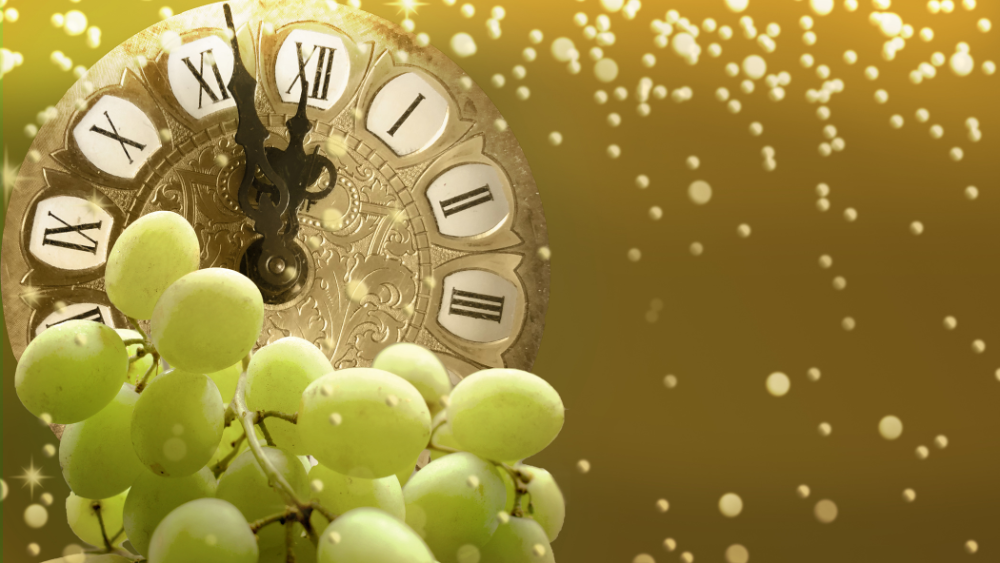
Nochevieja is Spain’s great communal send‑off for the old year: families and friends gather, parties flare in bars and plazas, and at the stroke of midnight the country performs a curious, delicious ritual together – the twelve grapes – one for each chime that, if swallowed in time, promise good luck for the twelve months ahead. The Alicante and Valencian hinterland play a quiet supporting role in the ritual: much of Spain’s grape crop for the twelve‑grape custom comes from the Vinalopó valley and nearby vineyards in the south‑east, which supply the small, sweet table grapes favoured for the occasion.
The ritual is most visible in Madrid’s Puerta del Sol, where thousands crowd beneath the clock of the Real Casa de Correos to eat their grapes as the bells toll and to share the confetti‑strewn explosion that follows; the televised countdown from the capital has become the national focal point for the moment, even as towns and villages stage their own local versions. To help with the frantic timing, supermarkets sell convenient tins of twelve small, seedless grapes already peeled and ready to pop, a modern convenience that has become part of the custom.
Other little superstitions and charms cluster around the night. Many people wear red underwear as a talisman for love and passion, a playful tradition said to work best when the garment is a gift; some drop a gold charm or ring into their cava glass at the toast to invite prosperity; others pop a strawberry, cherry or raspberry into their glass as a symbolic wish for love whilst, for good measure, it’s considered lucky to step out on the right foot as the first move of the New Year.
For the past few years Xàbia has doubled the fun by celebrating the arrival of the New Year twice in a single day. At midday on 31 December families gather in the heart of the historic centre to hear the bells chime twelve times, marking the new year as it arrives on the other side of the planet. Instead of grapes, people nibble segments of orange, music plays and there is often a little dancing in the square, so that children who might be asleep by midnight can enjoy their own, gentler Nochevieja. The event is small‑scale and neighbourly, the town’s sunny answer to the late‑night spectacle, offering a bright, family‑friendly moment of hope and noise long before the usual plunge at twelve o’clock.
Spanish Traditions: Año Nuevo – New Year’s Day
Año Nuevo arrives as a gentle punctuation: a public holiday when towns and cities slow and families recover, visit and settle into the new year with relaxed meals and small rituals. It is a day for quiet company rather than headline spectacle, when people exchange good wishes, enjoy a leisurely lunch and take the first day of the year at an easy pace.
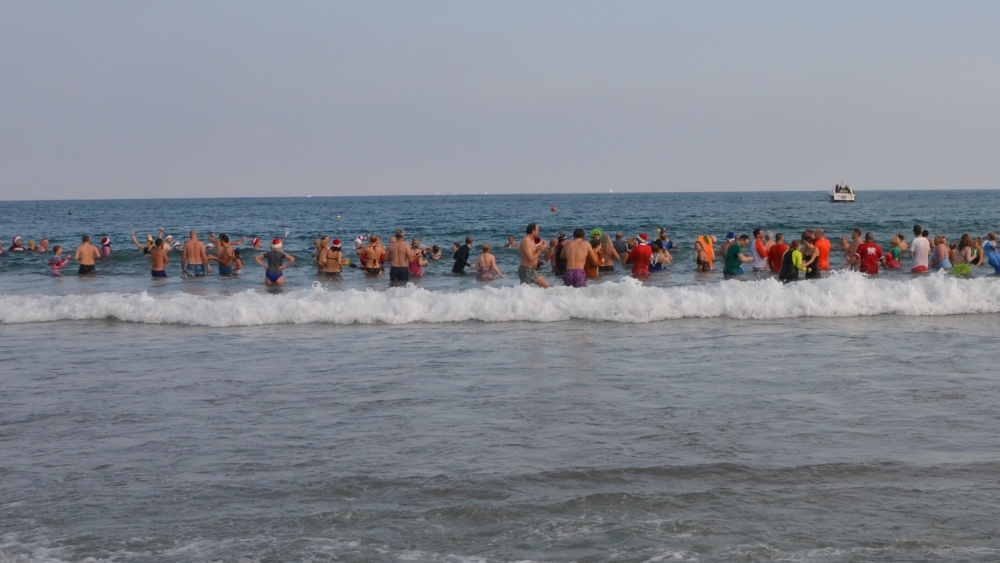
New Year’s Day also makes room for communal eccentricity. It has long been a tradition for brave ex‑pats and locals to gather on Xàbia’s Arenal beach to face the chilly Mediterranean water, more a spirited stand‑about than a full swim, and a reputed cure for the hangover. The event raises thousands of euros for charity, attracts several hundred courageous dippers each year, and has become a friendly, community‑minded way to kick off the year together.
Spanish Traditions: Epifanía – The Three Kings
While many countries end their festive season when January begins, Spain keeps its lights on: the calendar is quietly gearing up for a very special event, El Día de los Reyes Magos on 6 January, the feast of the Epiphany that long ago became the country’s principal gift‑giving occasion.
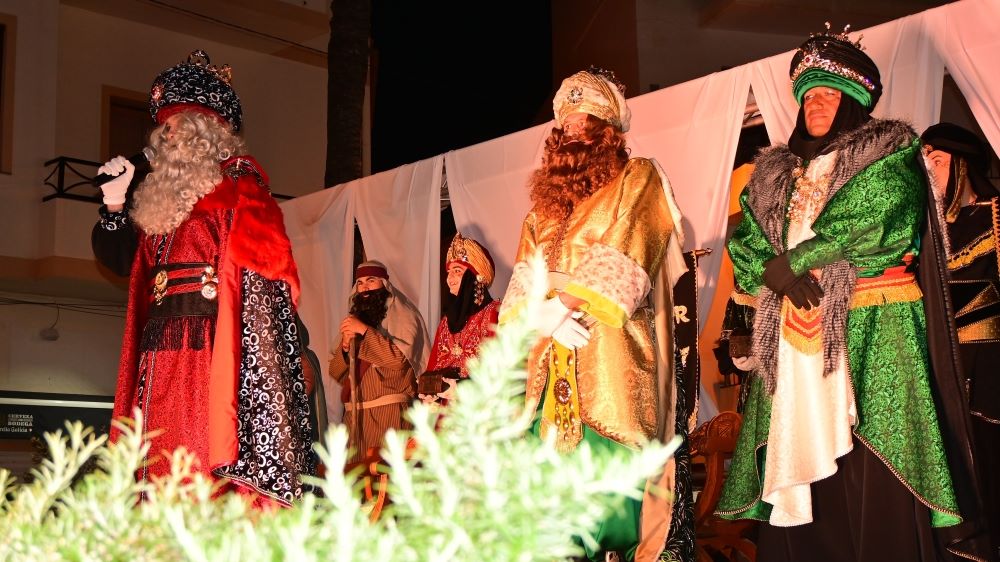
The celebration centres on the Cabalgata de los Reyes, elaborate parades held on the evening of 5 January in towns and cities across Spain, when the Three Kings (Melchior, Gaspar and Balthazar) arrive in full regalia on floats, horses or even camels, throwing sweets to the crowds and making a theatrical procession through the streets.
The partade in Madrid is one of the country’s largest and most watched, a grand procession that travels along major boulevards before finishing at Plaza de Cibeles and serving as a focal point for national television coverage and thousands of spectators.
Alcoy (Alcoi) claims the honour of the oldest parade in Spain, first staged in 1885; its parade is theatrically elaborate, declared a Festival of National Tourist Interest, and involves hundreds of participants, traditional music and dramatic street action that make it uniquely historic and intense.
Barcelona stages a spectacular arrival from the sea and an artful procession through the city, while other major regional centres such as Sevilla and Granada put local culture at the heart of theirs — Andalusian motifs, flamenco rhythms and Moorish echoes give these parades a distinctive, prolonged character that draws families and visitors alike.
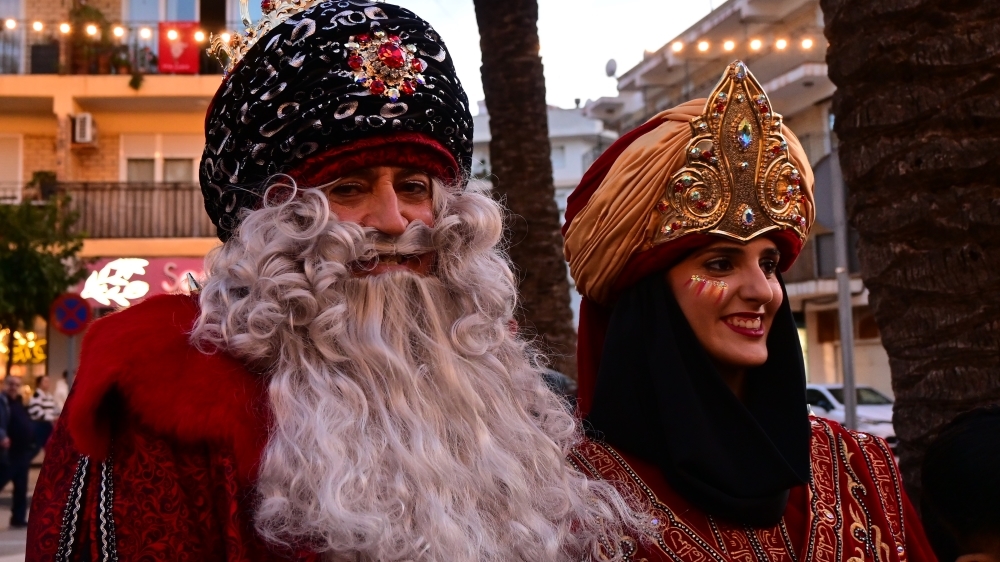
Lucky Xàbia stages not one but two Cabalgatas, a maritime‑tinged double act that lets the town spread the magic of the Three Kings across both shoreline and old streets. In the late afternoon their majesties make a theatrical arrival by fishing boat into the port, stepping ashore amid music and applause before processing through the maritime district, stopping in the main square to greet the excited children.
As dusk falls the procession reforms and makes its way up to the historic centre for a second, more intimate parade as the floats, dancers and costumes glow magically under lamplight, and families who prefer an evening outing bring their children to see the Kings up close. The twin format means no one misses out: the port event captures the town’s seaside identity and late afternoon buzz, while the later march into the old town keeps the tradition cosy, communal and wonderfully theatrical, two chances in one evening for candy, cheers and the expectant whisper of gifts to come.
Later, before bed, it is tradition for children place a pair of polished shoes by the door, beneath the window or beside the fireplace and sometimes on a balcony if the house faces the street. The footwear is a quiet invitation, a way of saying the household is ready to receive visitors from afar, and some families take care over the smallest details: shoes are cleaned and lined with tissue, a carrot or a little water is left for the Kings’ camels, and sometimes a note or a drawing is tucked inside to thank the visitors or to remind them of the children’s wishes.
In the morning the shoes tell the story: a sweet wrapper here, a new toy there, perhaps a small fruit or a chocolate coin tucked inside whilst it has long been tradition that children who have misbehaved are said to receive a lump of coal from the Three Kings instead of toys; over time that threat has softened into a kindly joke and the coal itself has been transformed into an eagerly anticipated sweet. Across Spain you will find Carbón de Reyes, a sweet that looks like a piece of real coal made from sugar, chocolate or blackened candy, wrapped up alongside small toys and sweets or tucked into shoes as a ribbing reminder to be better next year.
January 6th itself is family‑centred and ceremonial: families gather to share the Roscón de Reyes, a ring‑shaped, sugar‑topped brioche often filled with cream, in which a small figurine and a bean are hidden; finding the charm is considered lucky, and the finder traditionally pays for the cake or hosts the next party. And then it’s over.
Click here to discover more about Los Reyes Magos in Xàbia >>


Research Sources:
- spaininspired.com · “10 Magical Christmas Markets to Visit in Spain“
- wondrouswandering.com · “12 Best Christmas Markets in Spain“
- www.europeanbestdestinations.com · “Best Christmas markets in Spain 2025“
- visitavalencia.com · “Mercadillos para tus compras navideñas en València“
- valenciasecreta.com · “Navidad en Valencia: todos los planes que puedes hacer“
- visitvalencia.com · “Luces, árboles y arcos luminosos visten València esta Navidad“
- ourspanishadventures.com · “Spanish Christmas Traditions: What is a Belén?“
- spainguides.com · “The Best Christmas Nativity Scenes in Spain“
- sincerelyspain.com · “Traditions: Belenes (Nativity Scenes) in Spain“
- en.wikipedia.org · “Caganer“
- valenciasecreta.com · “Así es el belén monumental de Xàtiva, el más grande de España“
- aleteia.org · “The world’s largest Nativity scene is in Alicante, Spain“
- trastiendamarket.com · “Turrón: Spain’s Sweet Tradition of Christmas Delight“
- njoycostabrava.com · “Turrón: A Spanish Christmas Treat“
- euroweeklynews.com · “Turrón: Spain’s sweetest christmas tradition unwrapped“
- inspain.news · “Spanish traditions between Christmas and New Year’s Day“
- conferenciaepiscopal.es · “24 de diciembre a medianoche: la misa del gallo“
- catholic.net · “Nochebuena y la Misa del Gallo“
- spain.info · “Cinco regalos de una Navidad en España“
- spaininspired.com · “14 Unique Christmas Traditions You’ll Only Find in Spain“
- visitsouthernspain.com · “13 Most Beautiful Spanish Christmas Traditions“
- daveinspain.com · “Innocents Day In Spain“
- spain.info · “Día de los Santos Inocentes“
- carameltrail.com · “Discover the Fun and Traditions of Día de los Santos Inocentes“
- theinternationalreporter.com · “New Year’s Traditions in Spain“
- spain.info · “Nochevieja en España“
- spanishexpress.co.uk · “Epiphany in Spain: Everything You Need to Know“
- spanishtravelguide · “Three Kings Day (Epiphany) in Spain“
- barcelo.com · “Uncover the Three Wise Men festivity in Spain on January 6th“
- esmadrid.com · “Cabalgata de Reyes Madrid 2026“
- fascinatingspain.com · “The most spectacular Cabalgatas or Three Kings’ Parades in Spain“