
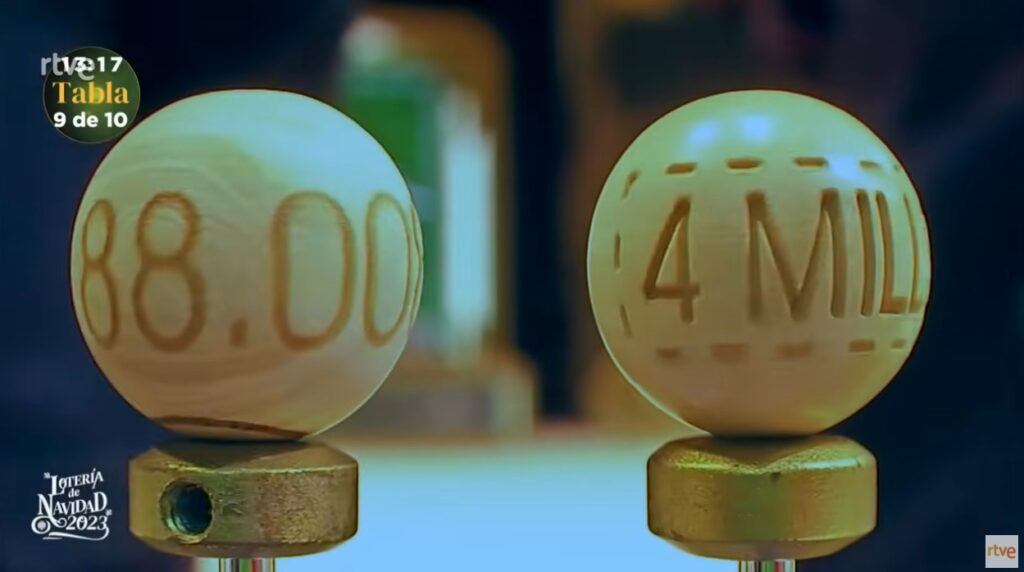
For a few brief hours on the morning of December 22nd many Spanish eyes and ears will be glued to the nearest television set or radio, whether they be at home, in a bar or even sitting at work. On that day, as has been the case every December 22nd for years, the biggest lottery in the world will be drawn. By the end of the day, someone’s life will have been changed, a perfect start to Christmas. This is El Gordo – the famous Christmas National Lottery.
A Tradition Older Than Christmas Trees
Few traditions in Europe combine civic duty and festive fever quite like El Gordo. The Spanish Christmas Lottery (Lotería de Navidad) was first held in 1812, in the southern port city of Cádiz, while the rest of Spain was still busy fighting Napoleon. The idea was ingenious: raise money for the state without inventing another tax, and throw in a bit of holiday excitement while you’re at it.
More than two hundred years later, it’s hard to imagine a Spanish Christmas without it. Even people who claim not to “believe in luck” somehow find themselves at the lottery counter “just in case.” Shops sell out of favourite numbers, office WhatsApp groups buzz with reminders, and long queues form outside the country’s most “lucky” lottery outlets, because apparently lightning can strike the same kiosk twice.
How It Works: Numbers, Décimos, and Shared Luck
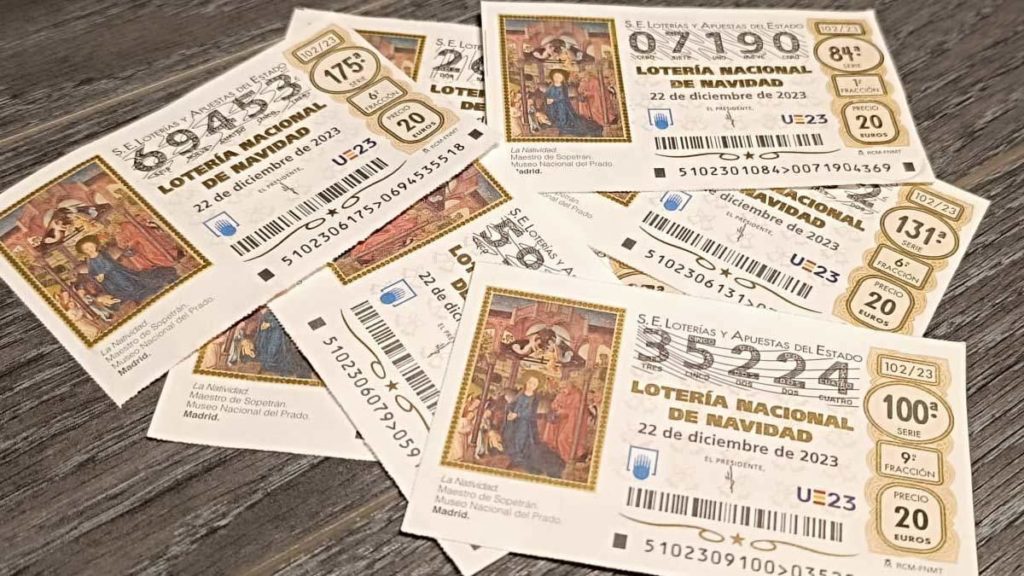
Unlike most lotteries, El Gordo isn’t about buying a single numbered ticket for a personal jackpot. Instead, each number from 00000 to 99999 is printed multiple times in “series,” and each full ticket (billete) is divided into ten smaller shares called décimos.
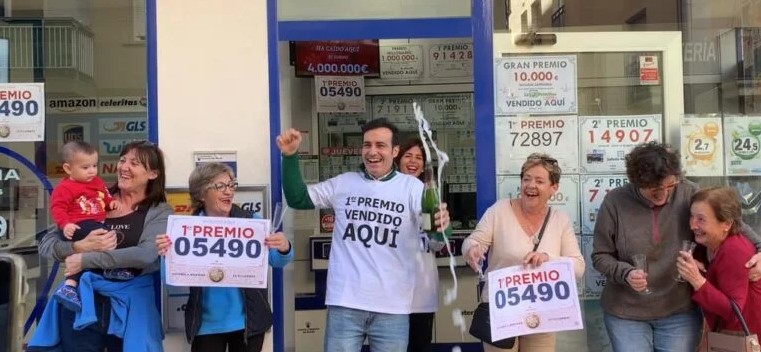
A décimo costs €20, so a full ticket sets you back €200, not exactly small change. That’s why sharing is part of the fun. Families, friends, and entire workplaces often buy the same number together, so if it wins, everyone celebrates. The result? Every December you’ll see champagne-soaked groups outside tiny lottery shops, laughing, crying, and declaring eternal loyalty to their local tobacconist.
But El Gordo doesn’t just spread joy, it also funds fiestas. Across Spain, associations, fiesta commissions, penyas, filas, and local football clubs sell décimos to raise money for their own activities. There’s usually a cheerful three-euro surcharge on top, a sort of unofficial “donation with benefits” that helps pay for next year’s fireworks, new costumes, or new paella pans for the casal.
For instance, Filà Baharis offers a limited number of décimos at €23 each, with the €3 contribution going straight to support the group’s participation in the annual Moros i Cristians fiesta. If you’d like to buy one, send a message. It’s a rare opportunity to snag a ticket and help fund local festivities at the same time.
And if €20 still feels extravagant, there’s always the participación: a smaller share of a décimo, which entitles you to a pre-determined portion of any prize, often 20 percent. It’s the budget-friendly way to join in the fun, though it does lead to those very Spanish conversations about how you’ve technically won €8,000, except you only had 20 percent of a tenth, and half went to the fiesta committee. Still, that’s enough for a few bottles of cava and a story to dine out on until next December.
In the end, El Gordo isn’t just a lottery, it’s a nationwide act of sharing. Everyone gets to dream together, argue about “lucky numbers,” and claim some sort of cosmic connection to that winning ticket in Málaga, even if they live in Madrid.
The Odds: A Surprisingly Kind Lottery
One of the reasons El Gordo enjoys such popularity is that it’s unusually generous. Around 70 percent of ticket sales are returned in prizes, far higher than most other lotteries around the world.
The jackpot itself is a life-changer, but the smaller prizes, the pedreas, the reintegro, and all the other layers of winnings mean that the odds of at least getting your money back are surprisingly good. That 1-in-10 chance to recover the cost of a décimo alone keeps people coming back year after year, with hopes that this might finally be their year.
The Prizes: More Ways to Win Than You Can Count
If you thought El Gordo was just about the big jackpot, think again. The total prize fund usually hovers around €2.5 billion, and there are over 15,300 individual prizes up for grabs. There’s enough winning to go around that even if you don’t hit the jackpot, you’re still likely to take something home.
The top prize, of course, is the famous El Gordo: a whopping €4 million per full ticket, which means a décimo nets you €400,000. Behind it are the runners-up: a single second prize of €1.25 million (€125,000 per décimo) and a single third prize of €500,000 (€50,000 per décimo). There are also two fourth prizes of €200,000 (€20,000 per décimo) and eight fifth prizes worth €60,000 (€6,000 per décimo).
But wait! Don’t panic if your décimo isn’t one of the big five. There are plenty of other ways to win. The draw is not a short process, and as the numbers roll in, 1,794 ‘pedreas’ – literally “stones” – are claimed, each worth €1,000 per ticket (€100 per décimo).
And if your ticket is just a whisker away from a top prize? You’re still in luck. Being one number above or below the winning numbers for first, second, and third prizes will earn you €20,000, €12,500, and €9,600 respectively (or €2,000, €1,250, and €960 per décimo). There are also prizes for matching the last two digits of the top three prizes, and the ever-popular reintegro, which refunds your décimo if its last digit matches El Gordo.
And there’s more: tickets that fall within the same hundreds of the top four prizes will also win — for example, if the winning number is 25,362, all tickets ending 300–399 will scoop €1,000 per ticket (€100 per décimo).
With so many ways to win – from the tiny reintegro to the life-changing jackpot – it’s no wonder that millions of Spaniards feel compelled to get involved in what is officially the biggest lottery in the world. Even if your luck is modest, there’s always something to cheer about, and that’s part of the magic of December 22nd.
The Draw: Singing Schoolchildren, Wooden Balls, and Hypnotic Suspense
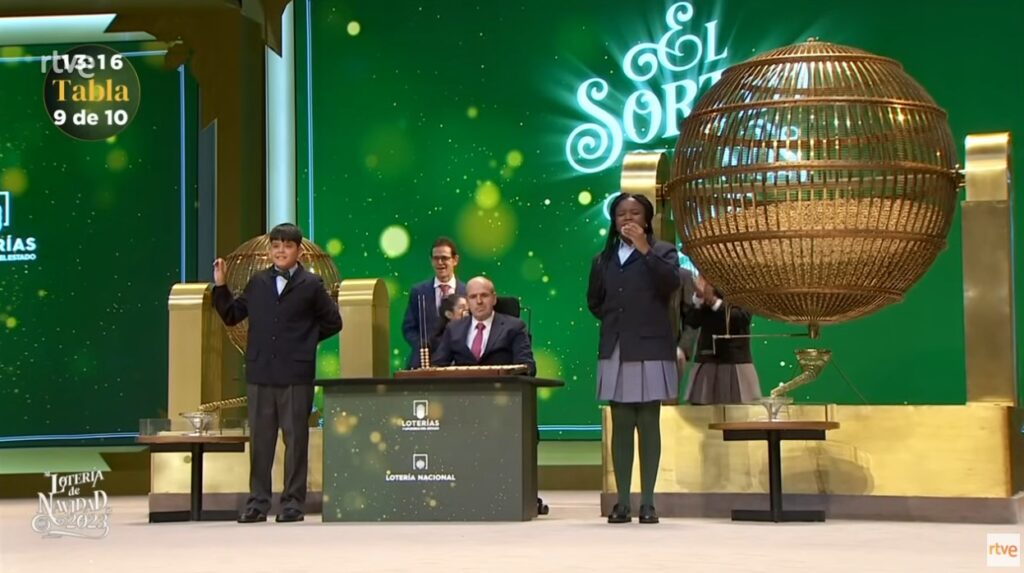
Every year, on the morning of December 22nd, Spain gathers (mostly via TV, radio, or bar stool) for the ritual that is El Gordo. The draw takes place inside Madrid’s Teatro Real, a fittingly grand stage for the country’s most beloved lottery. Two large spherical cages dominate the room, one big, one small. Into the larger cage go 100,000 tiny wooden balls, each bearing a unique five-digit number from 00,000 to 99,999. Each ball represents one of the 100,000 ticket numbers in circulation. The smaller cage contains 1,807 wooden balls, each with a prize amount in euros.
The draw begins promptly at 9 a.m., in front of an eager audience, some wearing their “lucky fancy dress,” others just clutching their décimo and praying silently. For more than two centuries, it has been the children of CEIP San Ildefenso, Madrid’s second-oldest school, who have carried out the draw. They work in pairs: one sings the winning number, the other sings the corresponding prize. The effect is strangely mesmerizing, like a lottery lullaby that keeps the whole nation glued to screens for hours.
As each number and prize is drawn, the balls are slid onto wire frames in pairs. Each frame holds 200 pairs, and once full, it’s removed for later presentation while another pair of children takes over. When a top prize is drawn, the winning pair repeats the number and prize multiple times at centre stage, giving the audience a chance to cheer (or cry), before handing the balls to a committee for verification. Mini-cameras confirm the values, and the balls are then placed into frames alongside the rest. It’s a meticulous, almost ceremonial process and an emotional one for the children too, who understand the honour of drawing the big winners.
Because lottery outlets typically sell tickets for only a handful of numbers, winners often live in the same town, work in the same office, or belong to the same local club. It turns El Gordo into a genuine community experience: almost everyone knows someone who’s celebrating a little windfall.
By the next morning, newspapers across Spain publish a full list of winning numbers and prizes, and lottery shops offer ticket verification. And somewhere in the country, someone is sipping their morning coffee with a very happy smile because, for them at least, Christmas has just started a little early.
More Than Just a Lottery
For Spaniards, El Gordo is as much about tradition as it is about luck. It marks the unofficial start of Christmas: the day offices slow down, bars turn up the TV, and everyone listens for that melodic chorus that means another life has changed. Even if your number doesn’t come up – and let’s face it, it probably won’t – you’ve shared in something national, joyful, and unmistakably Spanish.
Because in the end, El Gordo isn’t just about winning money. It’s about the buzz of possibility, the chatter of “what if,” and that collective sigh of “maybe next year.” Besides, the fiesta fund still needs topping up and someone’s got to pay for those fireworks.