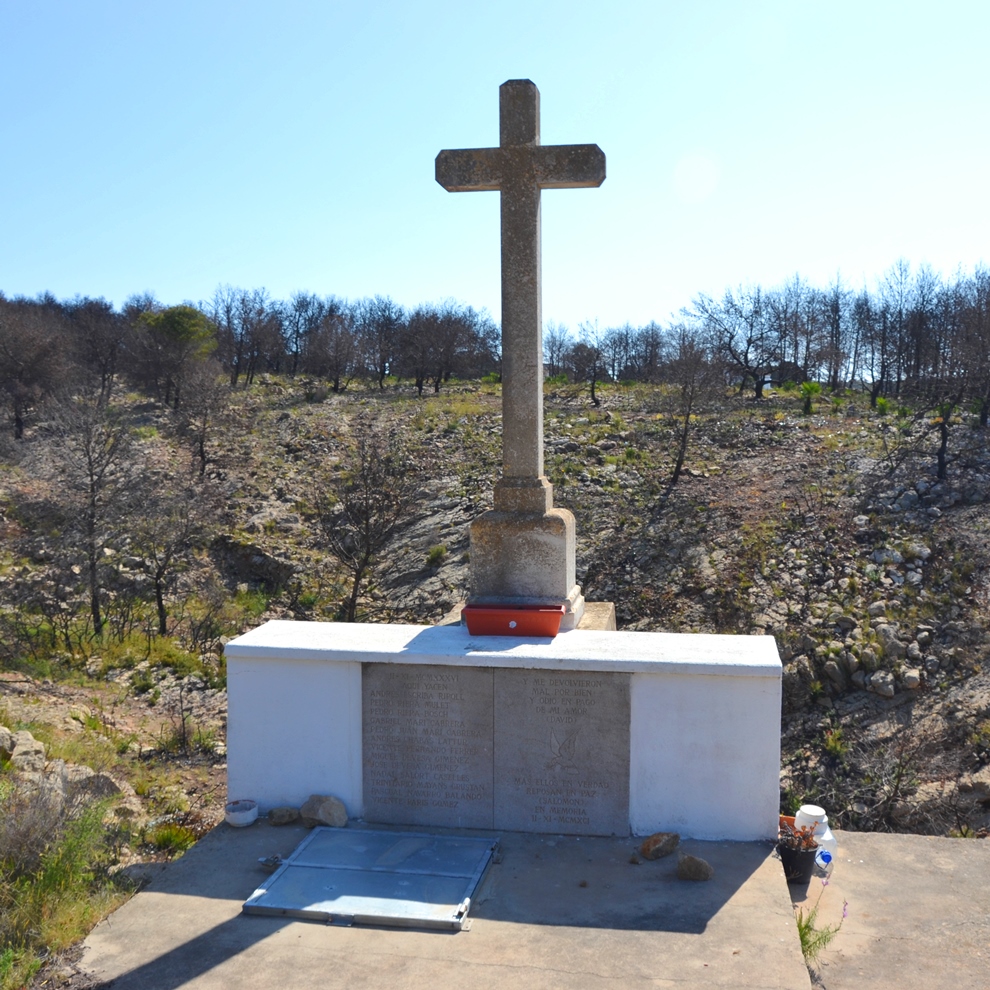
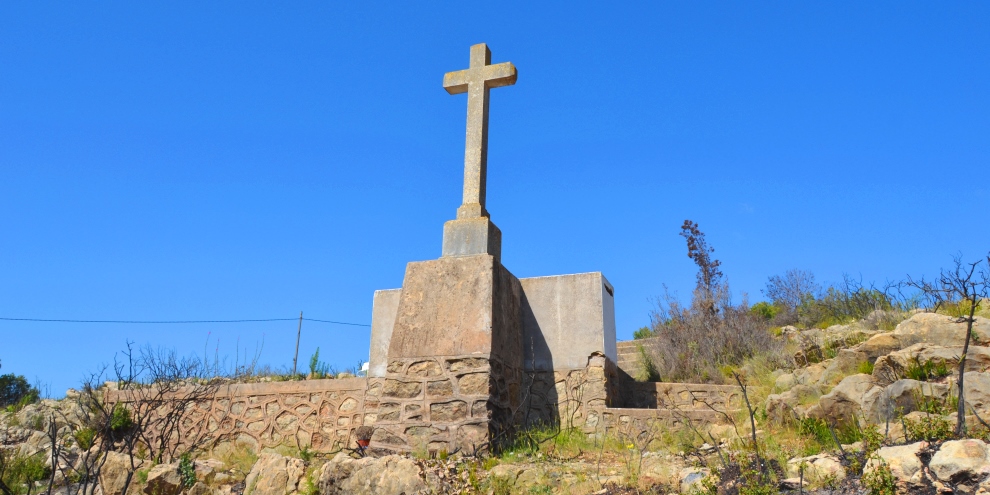
Once hidden among dense trees just a few hundred metres from the mountain road linking Xàbia and Dénia, a solitary stone cross stands watch over one of the Marina Alta’s most harrowing sites. It marks the location of a crime so brutal that it entered local memory under a single, chilling name: The Night of the Abyss.
In the summer of 1936, as Spain fractured, the Marina Alta, including Xàbia, remained loyal to the Republican cause. The military uprising of July, intended to crush the Second Spanish Republic, instead tore the country open and unleashed the catastrophe of civil war. Nationalist forces moved swiftly, seizing large swathes of territory, and within months General Francisco Franco declared himself head of state and Generalísimo. By November, the Republican government had abandoned Madrid and fled east to Valencia.
While armies clashed on distant fronts, terror seeped into Republican-held towns and villages. Reprisals followed, often chaotic and ferocious, carried out in the shadows beyond the reach of law or restraint. The Marina Alta was not spared. Men were taken from their homes, driven into the countryside, and erased. Some were chosen for their political loyalties, others for reasons never fully known, victims of grudges and revenge in a time when accusation alone could become a death sentence. Neighbours turned against neighbours. Silence became a form of survival.
On the night of 2 November 1936, a group of men from Dénia were taken up to La Plana. Among them were landowners, lawyers, businessmen, farmers and students, bound together only by their sudden designation as enemies. They were led to the edge of a natural chasm near the Barranco de Fondo, a dark opening in the limestone landscape, barely 130 metres from the road to Cap de Sant Antoni.
There, in the cold night air, they were lined up and shot. Their bodies were thrown into the depths of L’Avenc de Xàbia, a vertical fissure plunging almost seventy metres into the earth. Some accounts speak of movement below, of voices that did not immediately fall silent. At least three men are believed to have survived the gunfire and the fall, only to die slowly in the darkness, injured, trapped, and beyond all possibility of rescue.
Those responsible were militant left-wing unionists, many affiliated with the CNT, the anarcho-syndicalist confederation aligned with the Republican cause. When the war ended in April 1939, the abyss was sealed with concrete, transforming it into a permanent grave. A stone cross was erected nearby, bearing the names of the dead. The exact number remains uncertain, estimates ranging from thirteen to twenty-one, though fifteen is now considered the most likely figure.
For years the chasm remained closed, the dead undisturbed. On 18 July 1953, a team of cavers from Alcoy broke through the concrete slab and descended into the void. They found human bones scattered among stones, mixed with animal remains, alongside shoes, a shotgun, and fragments of personal belongings, mute witnesses to what had taken place. Some objects were brought back to the surface. Many were left behind.
Six decades later, cavers from Xàbia returned, accompanied by municipal archaeologist Joaquim Bolufer and journalist Eduard Torres. Beneath layers of rock and debris they uncovered more bones, tattered clothing and shoes, remnants of lives cut short and abandoned to the earth. When their work was finished, the abyss was sealed once again.
For much of its existence, the cross stood unseen, concealed by trees and visited only by those who remembered. Relatives and friends came quietly, laying flowers against the stone, keeping vigil over a grave with no bodies to tend. In September 2014, a devastating wildfire stripped the hillside bare. The trees that had hidden the cross for decades were reduced to ash, and the memorial was suddenly exposed, visible from the road, impossible to ignore.
Today, the cross can be reached on foot from the junction of the Carretera de Dénia and the Carretera del Cap de Sant Antoni. A narrow path, roughly marked by white-painted stones, leads south for about two hundred metres. The walk is short. The weight of the place is not.
Those who come are asked to do so in silence. This is not a viewpoint or a curiosity. It is a tomb without walls, a reminder of how quickly order can collapse, how easily fear and hatred can turn ordinary people into victims or executioners. The men who died here were not soldiers. Their crime was to be caught on the wrong side of a moment when Spain devoured its own, and the earth opened to receive them.