
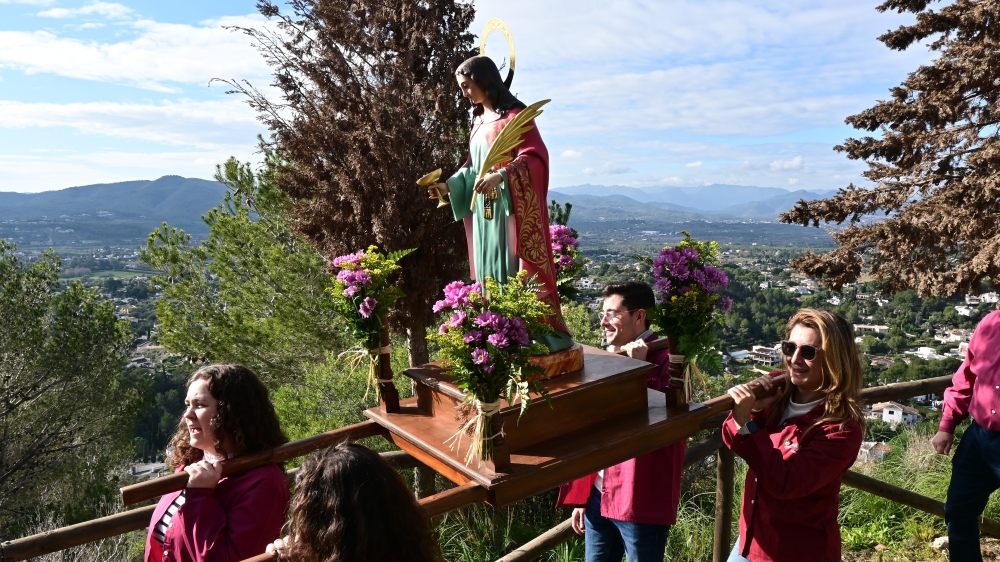
Twelve days before Christmas, Jávea’s quiet turn toward the festive season begins with the modest fiesta of Santa Llúcia on December 13. Often overlooked by many – especially when it falls on a working day and shops are open and children are at school – the celebration still holds deep meaning for a small, dedicated circle. For those families whose children suffer eye problems, the day is particularly poignant: they climb to the hilltop to honour the patron saint of the blind and to hold on to hope for recovery.
Santa Llúcia and the curious symbol of the eyes
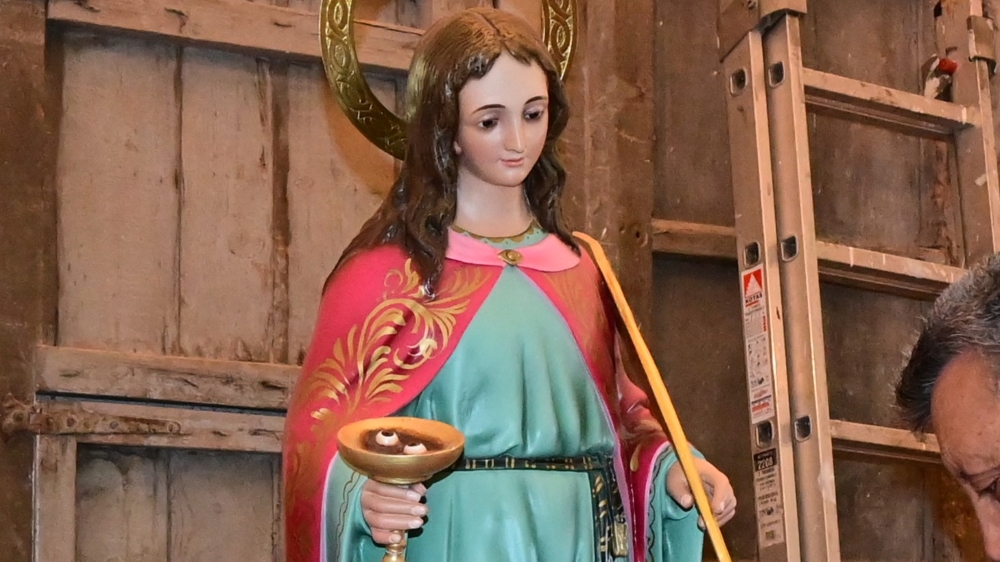
Santa Llúcia (Saint Lucy) was a young Christian martyr from Syracuse, traditionally dated to the late 3rd or early 4th century, whose very name comes from the Latin lux, “light,” a fitting emblem for a saint long invoked as protector of sight and the eyes. Her feast day is observed on December 13, a date that before calendar reform of 1582 fell close to the winter solstice and so came to carry older, seasonal meanings of light returning as days lengthened; this solstitial connection helped make her especially beloved in places with long, dark winters and folded ordinary concern for eyesight into a larger symbolic hope for the return of light.
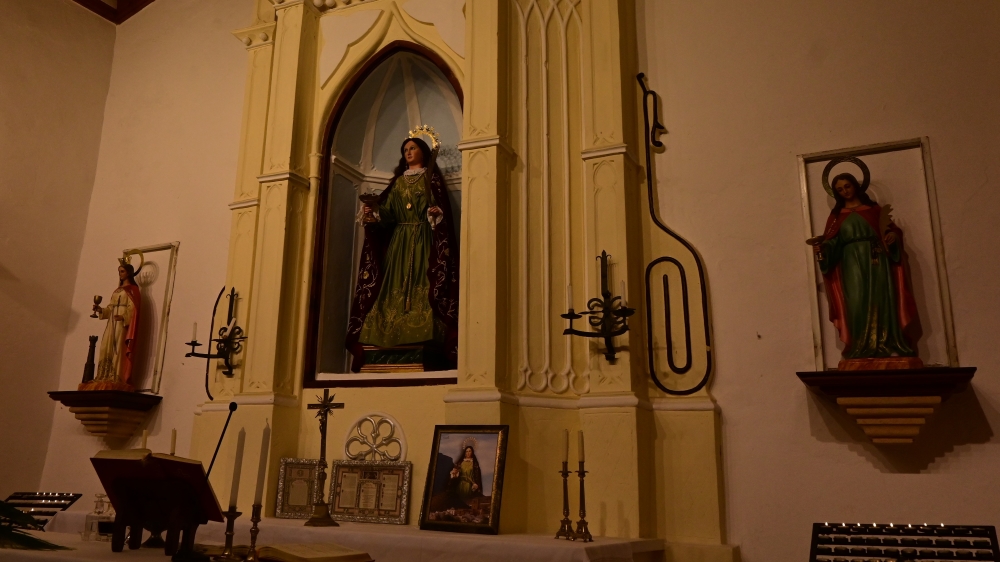
Legends about Llúcia grew quickly into vivid devotional images. One popular medieval tale says that, to preserve her vow of chastity or in the face of persecution, Lucy plucked out her own eyes and – in some versions – sent them to a suitor; in others her persecutors removed them. Miraculously her sight was restored, and from these stories the striking iconography arose of Santa Llúcia holding a tray with eyes, a graphic reminder that she is the patroness of vision and a tangible focus for prayers against blindness and eye disease. In many Mediterranean towns her cult became locally adapted and sometimes linked with other protectors.
In Xàbia the little chapel on the hill is jointly dedicated to Santa Llúcia and Santa Bárbara; the pairing makes practical and symbolic sense because Bárbara is invoked for protection against storms, lightning and sudden danger while Llúcia is sought for sight and light, so together they address both the physical dangers of a coastal, mountainous community and the deeper human longing for protection and illumination, two complementary needs that devotional life set side by side over the centuries.
Tossal de Santa Llúcia
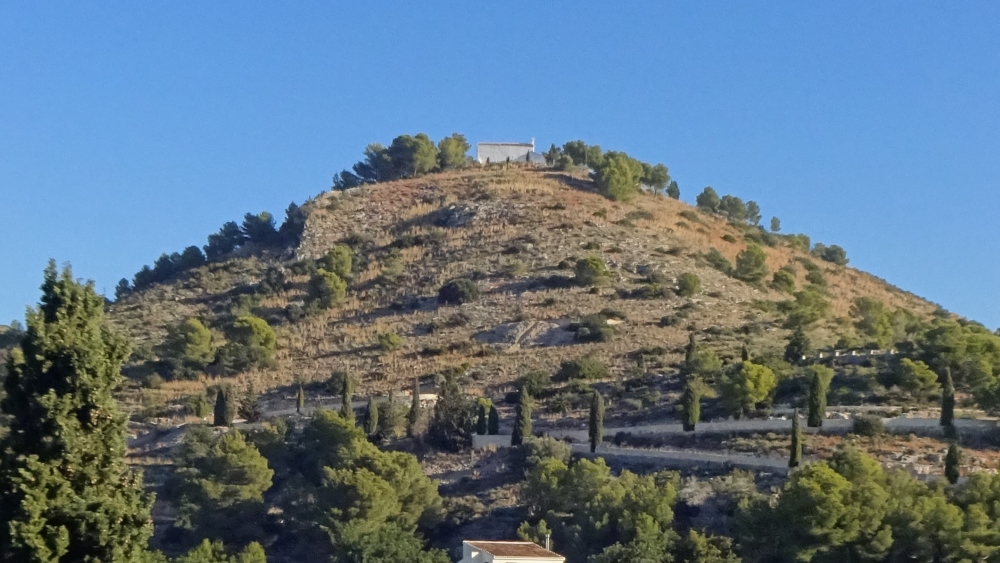
Perched at 163 metres, the Tossal de Santa Llúcia has watched over Xàbia since Roman times, when its summit served as a compact hilltop settlement and observation post. From that vantage the bay, the valley and the inland routes were all visible, making the hill ideal for territorial surveillance, short-term habitation and keeping track of movement between coast and interior. Those long vistas still resonate during the fiesta of Santa Llúcia, when the chapel and the hill become both backdrop and stage for local memory and celebration.
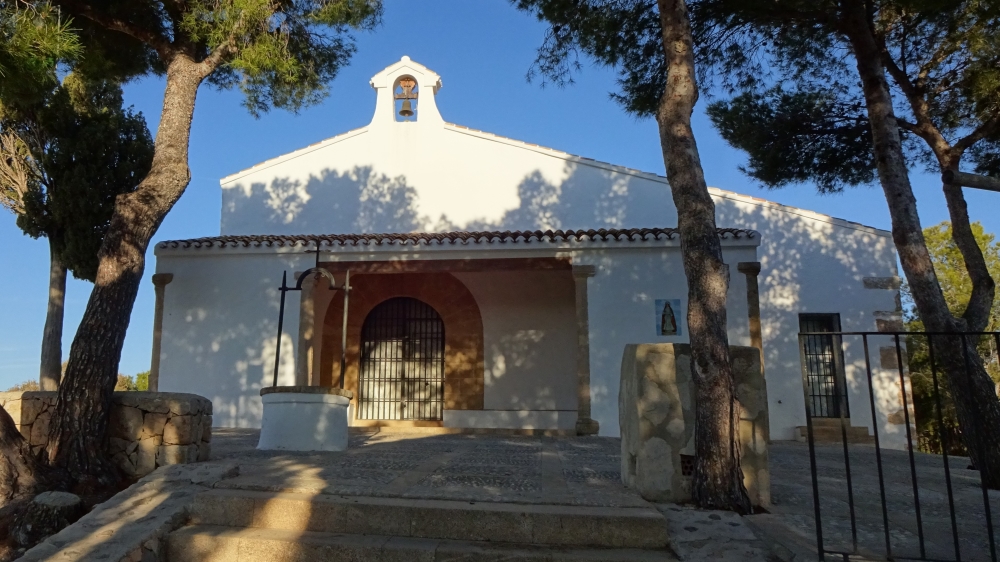
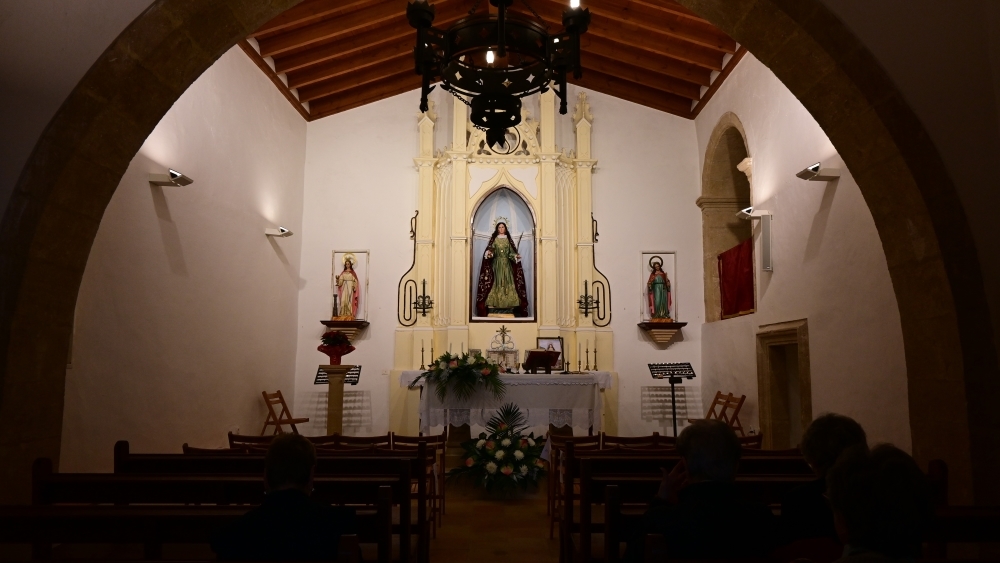
The chapel that crowns the summit dates from the early 1500s – although some sources suggest it was more likely a 17th century construction – and follows the region’s familiar “conquest chapel” model: a simple rectangular nave beneath a pitched tiled roof, a single interior space and a prominent tosca-stone arch that frames the altar. That modest, durable design is echoed in nearby shrines; the chapel of Popúl, Sant Joans beside the old cemetery and San Sebastián in Costa Nova, linking it to a wider local architectural tradition and giving the little building a reassuring, familiar presence.
Architecturally the chapel is a well-preserved example of small coastal religious buildings, and in recent years the summit has been carefully conserved: the entrance stairway and covered porch were restored, structural repairs reinforced the nave and general conservation work improved safety and access for visitors. Those interventions make it easy to climb the hill and to combine the chapel’s quiet intimacy with the sweeping panoramas that reward the ascent.
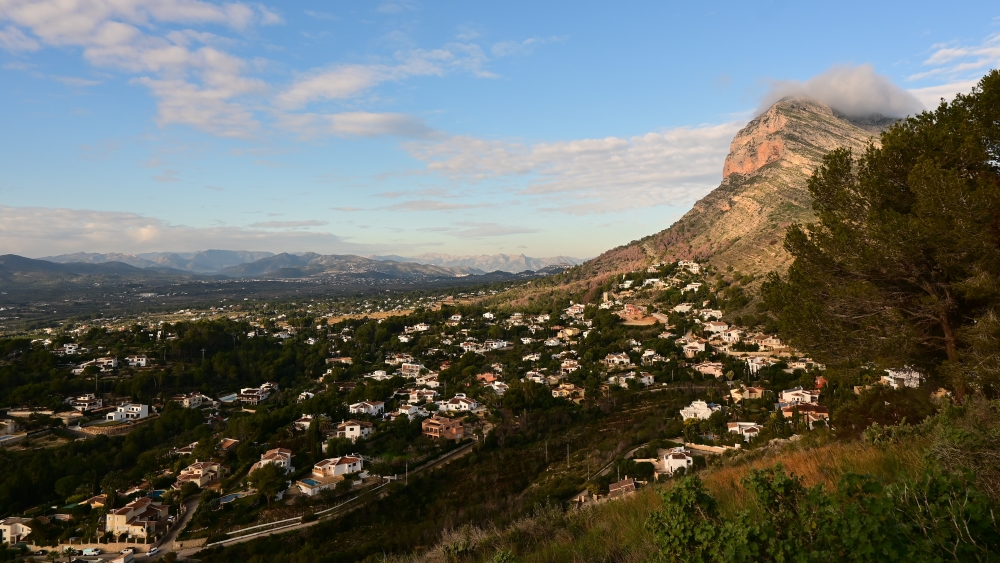
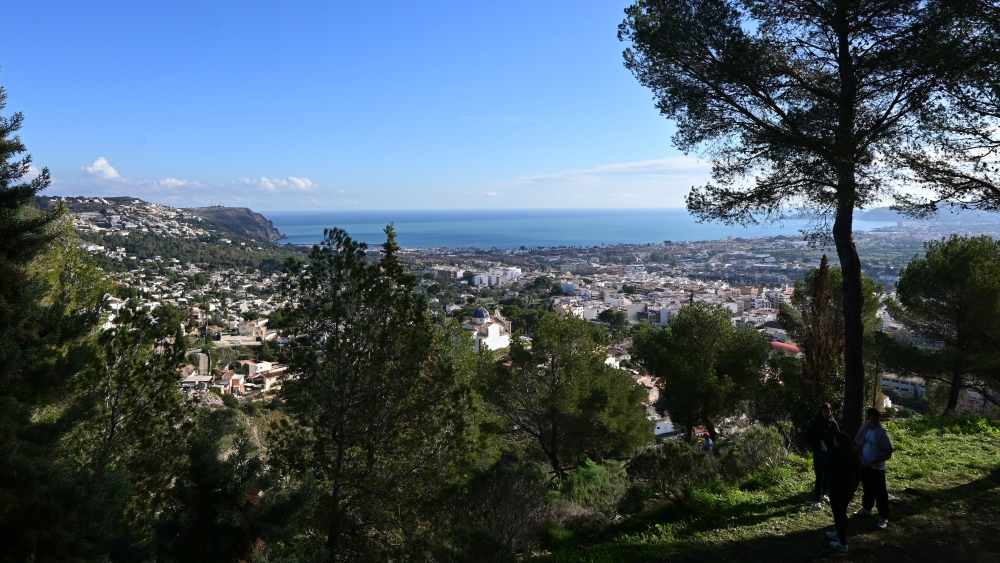
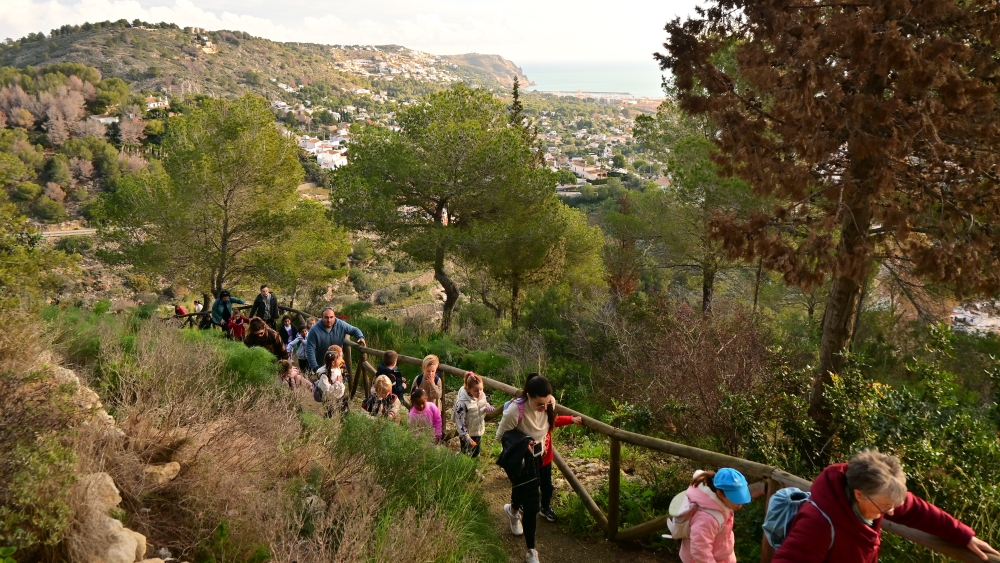
The views are the chapel’s greatest attraction. To the east, beyond the blue-domed chapel of the Calvario, the Mediterranean fills the wide bay of Jávea between Cabo de San Antonio and the slim promontory of Cabo de San Martín / Cap Prim, with the town spreading along the coast from the working port to the tourist sands of the Arenal. Southward lie the low hills of Capsades and Tossal Gros marking the municipality’s limits, with Puig de Llorença and its antennas beyond and the church of Poble Nou de Benitatxell visible to the right. To the west the high interior mountains rise where, centuries ago, communities retreated during the Christian reconquest; below them stretches the wide San Bartolomé valley, the garden of the Marina Alta. Walking the tree-lined perimeter path around the summit, the Montgó finally unveils itself, that iconic silhouette found on so many postcards and guidebooks, completing a panorama that ties landscape, history and fiesta into a single, living image.
December 12th – On the eve of the pilgrimage
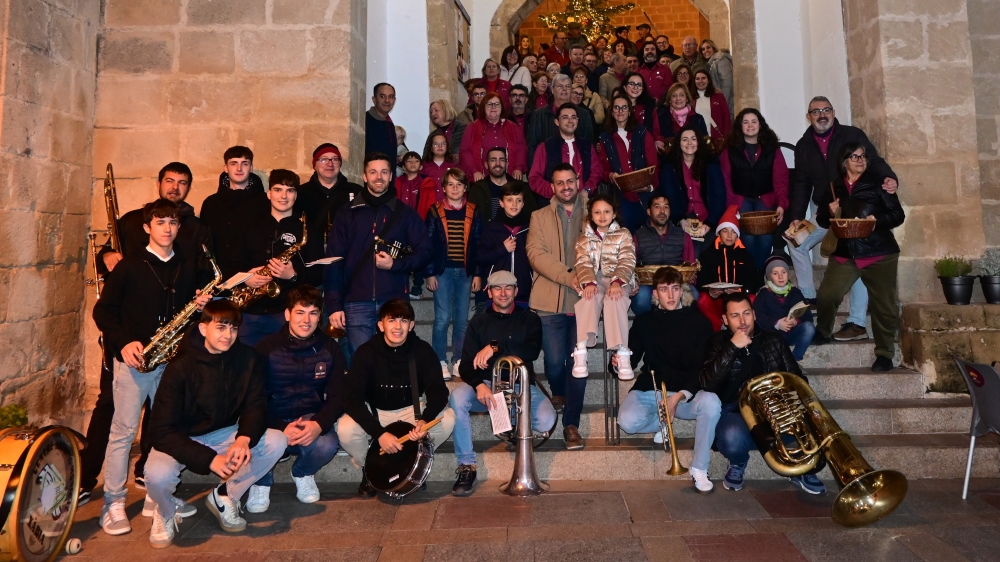
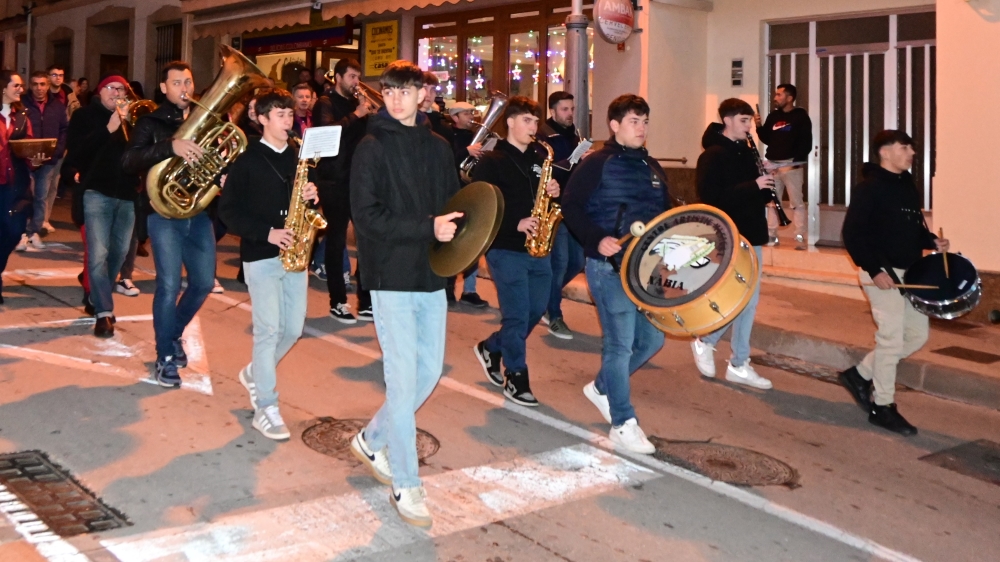
Although a few events, including a special Mass to Santa Bárbara the previous Sunday, mark the run-up to the feast, the celebrations truly begin on the evening of December 12 with an informal parade organised by the small commission that tends Santa Llúcia’s rites, an event is known as La Crida a la Festa.
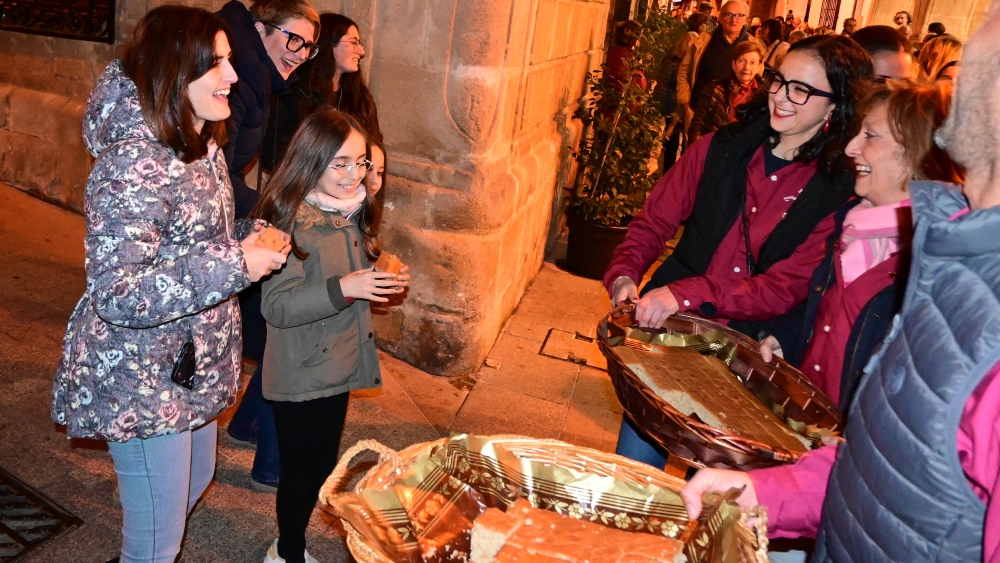
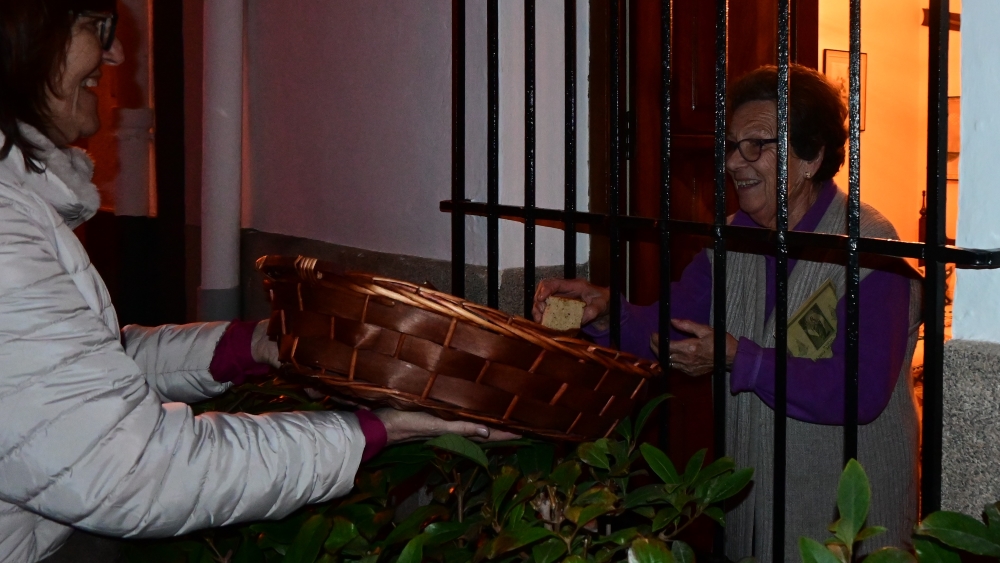
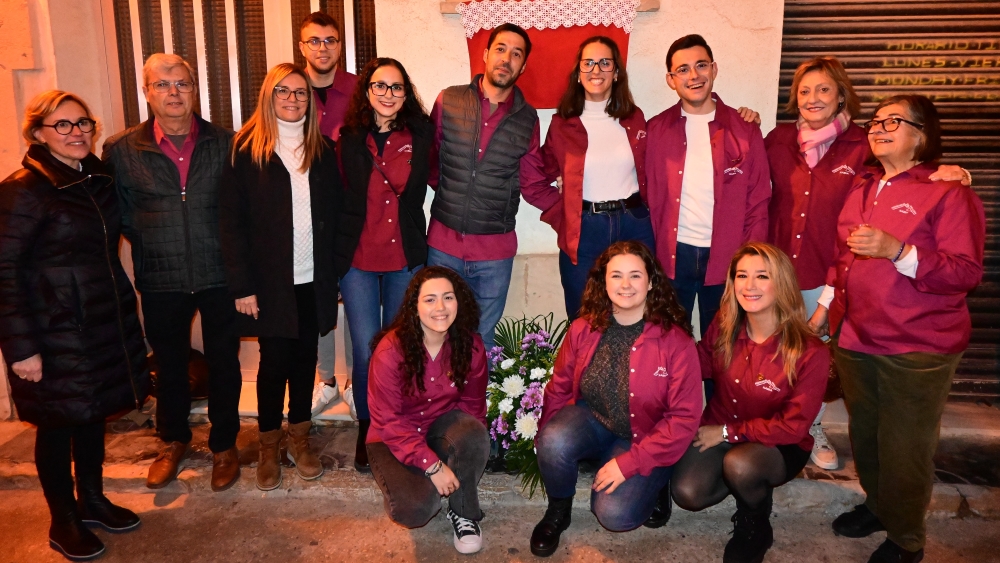
Barely more than forty people most years, the group nevertheless spans generations, from children to great‑grandparents. A band sets the pace with familiar tunes, followed by local councillors and committee members carrying baskets of warm doughnuts and bottles of mistela, a traditional Valencian fortified wine which they hand to neighbours who peer from doorways and windows as the procession passes. The cavalcade threads the town’s dark, narrow streets; the quiet is punctured by thundercrackers and the occasional sky rocket let off by those who bring up the rear.
After an hour of winding through the old quarters, the parade reaches Carrer de Santa Llúcia, where the little shrine has already been dressed with flowers. More cakes and small plastic glasses of mistela are shared with everyone before a long string of bangers, known as a traca, is stretched across the road and set off, filling the street with a sudden, glorious roar of noise, smoke and confetti-like debris.
December 13th – The pilgrimage
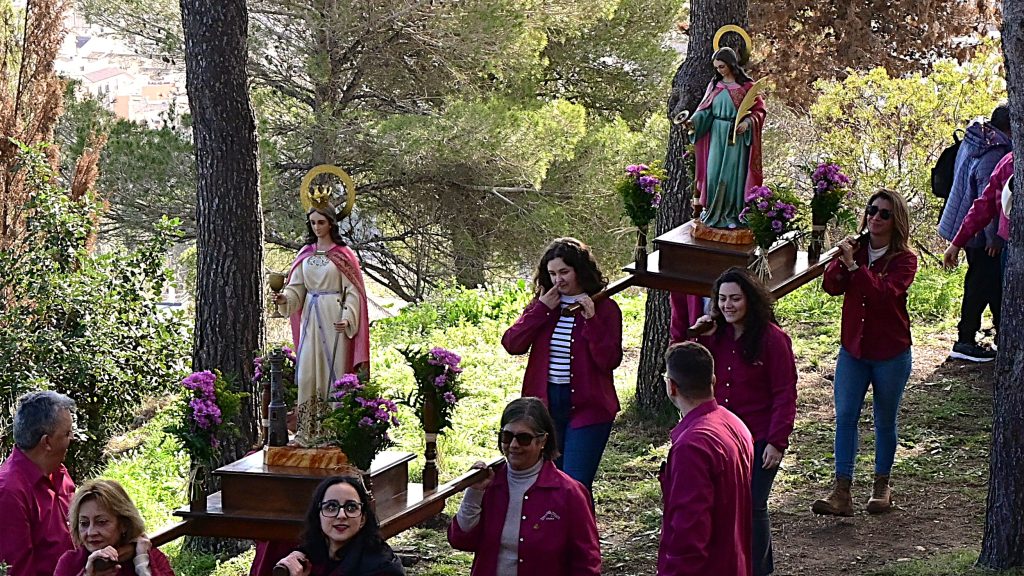
Dawn arrives sudden and jubilant in the neighbourhood as the traditional desperta – bangers and rockets – shatters the early-morning quiet, their bursts almost drowning the delicate strains of the music accompanies the noise. Even before the light has fully settled, many of the mayorales, the volunteers who organise the festivities, thread up the winding path to the chapel. Down in the historic centre, those who have yet to make the ascent assemble outside the ancient church of San Bartolomé; with rockets still thundering and the pipes and drums of the Xirimitabs offering a gentler counterpoint, they set off on the romeria, a pilgrimage that winds through narrow streets and climbs the stony track to the summit.
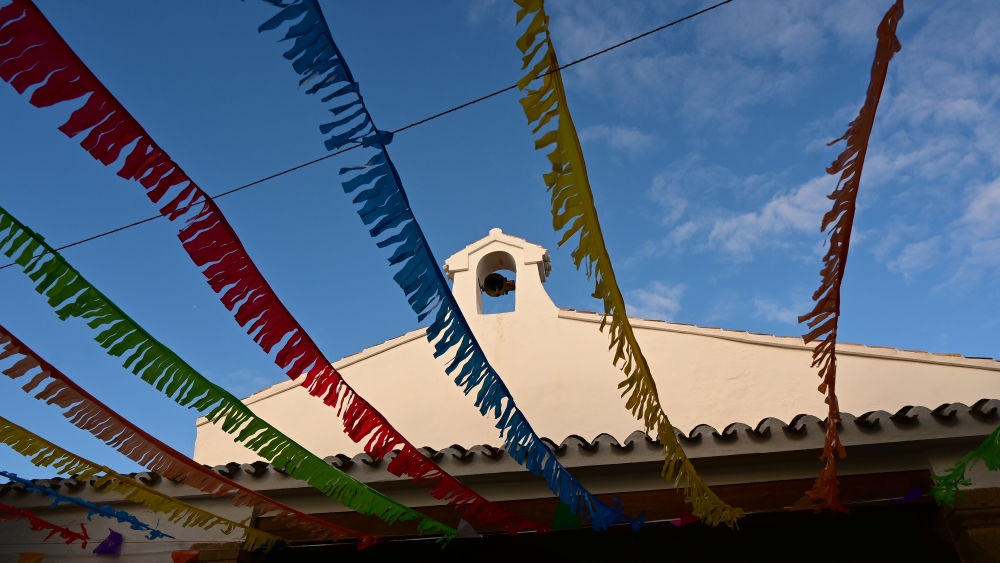
At the small, colourfully decorated chapel square the bell rings out across the plain, and hot chocolate and cake await those who have made the climb. Schoolchildren are well represented among the pilgrims, their presence a living promise that the ritual will continue. Around eleven o’clock a special mass fills the chapel to overflowing, and those left outside follow the service by loudspeaker; shortly before midday the bell peals again and rockets explode over thevalley as the statues of Santa Llúcia and Santa Bàrbara are carried out and processed around the chapel’s track to the accompaniment of the Xirimitabs.
When the images are returned to their niches and minds turn toward the first moments of the Christmas season. What lingers is the blend of sound and movement – the crack of rockets, the thread of traditional music, the steady climb to the chapel – and the sense that, on that small hilltop plaza, generations meet to renew a shared memory and get ready to step together into the festive season.
Research Resources
- aleteia.org · “Santa Lucía: The bearer of light and a joyful tradition“
- houseofgoodfortune.org · “St. Lucy in the Sky (with Eyeballs)“
- javea.com · “Ermita Santa Lucía y Santa Bárbara: historia, festividad y acceso“
- memoriadelmediterraneo.xabia.org · “Santa Llúcia”
- parquesnaturales.gva.es · “Montgó“