
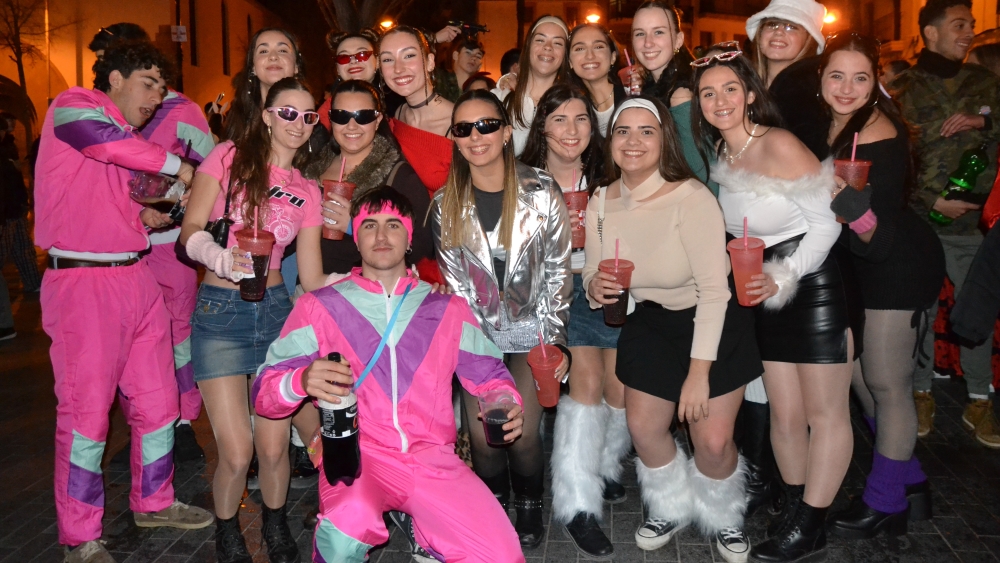
A few weeks before Easter, the town of Xàbia bursts into colour for its annual Carnival, a celebration that transforms the historic centre into a stage of sequins, satire and sound. Two fancy dress parades wind through the old streets: the first belongs to the children, wide eyed and wonderfully costumed, and the second, later in the evening, is reserved for adults who dance into the early hours in the Plaza de la Constitución. For some, Carnival marks the threshold of almost six weeks of restraint. For others, it is pure festivity, an open invitation to dress boldly and celebrate with friends.
Carnival in Xàbia began in 1987 in the Placeta del Convent, organised by that year’s Quintà. Three years later, it moved to the Plaza de la Iglesia, where local bars funded live music in exchange for setting up temporary bars around the square to keep the refreshments flowing. In its early years, the celebration took place on a Friday night, allowing xabieros to continue the revelry elsewhere in the region, particularly in Pego, home to what many consider the largest Carnival in the Marina Alta.
As the years passed, the festivities relocated several times. They moved first to the athletics track beside CEIP Graüll, then to the old dirt car park at Portal del Clot. The event remained there until a few years ago, when the Fogueres Commission, which organises Carnival on behalf of the town hall, transferred the celebration to its current home in the Plaza de la Constitución, shortly before construction began on the new Portal del Clot complex.
Beyond the parades, Carnival in Xàbia once featured two additional traditions that have since faded. One was L’Enfarinà, a lively flour battle reminiscent of the famous flour fight held every 28 December in Ibi. The other was the Entierro de la Sardina, staged a week after Carnival to mark the end of the festivities and the beginning of Lent. Dressed in black, participants processed through the old town carrying a coffin for the symbolic burial of the sardine, ceremonially laying to rest the indulgences of Carnival until the following year.
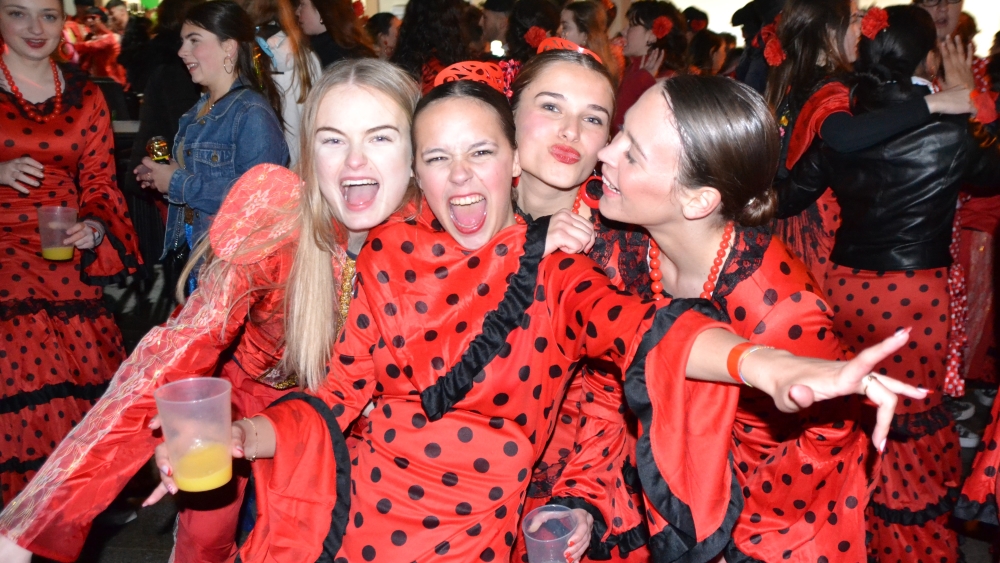
What is Carnaval?
Carnaval is a Christian festival that precedes Lent, the forty day period of reflection and restraint leading up to Easter. Traditionally, it is a final flourish of indulgence before the fasting begins, a time of feasting before the table is cleared. The word “carnaval” is widely believed to stem from the Latin carne levare, meaning “to remove meat”, a nod to the abstinence that follows. In modern times, however, the celebration has become synonymous with vast parades and theatrical spectacle, nowhere more famously than in Rio de Janeiro, whose Carnival is often called “The Greatest Show on Earth” and draws millions of revellers each day.
In Spain, the largest Carnival unfolds in Santa Cruz de Tenerife, widely regarded as second only to Rio in scale and exuberance. Dating back to the seventeenth century, it is so significant that it is broadcast nationwide and the city is officially twinned with Rio de Janeiro. On neighbouring Las Palmas de Gran Canaria, the Carnival rivals its island counterpart in colour and popularity, to the point that there have even been controversial proposals to unite the two festivities.
On the mainland, Carnival takes on older, more elemental forms. In Navarre, the villages of Ituren and Zubieta host one of Europe’s oldest pre Indo European carnivals each January. Here the ritual symbolises the eternal contest between light and darkness, winter and spring. Men clad in sheepskins and tall ribboned hats march through the streets with whips in hand and heavy cowbells strapped to their backs, their steady clang echoing through the valley. Around them swirl figures dressed as witches and demons, scattering as the bell bearers advance in solemn procession.
Further south, the Carnival of Cádiz, which dates back to the sixteenth century, carries a distinctly Italian influence. Rather than focusing solely on spectacle, it is famed for its sharp wit. Through satire and irony, performers tackle political and social issues of the day, proving that humour can be as flamboyant as any costume.
In Catalonia, the Solsona Carnival is among the longest in duration, lasting more than a week. It is best known for the curious tradition of hoisting a stuffed donkey up the church bell tower. According to legend, a real donkey was once lifted aloft to graze on grass growing high above the ground. Today, the locals, nicknamed mattarrucs or “donkey killers”, raise a stuffed effigy instead, which cheekily sprays water over the crowd below.
Closer to home, in the Comunidad Valenciana, the Carnival of Vinaròs has earned recognition as a Festival of Regional Tourist Interest after once being prohibited. Its programme features costume parades, music, dancing and even flour and confetti battles, culminating in the traditional burial of the sardine.
While Xàbia celebrates on a more modest scale, one of the largest carnivals in the region takes place in Pego. Each year, visitors travel from far and wide to join in festivities that include a children’s parade in the morning, an adults’ procession in the evening, and dancing that carries on well into the night.