
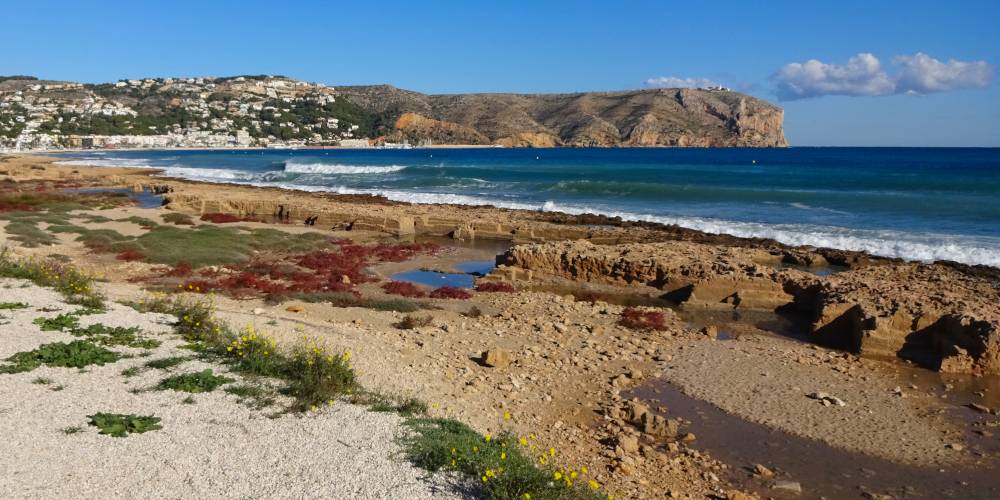
Aside from the modest crescent of the Arenal beach, the stretch of Xàbia’s coastline that unfurls for some four kilometres from the northern port to Cala Blanca is a far cry from the golden sands of the Costa Blanca. At first glance, it appears simply a rugged ribbon of sandy limestone, divided by the Arenal. But look closer, and you see the ancient story etched in stone: these cliffs are the fossilised remains of sand dunes laid down some 100,000 years ago, among the most significant deposits of their kind in the Valencian region.
To the north lies El Primer Muntanyar, to the south El Segon Muntanyar, silent witnesses to centuries of human toil. While the raisin industry filled Xàbia’s coffers and built its grand mansions, the stones of the coastline shaped the town itself. Blocks hewn from these cliffs – “tosca stone” – became the backbone of the historic centre, their golden hues catching the sun to bathe the town in a warm glow that persists to this day.
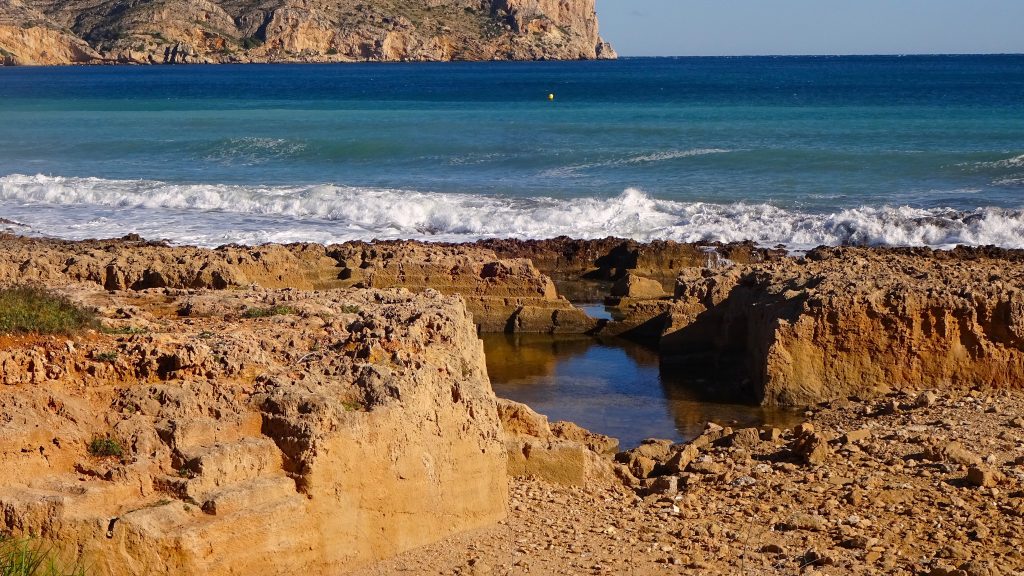
The quarries, exploited for nearly two millennia, only fell silent in 1972 when the local council ended the industry. But the scars remain along the coast: sharp edges and precise angles, impossible gifts of Mother Nature. Winter storms crash against the cliffs, waves filling the artificial basins, reminding the observer of the immense effort it took to extract these stones.
The tosqueras – the quarrymen of Xàbia – worked with bare hands, picks, and hammers. Each block weighed 30 to 40 kilos. By day, they laboured under the sun, prying stones from the coast; by night, many fished sardines to make ends meet. The toil was grueling, yet essential.
By the early 20th century, Xàbia exported some 5,000 tons of stone annually, transported painstakingly by horse and cart. The industry’s importance even prompted a bold attempt to connect the town to the regional railway in 1910, an ambition thwarted by the strange twists of history.
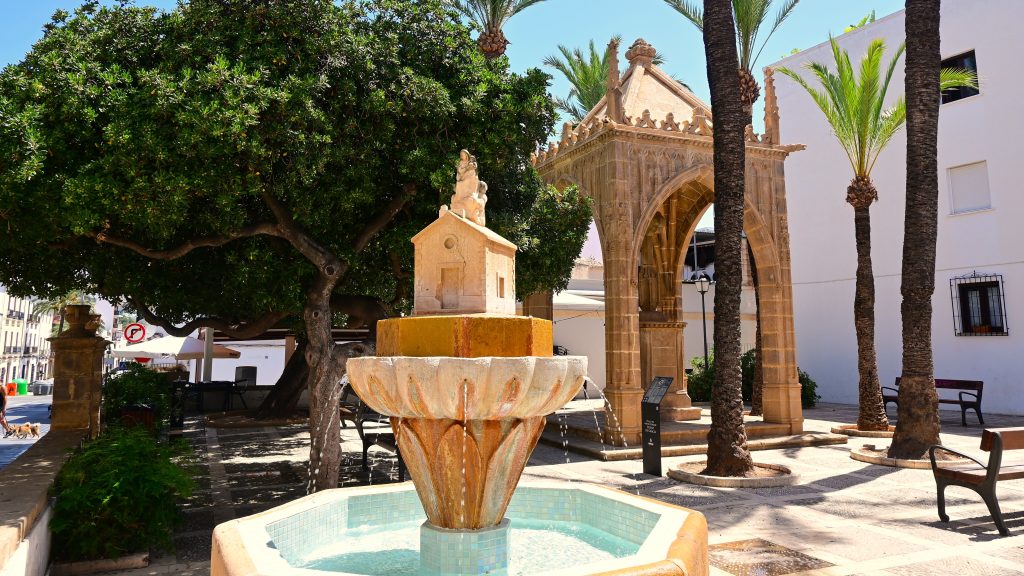
Among the legendary tosqueras was Vicente de Gràcia, whose work still graces the town: the fountain outside the church, the covered cross in the garden-square now bearing his name, the ornate balconies of the Casa de Abadía, and intricate elements within the church of San Bartolomé.
When quarrying ceased, the golden stone became scarce. Today, builders must either import it at great cost or salvage it from the remnants of old structures. In Xàbia, we have seen a derelict house dismantled with careful, almost reverent precision, its arches and walls cleaned and reassembled into a new building. As the structure nears completion, the age of the stone conceals the youth of the building itself—a quiet testament to Xàbia’s enduring golden legacy.