
In the bitter winter of 1937, amidst the chaos of the Spanish Civil War, Xàbia’s strategic coastal location drew the eyes of both conflict and opportunity. On its rugged shores, an aerodrome with two landing strips and a small port was hastily constructed, transforming the sleepy town into a potential target for sieges and assaults. Any structure with tactical potential, be it defensive or combat-ready, risked drawing the deadly gaze of the warring factions, placing the civilian population directly in harm’s way.
The newly formed Municipal Council, faced with the grim possibility of bombardment, embarked on a desperate mission: to construct shelters to shield the townspeople from the encroaching violence. These shelters, built in Raval de la Mar (where the Red Cross now stands), Terra Grogueta (Avenida de Alicante), Calle Roques near Casa Abadia, the former convent of the Agustinas (now the indoor market), Placeta del Convent, and the Fielato (Avenida de Ondara), were rudimentary at best. Dug into the earth without protective coatings and, in some cases, reinforced with stones salvaged from ruined buildings, they offered little more than protection from flying shrapnel, direct hits could still bring catastrophe.
The “Refuge” of Aduanas del Mar
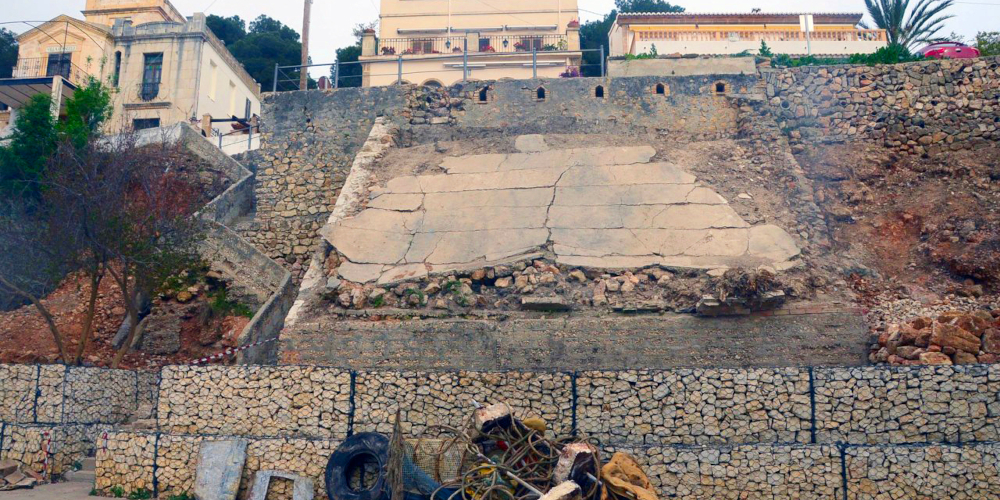
One of these wartime structures, hidden beneath Calle Caleta near the fishing port, has long been considered a civilian shelter. Yet, according to municipal archaeologist Ximo Bolufer and a study by architect Pablo García, this subterranean labyrinth was not a refuge at all – it was a torpedo warehouse, designed to store weapons for the naval defense of the coast.
The testimony of contemporary witnesses confirms this reinterpretation. In his diary, Ti Vicent de Gràcia recalls:
“I was so hungry that, on September 15, 1938, I began working in a shelter close to the base of torpedo boats in Caleta del Petorrí, handling the machines that load torpedoes. They gave me 13 pesetas and two loaves of bread, but I worked for the bread, not the money. I was so emaciated that I could barely stand, yet after a few weeks, I grew stronger. I worked there for four months.”
The human cost of the construction is further underscored by Amadeo Sivera Ros, now 95, who at 15 worked alongside Pep Soler Contrí. One day, a collapse inside the tunnels buried Pep beneath wood and formwork. He was rescued, but the injuries proved fatal days later. This tragedy also speaks to the unstable geology of the site; by war’s end, the supposed shelter had never been used for its intended purpose.
A Tunnel Complex of Surprising Ambition
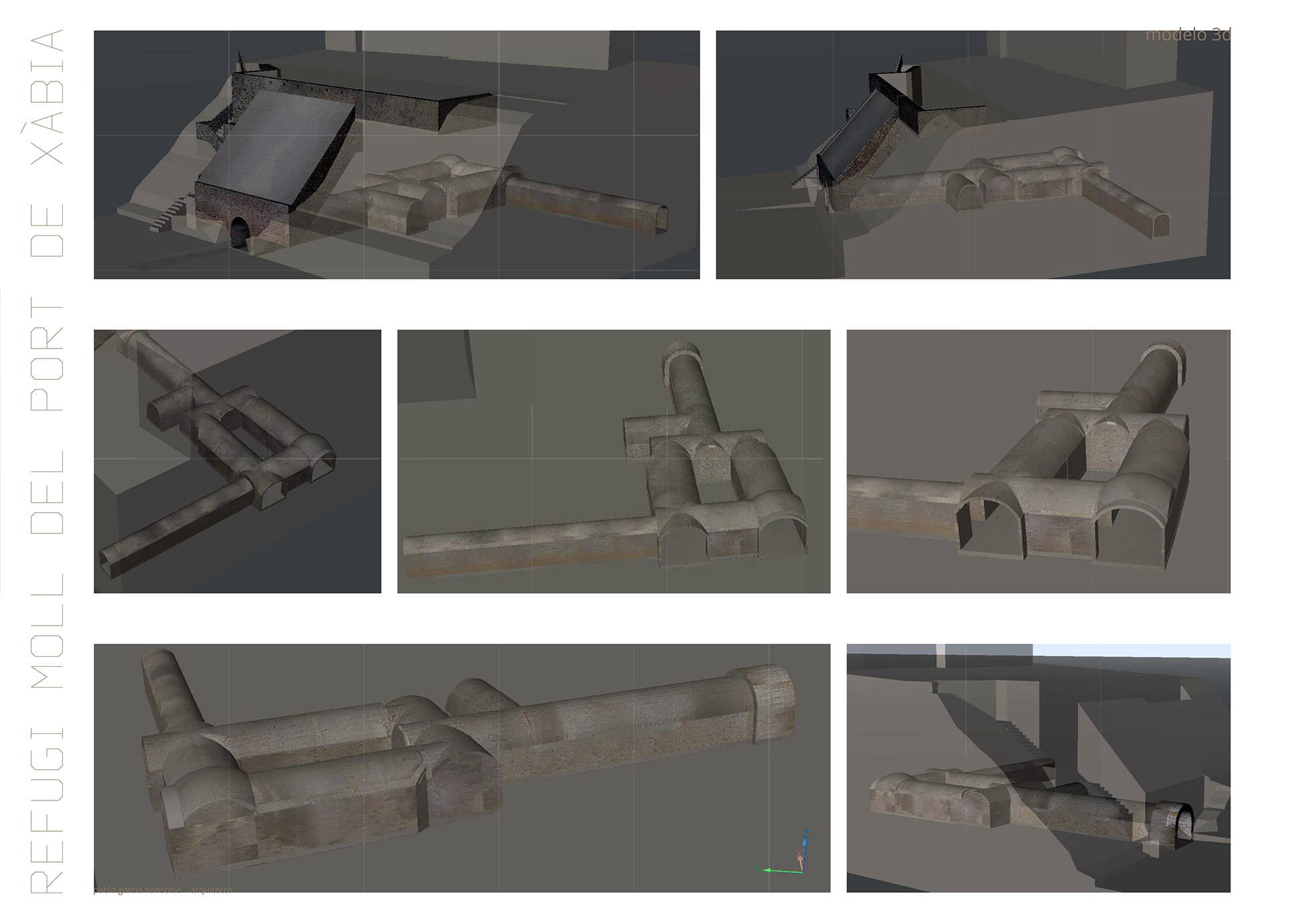
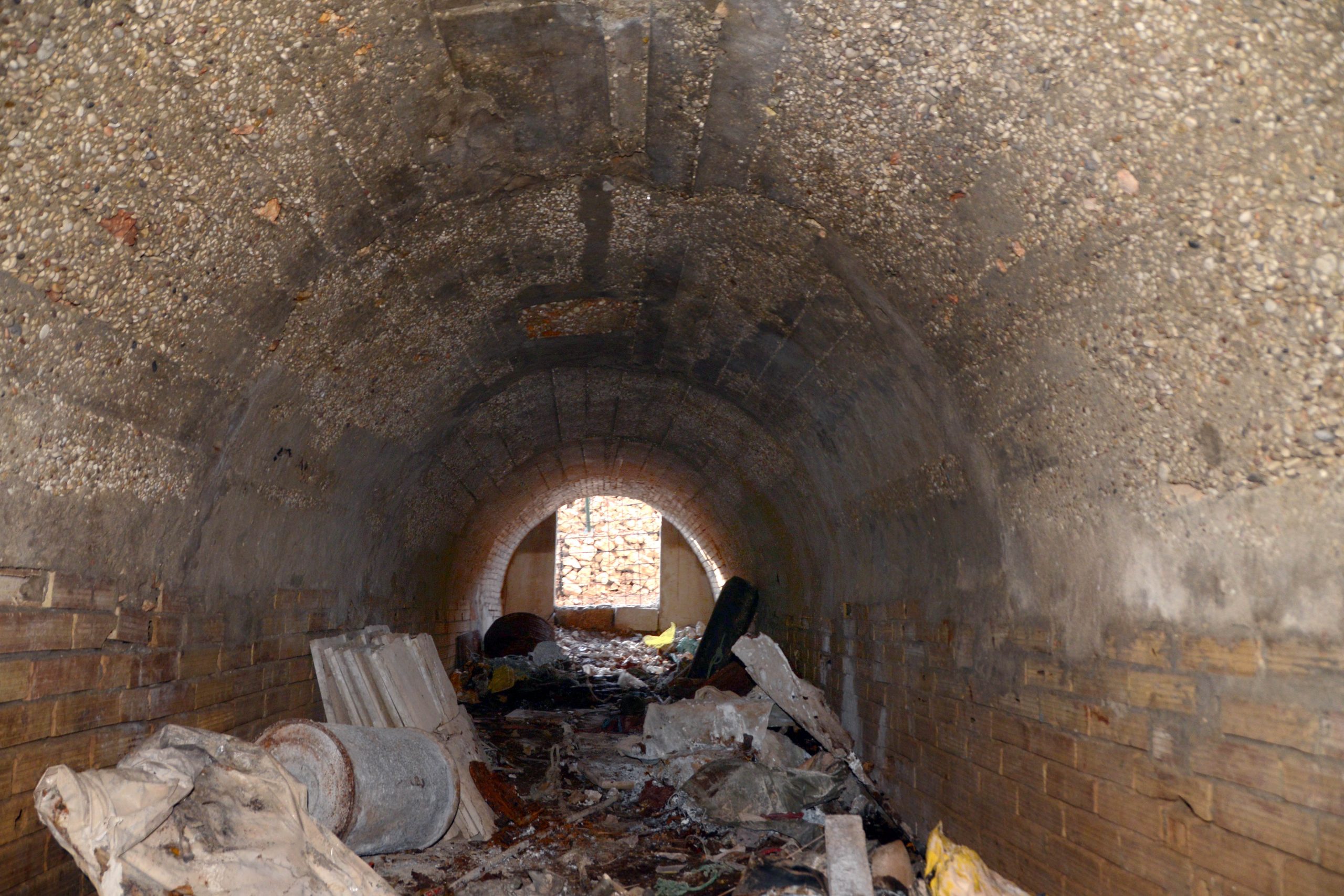
The structure measures roughly 10 by 6 metres and is carved into the natural slope of La Caleta. Its front wall, made of Portland concrete blocks, sand, and gravel, is an imposing 4 metres thick, while solid brick fortifies its central section. The entrance, framed by a semicircular arch, opens onto a tunnel stretching just over seven meters to a room from which two parallel galleries extend, separated by a robust dividing wall.
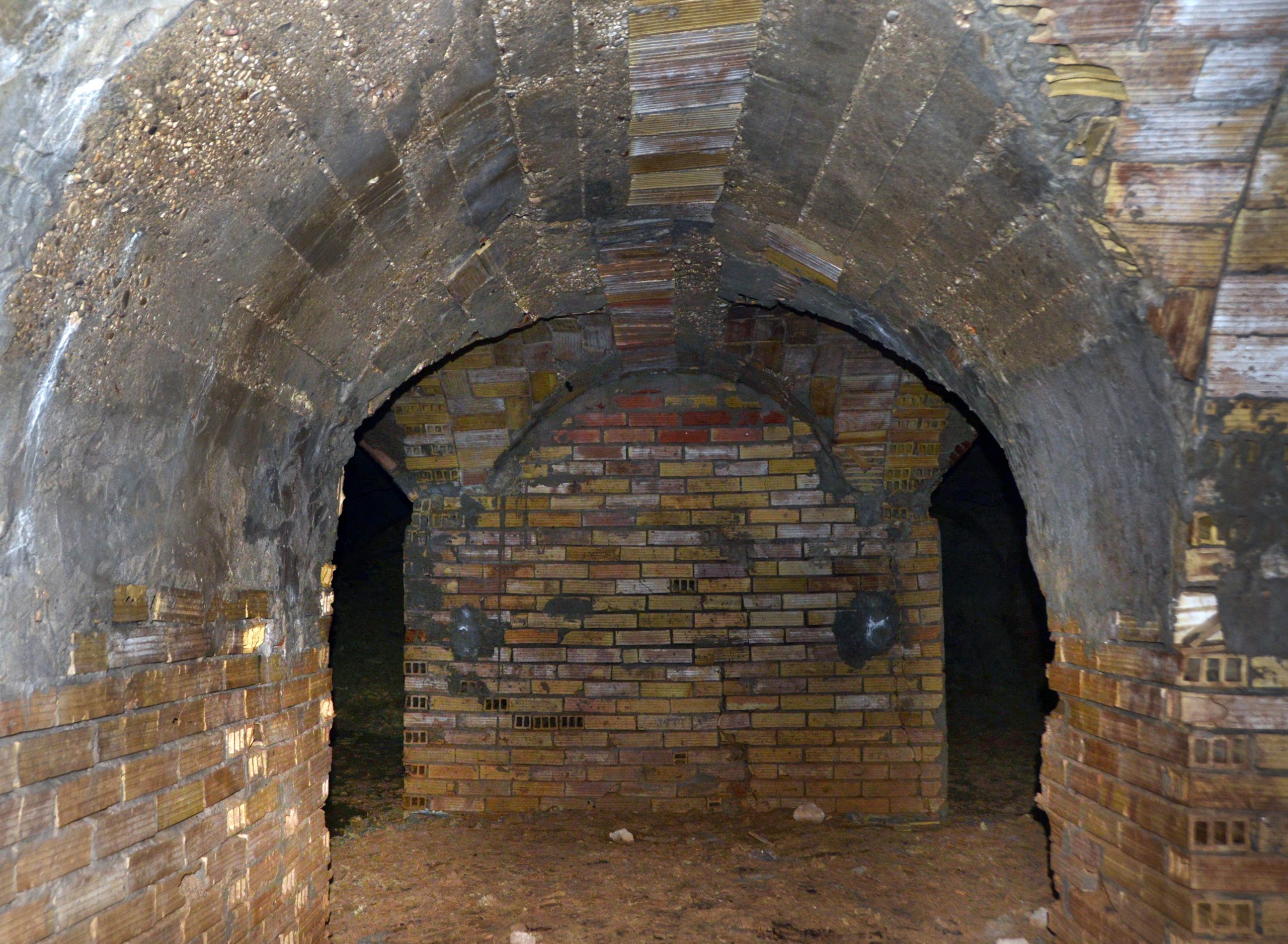
The left gallery ends in a lowered vault; the right gallery features a side vault that leads to a narrow 12-meter corridor, intended to connect to an unfinished exit 25 meters from the entrance. Two main galleries were planned to extend deeper into the hill, but the excavation was never completed. Walls throughout are reinforced with flat bricks, cement, and gravel, with vaulted intersections meticulously constructed—a testament to wartime engineering under extreme constraints. The complex reaches a total depth of 24 meters.
From War Relic to Historical Treasure
Decades later, in the 1950s and 60s, local sailors repurposed the entrance tunnel as storage. Nearly 80 years on, renewed study and conservation have unveiled one of Xàbia’s few surviving examples of Spanish Civil War architecture. The Soler Blasco Municipal Museum is exploring ways to preserve and publicize this remarkable site, offering a tangible link to a national conflict seen through the lens of a small coastal town.
Yet, the future of the tunnel hangs in the balance. With plans for a new multi-story car park in the port, the question looms: will this hidden relic be swallowed by progress, or will it be safeguarded as a lasting reminder of Xàbia’s wartime past? Beneath the quiet waves and bustling port, the town’s shadowed echo of war waits, its stones silently asking whether history will be preserved … or lost.
Click below to read more on this story in Spanish on Xàbia AL DIA