
Researched and written by Mike Smith – November 2025
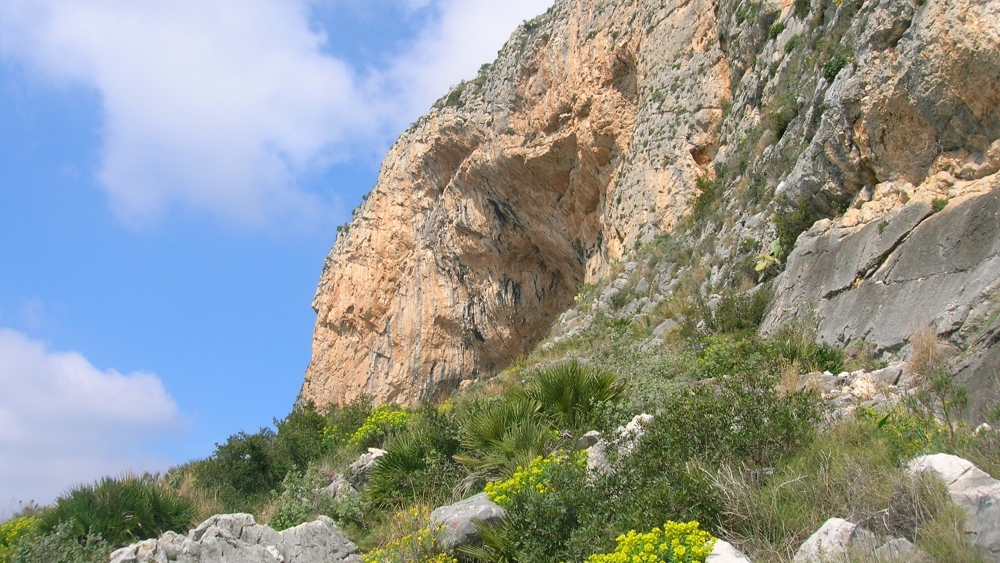
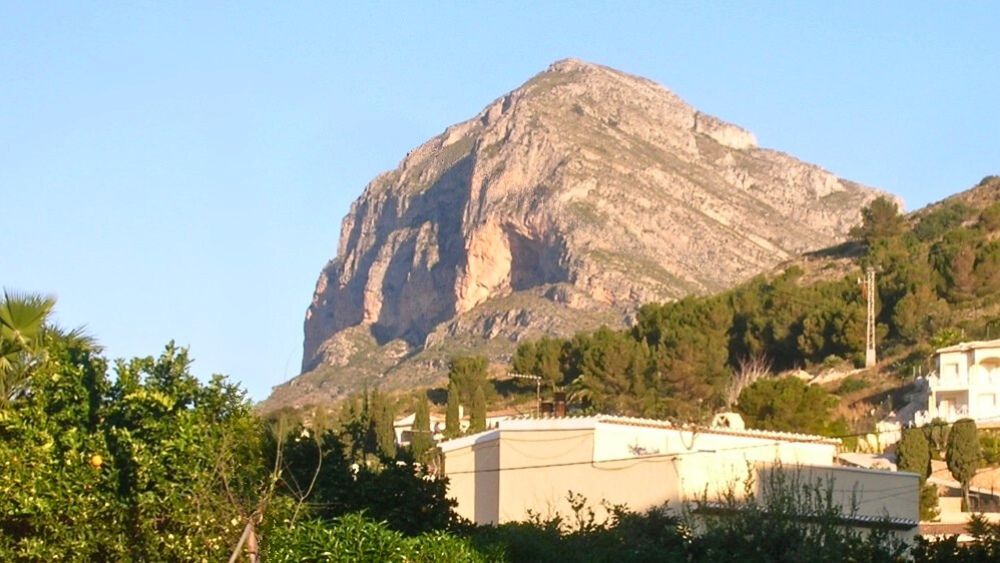
Perched on the sun-drenched southern slope of the Montgó Massif, lies one of the region’s most captivating natural wonders: Cova Ampla. Literally “Wide Cave,” this impressive rock opening looks almost like the mountain itself is winking at you—a natural “eye” gazing across the valley. From the valley below, a wide, dark ellipse blinks at you from the limestone. Locals call it the Eye of Montgó, hikers call it a prize, and archaeologists have called it home to some of the oldest residents of what is now Xàbia.
Getting There: A Hike Worth Every Step
Reaching Cova Ampla is an adventure in itself. Begin along the main trail that winds toward Montgó’s summit, breathing in the aromatic scent of pine and wild herbs. Instead of continuing all the way to the top, veer south along a wide track that curves gracefully through rocky slopes and sunlit terraces.
The path is marked by a simple low cairn on the right-hand side of the track, about 200 m beyond the junction, your first friendly guidepost. At first, the track is well-worn, weaving through undergrowth dotted with Dwarf Palm, Prickly Juniper, and Toothed Lavender, each plant adding its own wild perfume to the air. As the trail contours around the head of a deep ravine and begins a steeper climb, it becomes less distinct. Keep an eye out for small piles of rocks left by previous walkers, they are subtle breadcrumbs pointing the way.
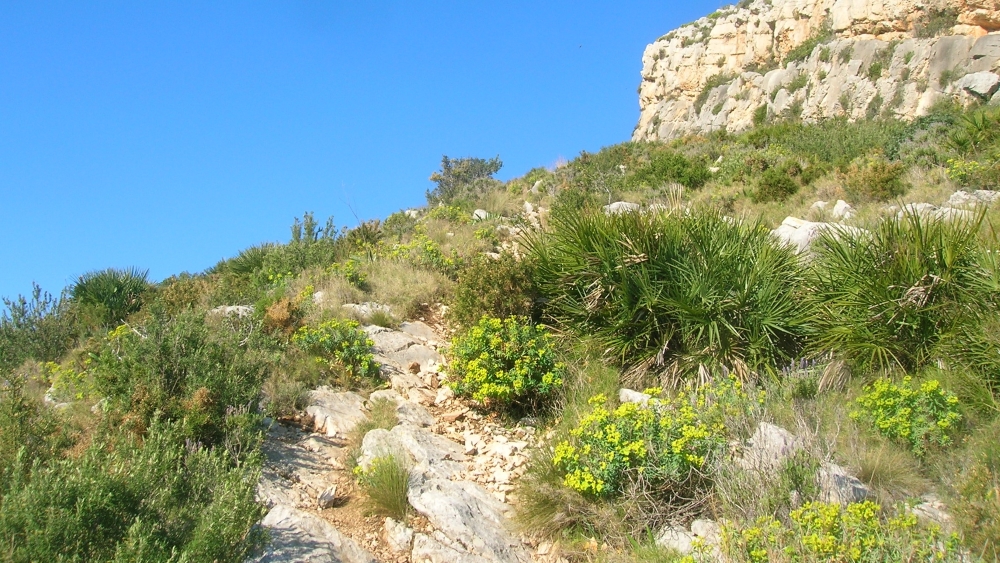
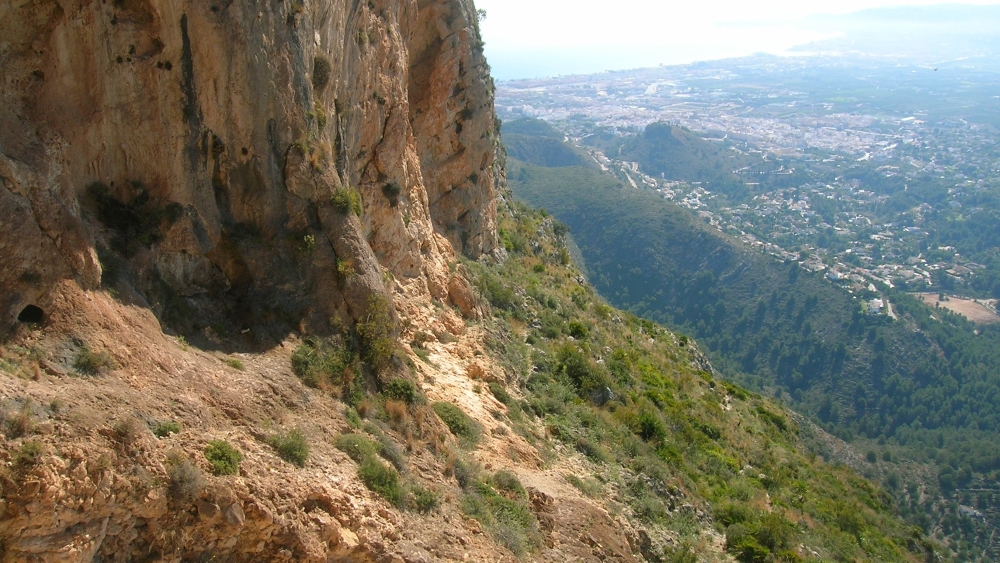
As you ascend, pause to admire the sweeping views to the south and east; it’s also a welcome chance for a breather. After about 30 minutes of steep climbing, the opening of the “Eye” comes into view, signaling a more challenging stretch ahead. The route shifts from a walk to a scramble over ever-steepening rocks. If the path seems unclear, look for boot marks on the rock or, less desirably, the occasional piece of rubbish, reminders of those who have passed this way before.
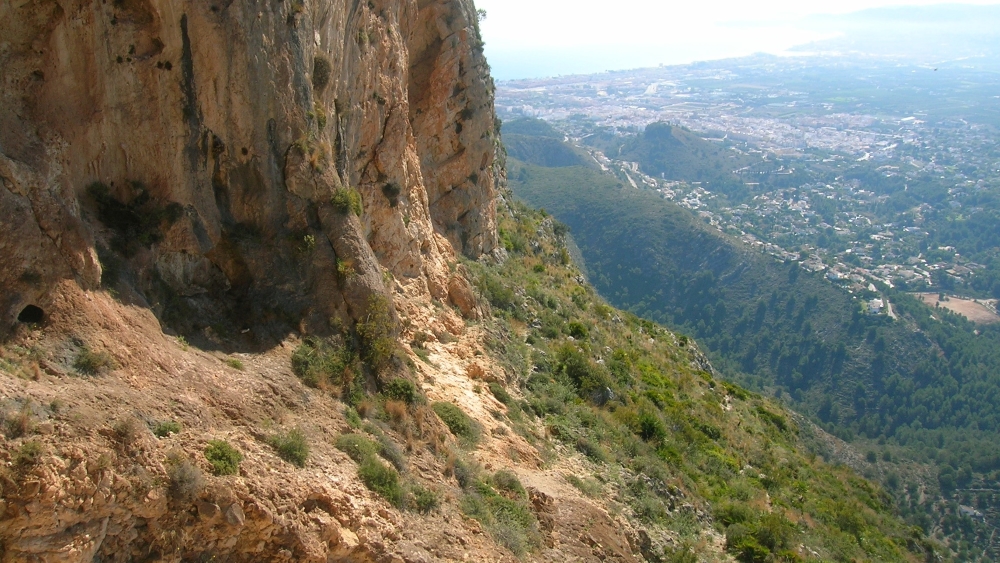
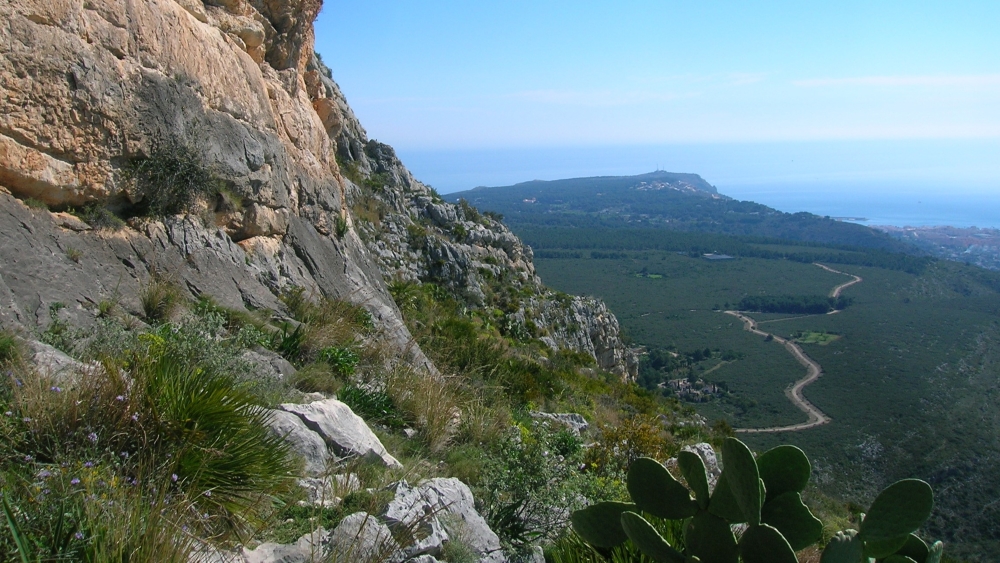
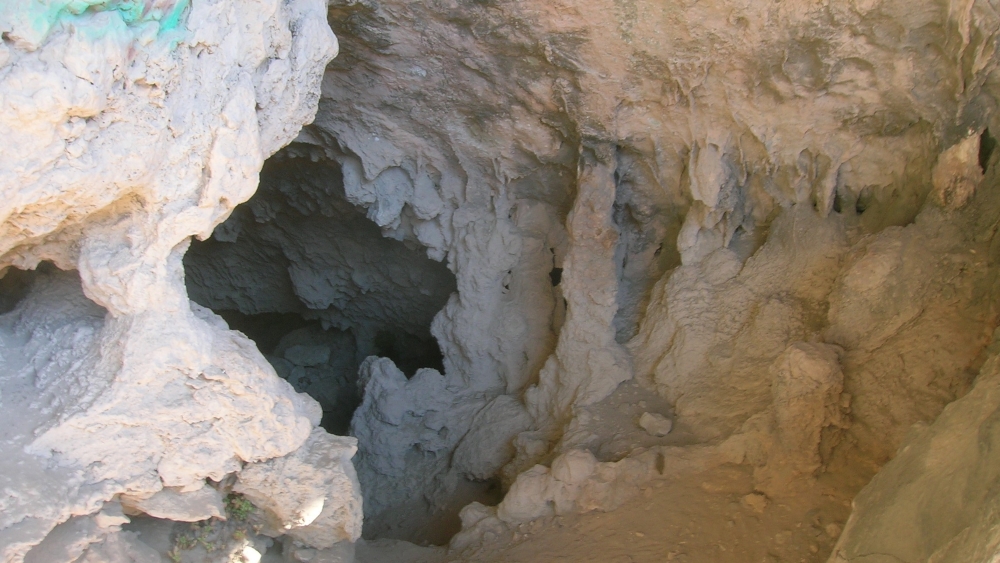
Finally, the entrance appears with a last scramble, where drops of water may fall from above, adding a touch of drama. At the threshold, a level dusty shelf welcomes you, with plenty of boulders serving as natural seats and offering breathtaking views over the valley below and the sparkling Mediterranean beyond. It’s a perfect moment to pause, soak in the scenery, and prepare for the adventure inside.
Step Inside History: A Journey Through Time
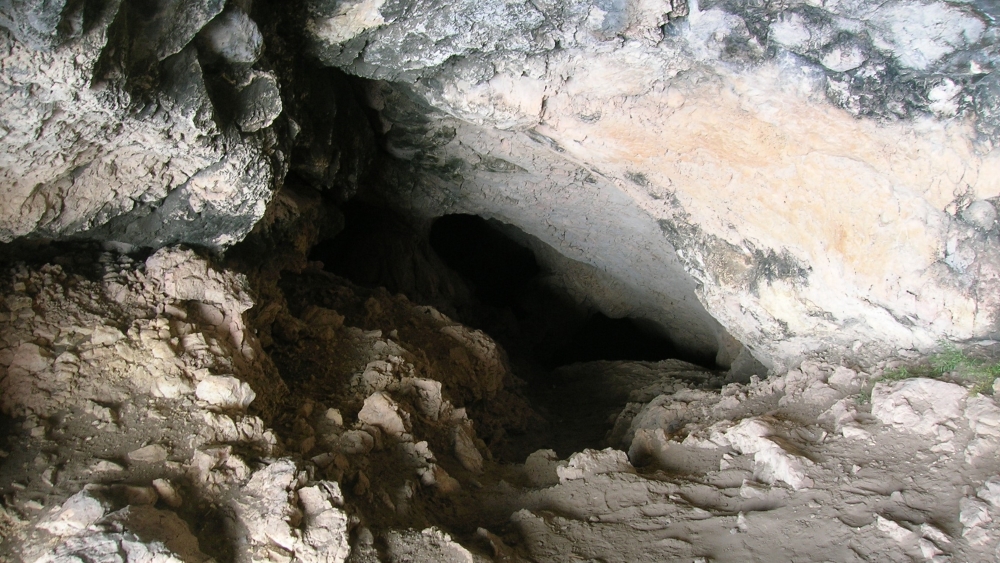
Cova Ampla is not just a dramatic rock hollow, it’s a living record of human history. From the earliest hunters to Bronze Age communities, this cave has seen millennia of human activity. Around 30,000 years ago, during the Upper Paleolithic, early humans sought shelter in the cave’s spacious entrance and galleries. Archaeologists have uncovered notched spear and arrow points from this period, evidence of skilled hunting techniques. The cave served as a temporary home and refuge, a safe haven in the rugged Montgó landscape.
By the Neolithic period, roughly 6,000 to 3,500 BCE, the cave became a more regular habitation site, reflecting the early farming and pastoral practices of the region. Painted pottery fragments with red zigzag and triangular motifs link Cova Ampla to broader Iberian Neolithic culture. Stone tools, bone implements, and personal adornments suggest a community that engaged in daily craftsmanship and artistic expression.
During the Eneolithic or Copper Age, between approximately 3,500 and 2,000 BCE, evidence shows continued occupation. The cave may have been used for more specialized activities, including metal tool production, serving as a workshop and storage space. By the Bronze Age, roughly 2,000 to 1,200 BCE, the cave also held ceremonial and funerary importance. Archaeologists discovered collective burials and human remains, alongside grave goods such as bracelets and metal tools, hinting at ritual practices and a developing sense of social hierarchy.
Cova Ampla itself is immense, measuring around 76 meters wide, 60 meters high, and 64 meters deep, with a floor area of nearly 486 square meters. Narrow passages, known locally as “gateres,” lead into inner galleries, some of which require low crawling, giving visitors an authentic sense of exploration. Sedimentary layers and artifacts carefully preserved in the cave reveal a rich stratigraphy of human activity over thousands of years.
Today, Cova Ampla is recognized as part of a network of prehistoric Montgó caves, highlighting long-term human occupation in the region. Many of its artifacts are displayed in the MARQ (Museo Arqueológico Provincial de Alicante), connecting local prehistory with the broader story of Iberian history. Its vast size, natural shelter, and strategic location made it an ideal refuge, workshop, and lookout across generations. Visiting the cave now offers a rare opportunity to step into a space that has witnessed tens of thousands of years of human life, a place where the echoes of hunters, artisans, and early farmers still linger, inviting modern explorers to imagine a world long before our own.
Views and Vistas
At the cave entrance, and throughout the accessible chambers, the panoramic views are simply spectacular. The natural framing of the cave’s opening acts like a lens, capturing the Xàbia valley and the sparkling Mediterranean, while the Montgó Massif stands like a vigilant guardian above. Photographers, hikers, and daydreamers alike will find themselves lingering here, marveling at the blend of history, geology, and sheer natural beauty.
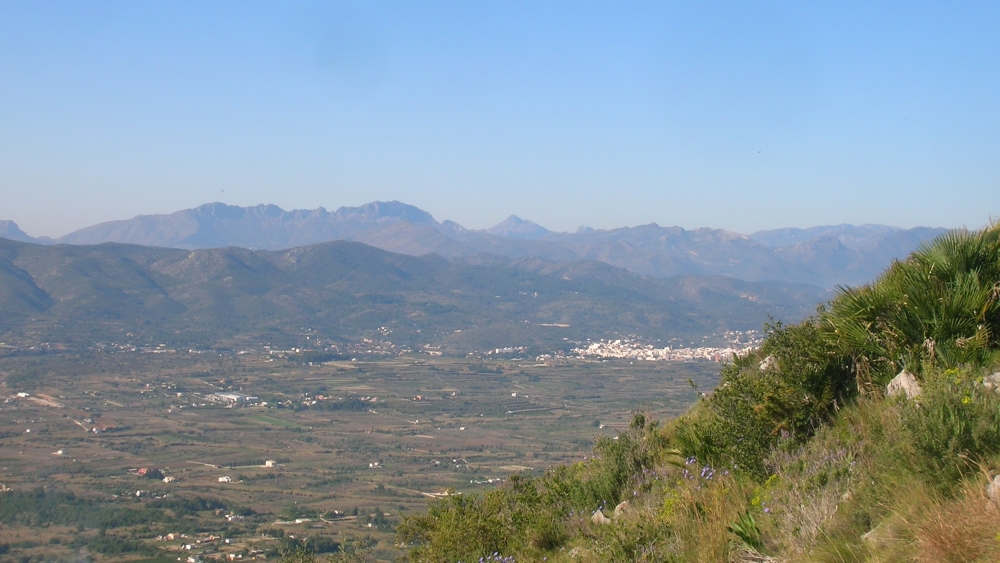
The view to the south is truly breathtaking. The peak of Puig de Llorença (445 m) with its communications masts dominates the scene, while the Peñón de Ifach of Calpe (332 m) peers over the horizon some 20 kilometres away. Between the two, almost eight kilometres distant, the tower of the church in Poble Nou deBenitatxell can be made out. Slightly to the right, 23 kilometres in the distance, the familiar jagged ridge of the Sierra Bernia, the natural barrier between La Marina Alta and La Marina Baja, rises to 1,129 m. On a clear day, the summit of Puig Campana (1,410 m), the second highest peak in Alicante province, can be spotted just beyond the ridge.
Turning to the left, the headland of Cabo de la Nao, marking the southern limit of the Bay of Valencia, comes into view, and a keen eye can just make out the lighthouse, over 11 kilometres away. Every glance offers a new layer of the landscape to appreciate, making it not only a natural lookout but also a geographic feast for those who love to explore the horizon.
Cova Ampla: Adventure, History, and Ancient Wonders
Cova Ampla is more than geology and prehistory; it’s a reminder that mountains can be hospitable when they want to be. This cavern has been shelter, workshop, refuge, lookout, and, for today’s adventurers, a window into a world before the word “world” meant very much at all.
Anyone making the trek should go prepared. The park authorities don’t provide railings, lighting, or the comforts of a tourist cave. The stone is loose in places, the passages dusty, and the mountain expects respectful visitors. But if you go with care and curiosity, the cave tends to repay the effort in panoramic views, cool air, and that rare feeling of standing somewhere that feels both deeply ancient and freshly alive.
Cova Ampla is fragile and precious. Its ancient layers are easily disturbed, and visitors are urged to tread lightly, leave no trace, and take only memories. This ensures future generations, along with archaeologists and naturalists, can continue to study and admire this remarkable site.
So lace up your hiking boots, grab your water, and set off on a journey that combines adventure, history, and breathtaking scenery. Cova Ampla isn’t just a cave, it’s Montgó’s eye, watching over Xàbia and calling out to those eager to explore its secrets.
Research Sources:
- Javea.com – Cova del Montgó
- Cuevas Alicante – Cova Ampla del Montgó
- MARQ – Provincial Archaeological Museum of Alicante
- Javeamigos.com – Energetic Wanders: Cova Ampla
- Valenciabonita.es – Ruta Cova del Gamell y Cova Ampla