
Every November 1st, Spain pauses to honour the departed. Known as Día de Todos los Santos (All Saints’ Day), this national holiday bridges the worlds of the living and the dead, not with fear or darkness, but with remembrance, light, and love.
Ancient Roots and Christian Meaning
The origins of Todos los Santos reach back to early Christianity. The celebration was first established in the 7th century by Pope Boniface IV, who dedicated May 13th as a day to honour all saints and martyrs, both known and unknown.
Three centuries later, Pope Gregory III moved the feast to November 1st, aligning it with existing seasonal festivals. The change reflected the Church’s broader effort to absorb and transform pre-Christian customs, particularly the Celtic festival of Samhain, which marked the end of the harvest and the beginning of the darker half of the year.
By intertwining these ancient traditions with Christian belief, the Church sought to neutralize pagan rituals and draw more people into the faith. Originally, the day was one of fasting and vigil, but over time it evolved into a gentler, more reflective observance, one focused on remembering all the dead rather than only the canonized saints. In Spain, the fusion of faith and folklore has created a day rich in symbolism, a celebration of both life and legacy.
But the remembrance does not end on November 1st. The following day, November 2nd, is the Día de los Fieles Difuntos – the Day of the Faithful Departed (All Souls’ Day) – dedicated to praying for the souls of ordinary men and women who have died and are still on their journey to heaven.
Together, these two days form a spiritual continuum: one honors the saints who have reached paradise; the other embraces those who are still being remembered and prayed for by the living. In Spain, the distinction between the two is subtle but deeply felt, a reminder that sanctity and humanity are part of the same eternal cycle.
A Day of Pilgrimage and Flowers
Unlike Halloween’s festive chaos, November 1st in Spain is solemn yet serene. Families dress in black or muted tones and visit cemeteries across the country. The morning is often quiet, filled with the gentle hum of conversation and the rustle of bouquets.
Graves are lovingly cleaned and adorned with chrysanthemums and marigolds, blossoms that symbolize eternal life and remembrance. Cemeteries, from the sprawling necropolises of Madrid to the tiny hillside plots of Andalusian villages, bloom into vibrant gardens of colour.
In many towns, local councils help ensure everyone can take part. Some cemeteries lie well beyond the town centre, such as in Xàbia, where it sits some distance from the heart of the old town. Each year, the town hall lays on a special shuttle service to help residents reach the site, especially the elderly or those without transport. Similar arrangements are made in other municipalities, a small but meaningful gesture that reflects the community spirit underlying the day.
It’s common to see multiple generations gathered, grandparents telling stories about loved ones long gone, children lighting candles, and the faint sound of church bells echoing through the crisp air. Many families return again the next morning, on November 2nd, to attend a special Mass for the Fieles Difuntos, quietly continuing the rhythm of remembrance.
Theatre, Death, and Redemption
Theatre has long held a place in Spain’s All Saints’ Day traditions. Since the Middle Ages, performances known as the Dance of the Dead (Danza de la Muerte) were staged in towns and church squares. In these ceremonies, the figure of Death, often depicted as a skeletal character, would parade through the crowd accompanied by a retinue of tormented souls, calling upon kings, nobles, peasants, and clergy alike, a stark reminder that death comes for everyone, regardless of station.
This early fascination with mortality evolved into a more literary and reflective tradition. It has become customary to attend a performance of Don Juan Tenorio, the famous Romantic play written by José Zorrilla and first published in 1844.
The drama tells the story of the legendary libertine Don Juan, a reckless nobleman consumed by gambling, duels, and seduction. The play opens with a bet to see who can commit the greatest misdeeds within a year, a wager Don Juan seems destined to win. But as his actions spiral out of control, his soul becomes ever more lost. In the final act, he must confront the ghosts of his past and face the possibility of eternal damnation until love itself offers the chance of salvation.
For many Spaniards, seeing Don Juan Tenorio on or around Todos los Santos has become as much a ritual as visiting the cemetery, a reminder that death, repentance, and redemption are inseparable threads in the tapestry of human experience.
Fira de Tots Sants: A Living Medieval Tradition
Not all of Spain’s All Saints’ celebrations are quiet. In the town of Cocentaina, the Fira de Tots Sants transforms remembrance into revelry. Dating back to the mid-14th century, it was originally granted by King Pere el Ceremoniós (Peter IV of Aragon), ruler of Valencia from 1336 to 1387. Now, in 2025, it celebrates its 679th edition, making it one of the oldest fairs in Spain.
Declared a Festival of International Tourist Interest in 2009, the event attracts more than half a million visitors over five days. More than 800 stalls fill the medieval streets, offering everything from regional cheeses and cured meats to handmade crafts, clothing, and household goods. Alongside these are exhibitions of the latest in farm machinery, renewable energy systems, and agricultural technology, a blend of past and present that defines the fair’s enduring appeal.
Street performers, jugglers, and musicians fill the plazas, while food stalls serve roasted meats, sausages, potatoes, and sweet treats. Children enjoy a medieval funfair, complete with games and rides inspired by the Middle Ages, a vivid reminder that Todos los Santos in Spain is as much about community and continuity as it is about remembrance.
Traditions of the Table
No Spanish holiday is complete without its culinary comforts. Todos los Santos brings with it a delicious array of traditional sweets, each with a symbolic touch. Huesos de Santo (Saints’ Bones) are marzipan rolls filled with sweet egg yolk cream, their name and pale color evoking the bones of the saints, whilst Buñuelos de Viento are airy fried dough balls dusted with sugar, often filled with cream, chocolate, or custard, said to lift souls to heaven with every bite.
In Catalonia, the celebration overlaps with La Castanyada, featuring roasted chestnuts (castanyes), sweet potatoes, and panellets, small almond cakes that mark the coming of winter.
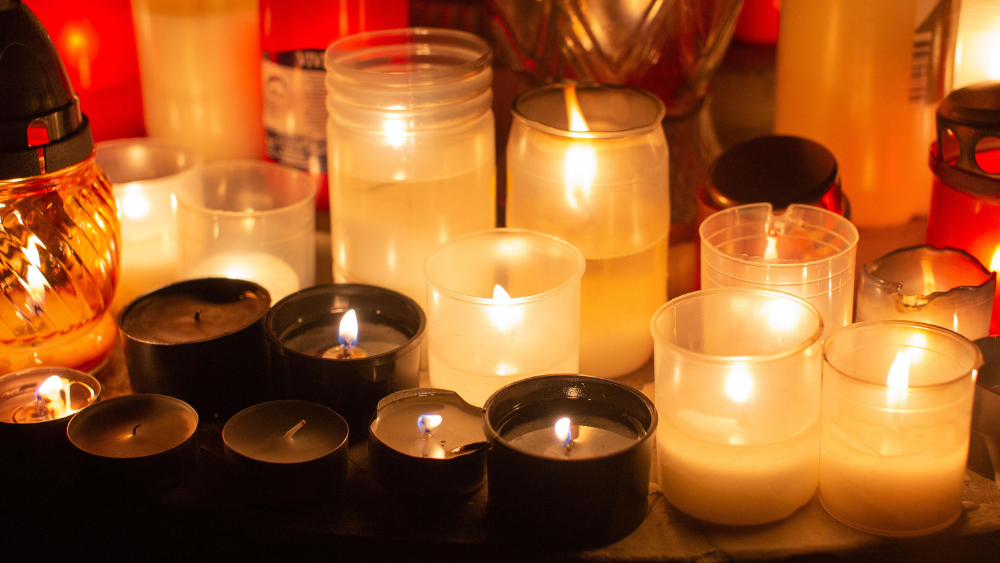
As the day ends, families gather around the table, sharing food and memories, the flicker of candles lit in memory of those who have passed echoing the warmth of the lives being honoured.
A Day Between Worlds
Living in Spain, one feels how Todos los Santos transforms the rhythm of daily life. Shops close, traffic slows, and even in the busiest cities, a hush seems to fall. It’s a day – and truly, a pair of days – to step outside time: to reflect, to remember, and to reconnect with roots that reach far beneath the surface of modern life.
As dusk falls and the last candle flickers in the cemetery, the scent of wax and flowers lingers in the cool evening air, a quiet promise that those who came before are never truly gone.