
Research and Written by Mike Smith
For years, the fiesta of San Sebastián drifted along the edges of Xàbia’s collective awareness, a quiet mid-winter murmur in a town better known for its sun-splashed summer saints. Then came 2012, and with it the revival of bull-running through the narrow arteries of the historic centre, a pulse-quickening tradition that thrust the celebration back into public view. Suddenly, San Sebastián was no longer a forgotten guardian. He was the headline act.
And that feels fitting. After all, San Sebastián is not just another saint on the local calendar. He is the town’s patron, its ancient protector, the figure traditionally entrusted with safeguarding Xàbia long before the fervour of San Juan, the bustle of San Jaime and the Moors & Christians, or the spring devotion to Jesús Nazareno ever took hold.
Exactly when he earned this role is lost to the folds of medieval life, but legend suggests it emerged during the terror of the Black Death. As disease swept across Europe with indiscriminate cruelty, people imagined infection as invisible arrows falling upon the innocent. Protection, then, was sought from a saint associated with archers. Through devotion, or perhaps providence wearing the mask of coincidence, the villagers believed San Sebastián spared them from ruin.
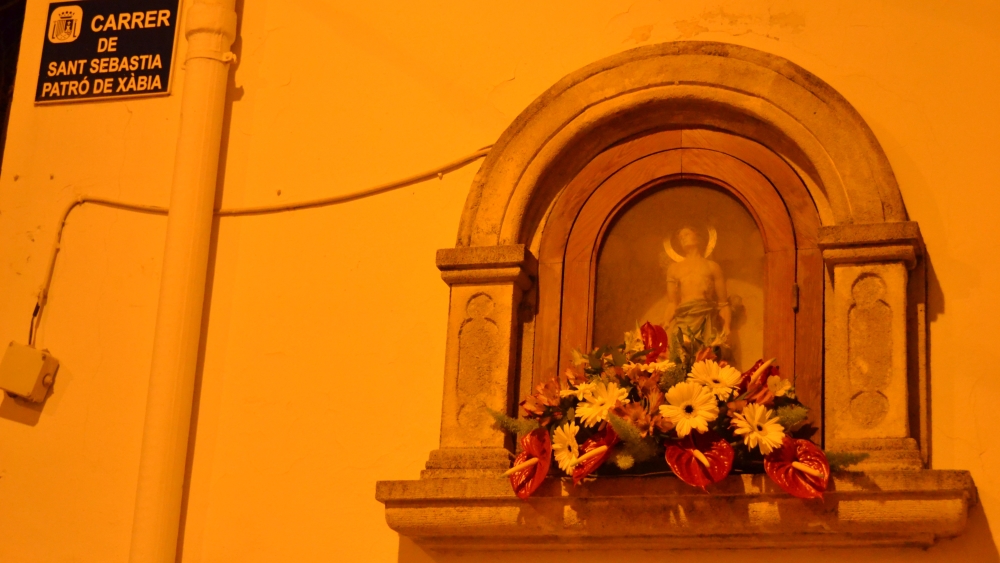
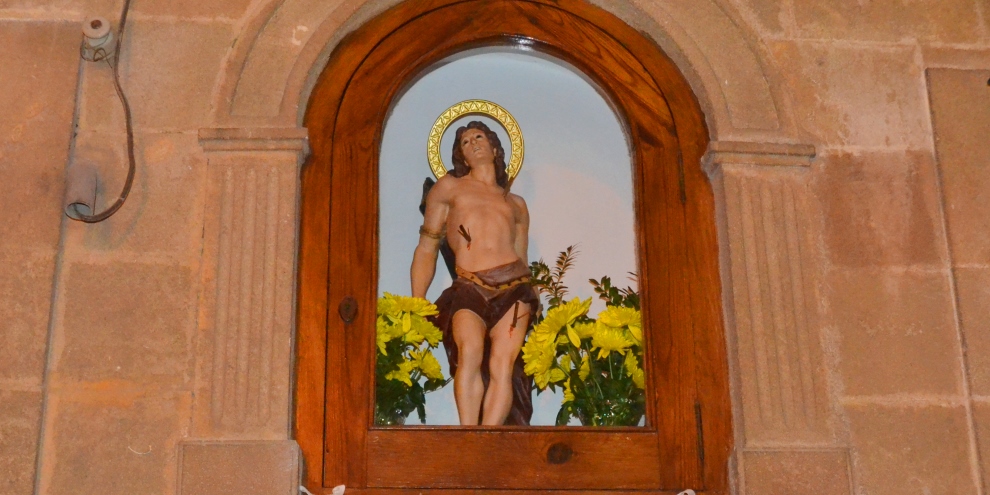
His familiar image, studded with arrows, still watches over the town from two small shrines. One rests on Carrer de Sant Sebastia behind the post office, the other near the base of Carrer Major, close to where one of the gatehouses used to be located, a barrier against disease entering the walled enclosure. In recent years, the latter had stood empty for most of the year, owing to the house owner’s personal beliefs, but during the fiesta it is briefly restored to its intended dignity. Even as the arrival of Jesús Nazareno in the 18th century shifted local devotion, a handful of residents kept San Sebastián’s flame flickering. For decades, January 20 brought only a modest procession and a solemn mass.
Then came Xàbia’s 400th anniversary as a Villa Real, and with it a surge of civic pride. The town dusted off its most historic celebration and added a modern jolt: bull-running, woven right through the old quarter. The decision split opinion with the dramatic flair of a fiesta firecracker. Love it or loathe it, the event drew crowds, and it has remained ever since. In today’s Xàbia, San Sebastián marks the opening of the year’s four bull-running festivals, each focused on agility rather than combat.
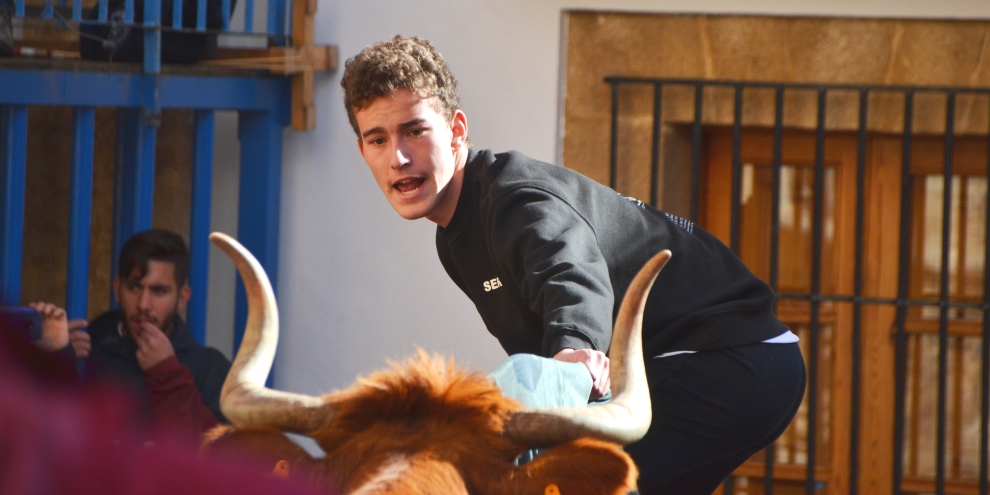
Over several days, bulls and heifers are released into an expanded arena formed by metal barriers that transform the church square and the Plaça del Baix into a grand stage of adrenaline and spectacle. The surrounding bars bubble with life, catering to both the thrill-seekers and those who prefer to enjoy the fiesta from a safe, sociable distance. The result is a lively winter gathering that pulls the community together long before the summer fiestas arrive.
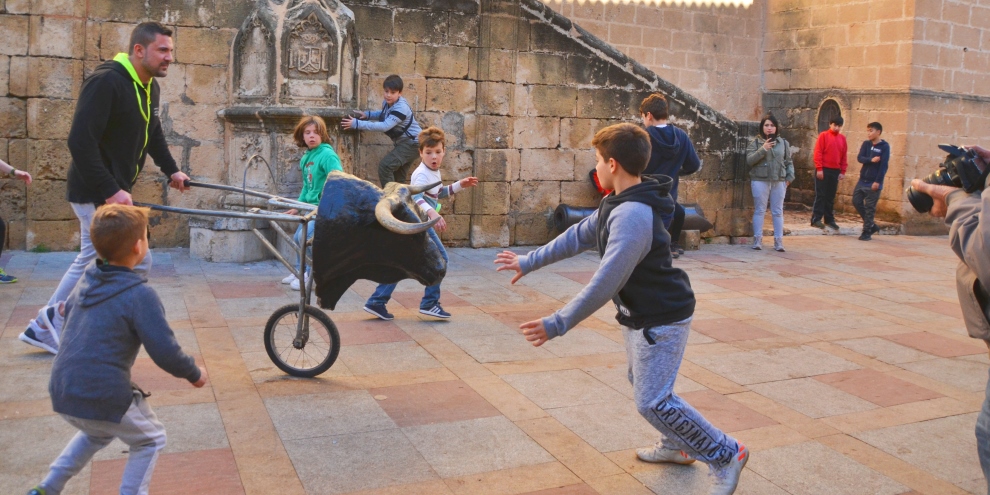
Children are folded into the festivities with gleeful chaos: carretones — bull heads mounted on carts — chase after giggling youngsters through the same arena, pushed by adults with seemingly unlimited energy and stamina , while storytelling and hands-on activities keep the youngest celebrants immersed in their own magic.
And since 2024, the celebration has amplified even further with the “Sant Sebastià Fest,” a marquee-filled bash on the Plaza de la Constitución. DJs spin through the night, live bands keep dancers buoyant until dawn, and the winter chill melts under waves of music, laughter, and shared warmth.
Once overlooked, San Sebastián now strides back into the heart of Xàbia’s cultural life, moving with the quiet authority of someone who has seen ages rise and fall yet remains unmistakably present. His return feels less like a revival and more like a memory resurfacing, a name carried back on the winter wind to the place that once entrusted him with its protection. Around him, the old streets stir, and the town gathers as if answering a long-paused call. Jávea remembers. Jávea honours. Jávea celebrates, letting its devotion ring out again through the stone corridors of its historic centre.
The Arrow-Struck Saint Who Defied an Empire
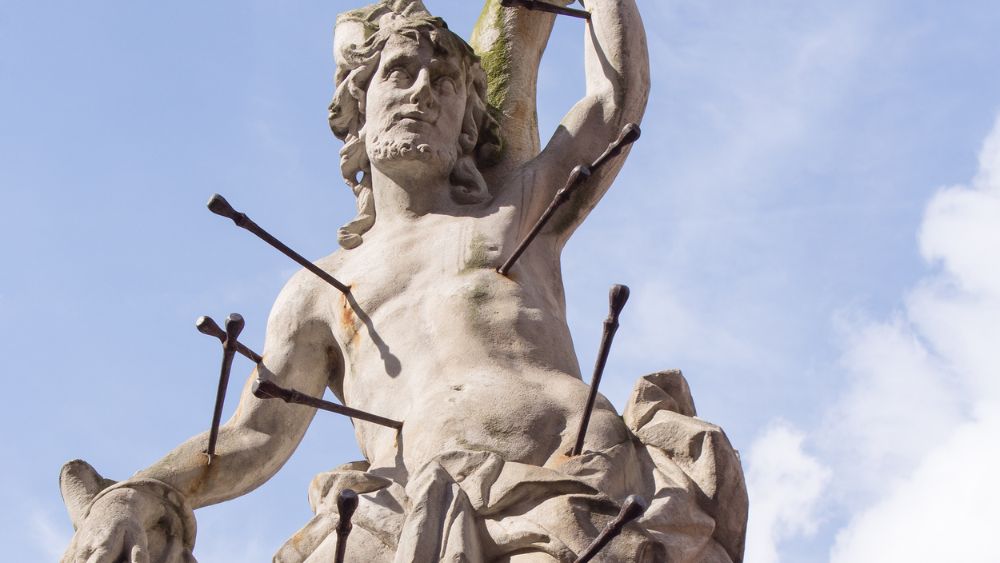
San Sebastián’s story reads like a drama carved into marble: devotion, danger, survival against impossible odds, and a final act that echoes across the centuries. Long before his image appeared in Jávea’s shrines, he was a young man of privilege in third-century Gaul, born around 256 CE into a Roman family with every advantage. Raised in Mediolanum, the bustling ancestor of Milan, he grew into a skilled soldier whose heart quietly aligned itself not with Rome’s gods, but with the fledgling Christian faith.
Around 283 CE, he joined the Imperial army. It was a daring double life, the kind that might unfold in the shaded colonnades of a palace corridor: a soldier outwardly loyal to Rome, a covert encourager of conversions behind its back. Tradition tells us he strengthened two wavering Christian deacons, Marcus and Marcellian, as they waited in prison, urging them not to renounce their beliefs. From there, his influence rippled outward. He persuaded many others to embrace Christianity, among them the son of a local prefect. One story claims that the desire to convert restored the speech of Nicrostratus’s wife after six silent years, and that her miraculous return sparked seventy-eight sudden conversions. Whether history or holy imagination, these tales reveal how intensely Sebastián inspired those around him.
His talent and discipline propelled him to the rank of captain in the Praetorian Guard under emperors Diocletian and Maximian. For a time, his faith remained hidden in the shadow of his uniform. But Diocletian, architect of one of the harshest Christian persecutions in Roman history, eventually discovered the truth. To him, Sebastián’s dual identity amounted to treachery.
His punishment was meant to be decisive. Bound to a stake in an open field, he became a living target for Mauritanian archers. Arrows laced his body, and he was abandoned to die. Yet death did not claim him. Irene of Rome, widow of another martyr, found him still breathing, removed the arrows, and cared for him in secret until he regained his strength.
Most people would have vanished into anonymity or fled the empire entirely. Sebastián instead took a step onto a public staircase and confronted Diocletian directly as the emperor passed by in his litter. His voice, newly reclaimed from death’s doorstep, condemned the cruelty of the persecutions. Rome’s response was swift and final: soldiers beat him to death with clubs, and his body was discarded in the sewers. It was around 288 CE.
From these brutal final chapters emerged a patron saint revered across continents. Archers saw in him a spiritual comrade; athletes admired his endurance; soldiers respected his unwavering protection of the vulnerable. Communities facing plague invoked his name, imagining his arrow-pierced body as a shield against the invisible dangers sweeping through their streets.
And here, at last, the thread leads to Xàbia, a town that once prayed for deliverance from disease and found its protector in a saint who had already stared down an empire and refused to yield.