Xàbia unites at last to bring desalination plant under public control
After months of political tension, all parties in Xàbia’s council finally reached a historic agreement to return the desalination plant to public management by 2026.
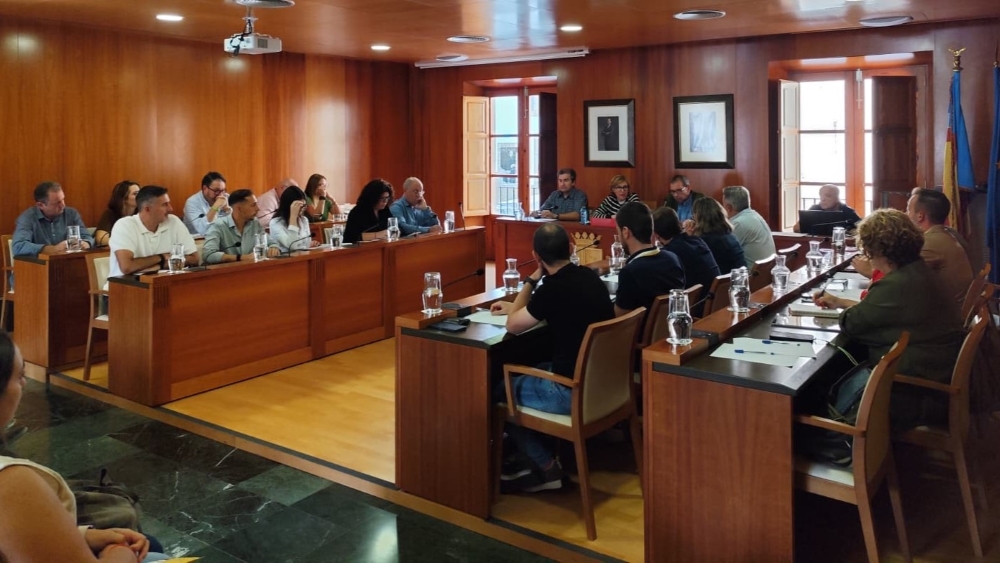
Historic, and even a little bit funny with jokes, smiles, and congratulations from every political group. That’s how Thursday’s extraordinary council meeting ended, very differently from how it began. The session, called by the Socialist opposition (PSOE) led by José Chulvi to push for the long-awaited return of the desalination plant to public hands, turned into an unexpected success story.
The PSOE got what it wanted, thanks to an ally on the other side of the chamber: Ciudadanos por Jávea (CpJ), one of the local government’s own partners. Both groups had presented separate proposals with the same goal, which forced the other two coalition members, PP and Vox, to negotiate a joint document to avoid dragging out a process that has been pending for nearly two years. In the end, everyone voted in favor.
Mayor Rosa Cardona (PP) had little choice but to accept the deal. With the votes of PSOE, CpJ, and Compromís, the motion would have passed anyway, risking a full-blown government crisis. As the meeting closed, Cardona admitted she felt like crying, presumably from relief.
That was quite the turnaround, considering she’d spent more than an hour earlier insisting it was impossible to set a date for the handover, saying too many reports were still pending and warning that doing so would be “deceiving ourselves and the public.” Yet the final motion included not one but two firm deadlines: by January 15, 2026, an extraordinary meeting will be held to officially approve the transfer of the plant to the Xàbia council; and that by April 1, 2026, the municipal water company AMJASA will take over full management.
There were even some genuinely funny moments, rare in the often tense atmosphere of Xàbia politics. The final agreement was cobbled together from fragments of the PSOE and CpJ motions, rewritten during a break with input from all sides. The mayor then had to dictate the new version slowly to the council secretary, who, in the 21st century, was still handwriting it line by line.
At one point, the secretary interrupted to say, “I’m getting lost, I want to make sure it’s clear what we’re voting on. I’ve got all afternoon, so take your time and write it properly!” Cue laughter from the chamber. The mayor tried to help, explaining like a teacher: “It’s easy; just put this here and that there.” When he finally finished, the secretary added with a grin, “Now the only problem is whether anyone can read my handwriting!” Laughter broke out again, not something Xàbia’s full council is known for.
Still, the session had its fiery side too. It marked the first time Ciudadanos por Jávea openly confronted the mayor, showing cracks in the three-party coalition. CpJ’s spokesperson Mavi Pérez called it “a disgrace” that a process begun in November 2023 was still unfinished. She reminded the council that her group had already demanded public management of the plant within three months back in June and now she was giving PP and Vox just three more.
Cardona argued that wasn’t feasible, saying that even transferring the staff from Acciona (the private company still running the plant under extension) would take six months. She cited a legal opinion from the previous council secretary, stating that the town would need to hire an external consultant to prepare a full justification report, delaying things even more.
But Pérez wasn’t having it. “We seem to take some reports more seriously than others,” she snapped. CpJ’s other councillor, Juan Ortolá, backed her up, warning that hiring an outside firm would drag the process out another year. That’s why the final deal includes a clause, pushed through by CpJ, requiring the report to be written by an in-house technical officer from the finance department. That caused another bit of confusion, as the current finance officer immediately said he wasn’t supposed to do it and didn’t know anyone who could. Yet, somehow, the clause stayed in.
Throughout the debate, Pérez kept the pressure on, saying: “We’ve fallen way behind. We don’t want to think it’s intentional, but these deadlines could be shorter. With political will, it can be done.” For a governing partner, it was quite the rebuke.
From the opposition bench, PSOE spokesperson José Chulvi joined in, accusing the mayor of “neglect and passivity” that had caused costly delays. He pointed out that the official overseeing the process had been on leave since July and was only replaced that same day, and that it had taken four months to send a required report to Acciona, something the mayor blamed on an administrative error.
Chulvi also stressed that the delay was expensive: the extension with Acciona costs taxpayers €35,000 per month, or about €750,000 total so far. “Clink, clink, clink,” he said, imitating a cash register. And while the contract drags on, the council can’t invest the planned €3 million to improve the plant, putting Xàbia’s water supply at risk, a point that finally hit home.
The final agreement added one more clause proposed by the PSOE: from now until the official transfer meeting, the council’s committee of spokespersons will meet every two weeks to monitor progress, with the technical team in attendance.
After a long, messy, and unexpectedly humorous session, Xàbia’s council finally reached what everyone agreed was a historic turning point and perhaps a rare moment of unity.
Adapted from an original article published in La Marina Plaza: CpJ y PSOE se unen para obligar a la alcaldesa a revertir la desaladora de Xàbia en enero de 2026