Xàbia at a crossroads: Leadership, power, and accountability in the wake of sexual harassment scandal
Allegations against VOX councillor José Marcos Pons have plunged Xàbia into political turmoil, testing mayor Rosa Cardona’s leadership and raising wider questions about power, ethics, and accountability in local government.
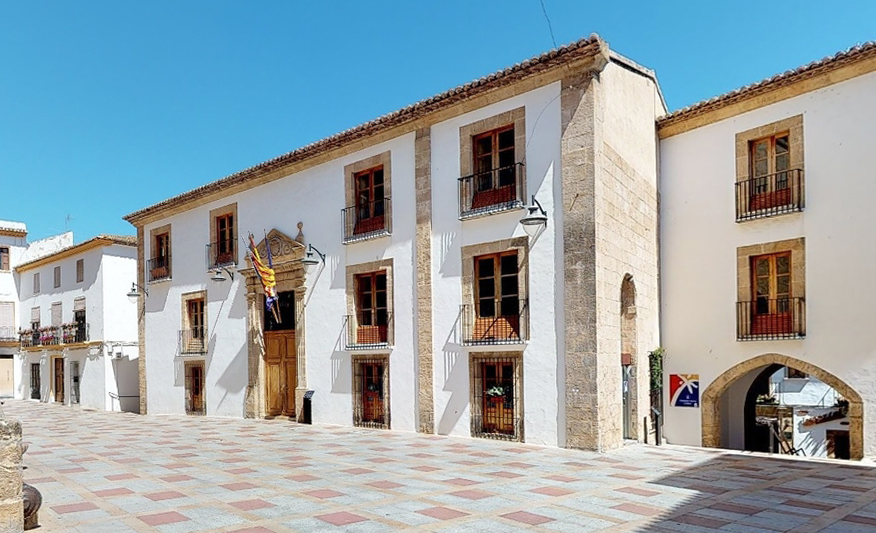
Photo: Xàbia AL DÍA
Xàbia, better known for its rugged coastline and its characteristic tosca stone, has become the centre of a political storm that reaches far beyond local municipal politics. At the heart of the crisis is José Marcos Pons, the VOX spokesperson on the local council, who faces allegations of sexual harassment from a former trusted advisor. The scandal has not only put the far-right councillor under scrutiny but has also tested the leadership of mayor Rosa Cardona (PP) and raised broader questions about power, ethics, and governance in the town.
The story came to light first through La Marina Plaza and later through Levante EMV, revealing that the advisor resigned before the summer, citing daily harassment and humiliation by Pons. Municipal sources indicate that her emotional and professional deterioration had become evident long before her departure. VOX launched an internal investigation following the complaint, but the process, initiated and managed by the party itself, has been criticized for its lack of independence.
Pons has vehemently denied all allegations. In statements on social media, he claimed that VOX’s internal committee “determined clearly that no harassment or inappropriate conduct occurred on my part” and described the accusations as a “deliberate” attempt to tarnish his and the party’s reputation. He has announced legal action against both the accuser and other actors, signaling a combative stance that mirrors his political ambitions.
The allegations have obvious political repercussions. Pons’s influence was pivotal in shaping Xàbia’s municipal government. His vote ensured Rosa Cardona’s rise to the position of mayor, displacing José Chulvi, the long-serving socialist mayor, who had won the election but lost the absolute majority. Pons’s desire for control over key delegations – tourism, with its influence over the town’s image, and the water distribution network and public supply company, which oversees the desalination plant and major infrastructure projects – underscored the ambition and strategic calculation that has defined his political trajectory.
Yet the crisis is also a story of leadership under pressure. Mayor Cardona has faced competing pressures: the presumption of innocence, the political sensitivities of coalition governance, and the ethical imperative to protect potential victims. Her response has been measured but decisive. She removed Pons from his delegations only after careful consideration, after listening to the victim, and after weighing the potential repercussions for the town’s governance. Sources close to the mayor emphasize that her priority has been the protection of the victim and the defence of public trust.
Observers have noted that the far-right councillor’s reaction, which have included threats against the mayor in council sessions and promises to disrupt proceedings, reveals a deeper issue of toxic power. Analysts describe his behaviour as the classic fusion of authority with personal dominance, the very dynamic that workplace harassment protocols are designed to prevent. Pons’s ambitions, evident since his election campaign and captured in symbolic moments like his handshake with VOX leader Santiago Abascal, reflect a political approach rooted in control and image rather than public service.
The broader political landscape has reacted accordingly. The Socialist municipal group demanded Pons’s immediate resignation and called for precautionary measures while the investigation continues. PSPV-PSOE has also publicly asked the mayor to clarify when she became aware of the harassment complaint and why protective measures were not immediately enacted. Compromís per Xàbia has also joined calls for stronger prevention, protection, and awareness policies.
At its core, the Xàbia scandal is a test of democratic values, institutional responsibility, and moral courage. It highlights how ambition, power, and personal ambition can intersect with public governance, creating situations where the vulnerable are left at risk. It also underscores the importance of principled leadership: the ability to make difficult decisions not in service of expediency or political calculation but in defence of justice, ethics, and the well-being of the community.
In this sense, Xàbia’s crisis is symbolic. Like the tosca stone from which much of the town is built, the mayor’s authority is defined not by flashiness or bravado but by resilience, ethical consistency, and the protection of the vulnerable. Her actions send a clear message: in Xàbia, as in any functioning democracy, power carries responsibility, and toxic power will not be tolerated.
This moment is also a reminder that political leadership is as much about character as about policy. While Pons represents ambition untempered by accountability, Cardona’s measured firmness shows that integrity and ethical governance can withstand the pressures of coalition politics, media scrutiny, and personal threats. For the citizens of Xàbia, the lesson is clear: safeguarding democracy and human dignity requires vigilance, courage, and leaders willing to act decisively when the stakes are high.