Regional Government Confirms Albufera Has Lost 10 Centimetres of Depth in Two Decades
A 2025 study has revealed over two million cubic metres of sediment, worsened by the 2024 floods.
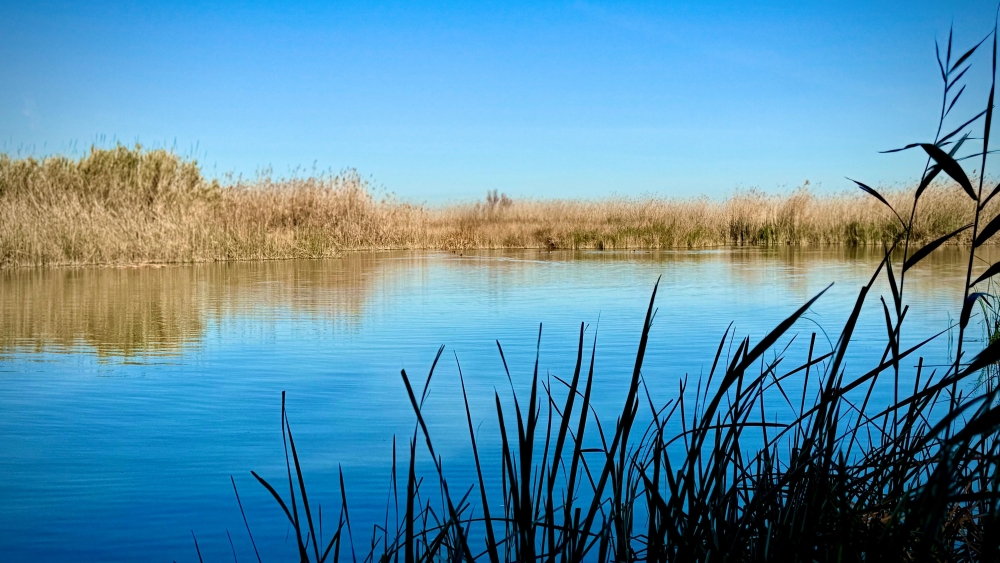
The Generalitat Valenciana has confirmed that L’Albufera, the vast freshwater lagoon and protected natural park located just south of the city of Valencia, has lost nearly 10 centimetres of depth over the past two decades, a process significantly intensified by the floods of 2024.
The findings were presented by the regional Vice Presidency and Department of Environment, Infrastructure, Territory and Recovery, based on the 2025 bathymetric study carried out in collaboration with the Universitat Politècnica de València. The study reveals a steady increase in sediment accumulation on the lakebed, leading to a loss of 9.7 centimetres in average depth since 2003.
Vice President and Regional Minister for Environment, Infrastructure and Territory, Vicente Martínez Mus, stressed that “L’Albufera is changing” and acknowledged that the progressive loss of depth has accelerated, making action essential to safeguard water quality, biodiversity and traditional activities such as fishing and navigation.
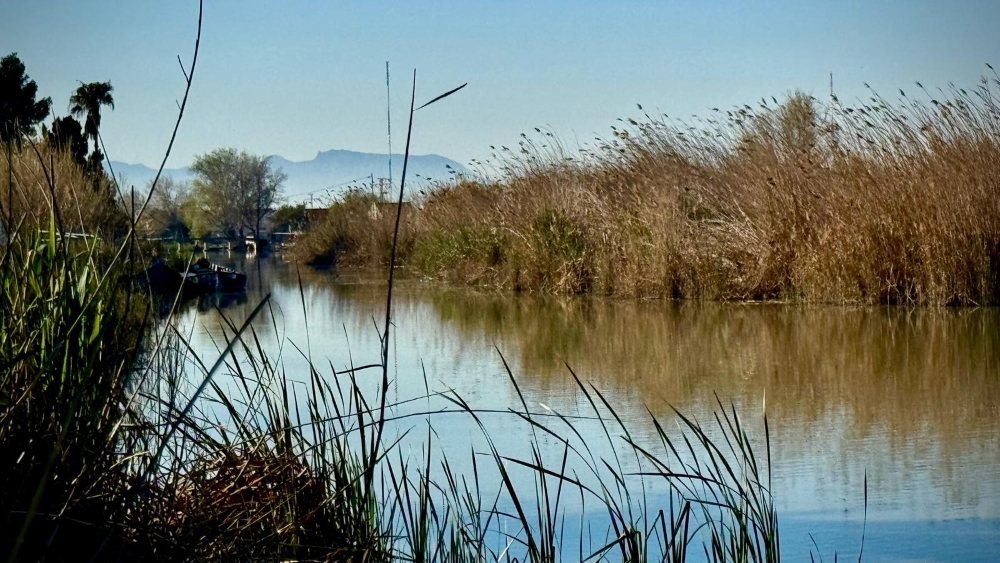
The new report compares current data with the 2003 bathymetric survey, vastly expanding the sample size from 76,000 to more than 728,000 measurement points. The results show that the lakebed has risen by an average of 9.7 centimetres, representing a 12.89 percent increase relative to 2003 levels. In total, more than 2.16 million cubic metres of sediment have accumulated in the lagoon basin. As a result, average depth has decreased from 0.74 metres to 0.66 metres, a decline exacerbated by the severe weather event of October 2024.
During the presentation, Martínez Mus outlined the regional government’s roadmap, built on three guiding principles: science and transparency, prevention rather than reaction, and institutional co-responsibility. He highlighted the creation of a specific working group on L’Albufera within the joint flood response commission established with Spain’s central government. To date, 100 million euros have been invested in the natural park and surrounding municipalities to prevent discharges following the floods and to remove waste, including hazardous materials.
“Governing means relying on evidence,” he said, defending the need to anticipate degradation before it becomes irreversible and to strengthen coordination among administrations, noting that “L’Albufera does not understand administrative boundaries, only ecological balance.”
The department is advocating hydraulic infrastructure investments to reduce sediment inflows, restoration work in key ravines, measures to improve water quality, and continuous technical monitoring of the lagoon basin. Wetlands are also to be prioritised in climate change adaptation policies. Selective dredging in specific areas is under consideration, guided by the findings of this latest bathymetric study.
Martínez Mus emphasised that protecting L’Albufera means protecting biodiversity, migratory birds, a unique cultural landscape and the livelihoods of many families. The study confirms that the lake has accumulated more than two million cubic metres of sediment in two decades, that its morphology is shifting, and that extreme weather events can accelerate silting processes, though public intervention can mitigate their impact.
Data indicate an average annual sedimentation rate of 4.41 millimetres, consistent with recent historical records, although extreme episodes significantly speed up accumulation and require corrective measures. In the most unfavourable low-water scenario, nearly 22 hectares, representing 0.98 percent of the lake’s surface area, now have insufficient depth for traditional navigation, reflecting the ongoing trend of shallowing waters.
The study also identifies a recent change in the consistency of the lakebed following the October 29, 2024 flood, which directly altered the lake’s morphology. Significant sediment inputs were traced to the southern sector, particularly from the Poyo ravine. However, the minister noted that coordinated management of the sluice gates helped channel a substantial portion of these sediments out to sea, preventing an even greater degree of infilling.
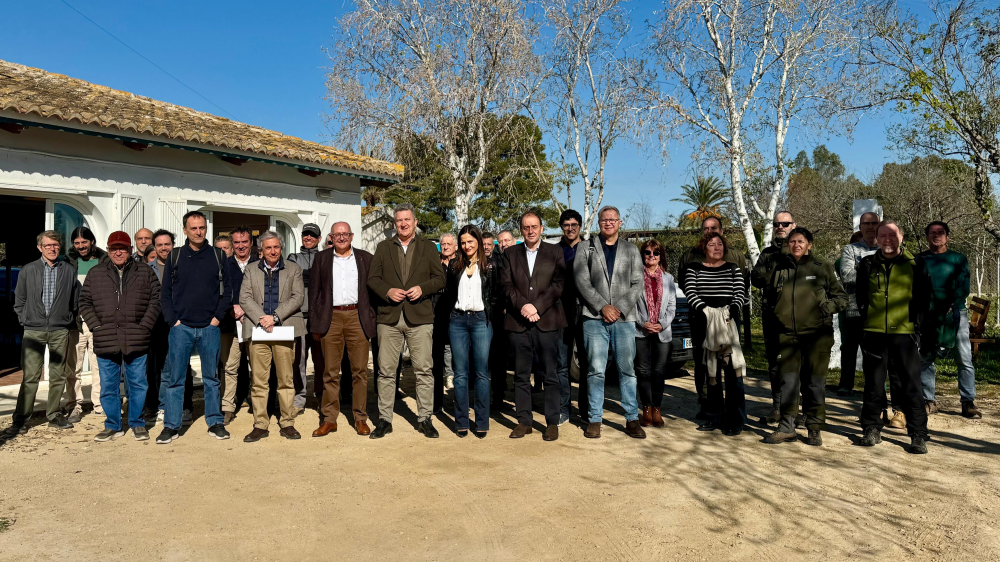
Also in attendance were the Commissioner for Recovery, Raúl Mérida; the Regional Secretary for Environment and Territory, Sabina Goretti Galindo; the Director General for Natural and Animal Environment, Luis Gomis; and Professor Josep Pardo, Chair of Cartography, Geodesy and Photogrammetry at the Universitat Politècnica de València.