
Researched and written by Mike Smith – December 2025
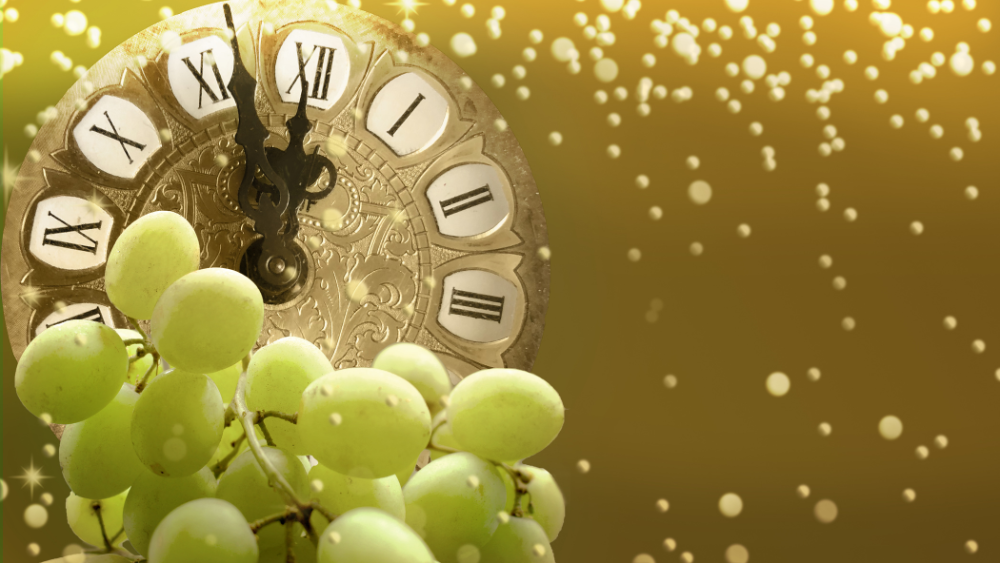
As midnight approaches on New Year’s Eve in Spain, celebrations pause for a nationally synchronized ritual. As eyes across the country turn to Madrid’s Puerta del Sol, where the famous clock above the Casa de Correos becomes the unlikely star of a national television event, families hush, party chatter drops to a whisper, and glasses are momentarily forgotten. This is serious business. Grapes are at the ready.
When the clock begins its measured chime, Spaniards embark on a ritual that is part tradition, part endurance sport. One grape per bell. Twelve bells. Twelve chances at good luck for the year ahead. Miss one, and you’re allegedly inviting misfortune. Nail all twelve, and the future looks juicy.
The origins of this grape marathon are delightfully practical. In the early 1900s, Spanish winegrowers found themselves staring down an overenthusiastic harvest. With grapes to spare and bills to pay, they promoted the idea of eating twelve grapes at midnight for luck. The public obliged, and a century later the tradition is as entrenched as the Puerta del Sol clock itself.
The spectacle in Madrid is only half the story. Across Spain, the same scene plays out in living rooms, town squares, and bars, each with its own local flourish. In Catalonia, the grapes might be followed by cava, the region’s sparkling pride. In Andalusia, celebrations spill outdoors, fueled by warmth, music, and neighbours who insist the night is still young. In Galicia, seafood feasts often steal the spotlight long before the bells even begin.
Then there’s the red underwear. No one seems entirely sure who started it, but many Spaniards swear by it. Worn on New Year’s Eve, red undergarments are said to summon love, passion, or at least a bit of romantic luck in the coming year. Practical advice accompanies the superstition: they should be new, preferably gifted, and sometimes discarded immediately after. Fashion with a countdown.
Once the grapes are swallowed and the final chime fades, Spain erupts. Kisses are exchanged, fireworks crackle, and the night stretches luxuriously toward dawn. Clubs fill, street parties bloom, and churros with hot chocolate make their timely appearance as the unofficial breakfast of champions.
In Spain, New Year’s Eve is less about quiet reflection and more about collective timing. A nation chewing in unison, hoping the next twelve months are as sweet as the last grape sliding down at midnight.