Javea Government Moves to Ease Holiday Rental Ban, Sparking Political Clash
PP–CpJ coalition outlines new licensing limits for tourist accommodation as PSOE warns of housing pressure and town saturation.
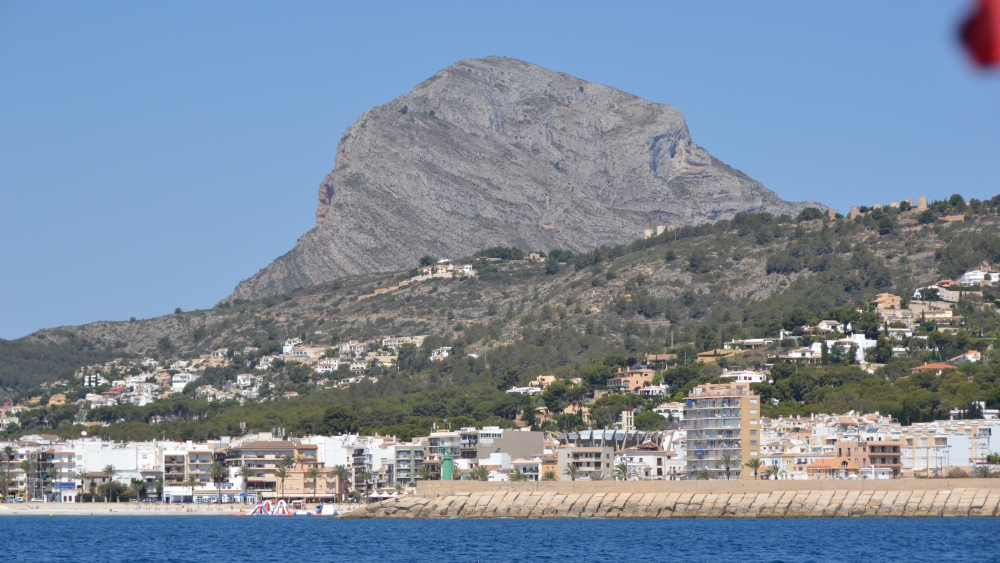
The local government of Javea, formed by the Popular Party (PP) and Citizens for Javea (CpJ), has unveiled its roadmap for the municipality’s tourism future, placing holiday rentals at the centre of a growing political dispute.
Under the proposed plan, the coalition intends to lift the current ban on new holiday rental licences and allow fresh authorisations, provided they remain within set percentage limits that vary by area. The caps would be 7 percent in the historic centre, 15 percent in Duanes, and up to 25 percent in the Tossalet zone.
The strategy was defended by Pere Sapena, the PP councillor for Urban Planning at a meeting of the Urban Planning Council. However, it immediately drew strong criticism from the opposition PSOE, which argues that the town has already reached, or exceeded, its sustainable capacity for tourist accommodation.
In a statement, the socialists, led by former mayor José Chulvi, warned that “Javea cannot sustain the current number of holiday homes, let alone continue growing towards 5,000, as the ruling team proposes.” According to PSOE calculations, applying the proposed percentages would increase the number of registered holiday homes from around 4,000 to more than 5,000, adding an estimated 3,000 new tourist beds.
PSOE councillor Vicent Miralles described the proposal as irresponsible in the current housing context. “At a time when housing is unaffordable for residents, long-term rentals are scarce, and conflicts intensify every tourist season, it is unacceptable that the PP wants us to keep growing at any cost,” he said. From this standpoint, the socialists are calling for a total moratorium on new holiday rental licences.
Miralles went further, framing the issue as one of overall quality of life. “This is not just about access to rental housing,” he said. “It’s about the saturation of our town, our natural resources, and our infrastructure. Adding 1,000 holiday homes means 3,000 more tourists. Does anyone really believe that can happen without destroying our quality of life?”
The PSOE also noted that these figures do not include illegal holiday rentals, additional hotel beds, or properties that have been deregistered as tourist accommodation but continue to be marketed to visitors under alternative legal arrangements.
Calling for broader political engagement, the PSOE in Jávea urged “reflection and dialogue among all political groups” to address what they describe as a pressing and structural problem. They warned that they would use “every political means at our disposal” to force a full debate, insisting that the municipal plenary session must ultimately decide the town’s course. “All groups must take a clear position and assume responsibility towards residents,” they said.
The PSOE has also questioned the technical basis of the proposal, claiming there is “no report supporting the arbitrary limits presented” by Sapena. They pointed out that different percentage caps were discussed at the previous Urban Planning committee meeting, which they say demonstrates inconsistency and a lack of consensus. Earlier ideas to restrict holiday rentals by property type were also abandoned, a move the socialists described as “arbitrary.”
Javea’s debate mirrors a wider national conversation. Across Spain, the rapid expansion of holiday rentals has become a flashpoint, particularly in tourist-heavy cities and coastal towns such as Barcelona and Malaga. Rising property prices, shrinking long-term rental markets, and growing tensions between residents and short-term visitors have prompted regional and national authorities to introduce regulatory measures, though enforcement remains uneven.
As a result, many municipalities are left to define their own limits, balancing tourism, a key economic engine, against the need to safeguard affordable housing and sustainable living conditions. In popular destinations like Javea, the seasonal influx of visitors often places additional strain on infrastructure and services, intensifying the debate over how much tourism is too much.