UPDATE: V-16 emergency light required in all vehicles in Spain from January 1st 2026
Essential guidance for drivers in Spain, shared courtesy of the Facebook group “Spanishtrafficlaw” (ex N332), a community dedicated to helping international residents understand changes in traffic regulations.
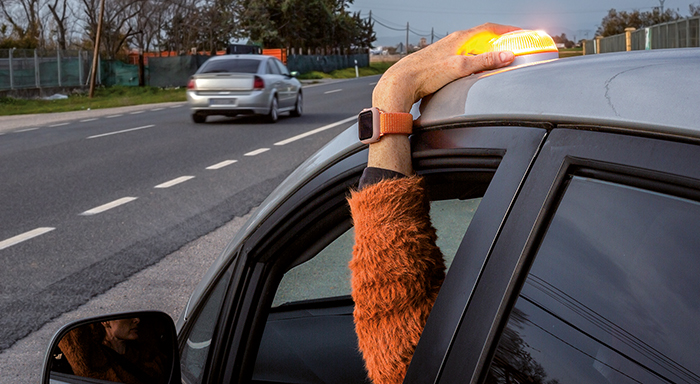
If you’re shopping for a V16 emergency light this Christmas, whether for yourself or as a gift, it’s important to know that not all lights currently on the market meet Spain’s road-safety requirements. In fact, three different types of products are being sold right now, and only one of them will remain legal after January 1st 2026. Misleading offers are common during the holidays, so understanding the differences can save you money, stress, and potential fines.
According to information shared by the Facebook group Spanishtrafficlaw (ex N332), which helps the international community living in Spain stay up to date on traffic regulations, here’s what you need to know:
The first type is a simple orange flashing light, usually priced under €10 with online stores such as Amazon, that is neither approved nor connected to the DGT. It’s fine for decoration, but it is not legal for vehicle use and offers no certified safety features.
The second type is the first-generation V16 light, released in 2018. This version is approved, but it lacks both geolocation and a microSIM, meaning it cannot communicate with the DGT 3.0 platform. While still valid today, it will no longer be legally accepted after January 1st 2026.
The third, and only future-proof option, is the new connected V16 light. This updated model is fully certified by the DGT and contains the required internal geolocation chip and microSIM that automatically send your vehicle’s position to the DGT 3.0 platform. From 2026 onward, this will be the only V16 light legally recognised in Spain.
One crucial detail to keep in mind: the first-generation approved V16 and the new connected V16 look almost identical from the outside. The difference is hidden in the technology inside the device. For that reason, it’s essential to check that the packaging clearly states “CERTIFIED AND CONNECTED.” If those words are missing, the device will not meet the legal requirements.
As enticing as holiday discounts may be, buying a non-approved or soon-to-expire emergency light can leave you unprotected – and out of pocket – within a year. This Christmas, choose safety and legality first, and rely on trusted information sources like Spanishtrafficlaw to stay informed about the latest traffic regulations in Spain.
The very helpful website N332 Spanish Traffic Law has produced a list of V16 emergency beacons which have been approved by the DGT, including a selection that can be bought from Amazon. Click here for more information.
Source: spanishtrafficlaw.n332.es
UPDATE 1
Firstly, the recommended place to store the V16 emergency light is inside the vehicle, logically in the glove compartment, so that the occupants are not forced to leave the vehicle to retrieve the light from the back of the car, for example. This is the whole point of the beacon; to improve safety.
Secondly, whilst the DGT have said that warning triangles should not used from January 1st 2026, it has been advised by travel organisations to keep the triangles in the car for the scenarios where the V16 emergency light might not be as effective as a triangle, such as a car fire.
UPDATE 2 · 05/12/2025
On Friday 5th December, the DGT issued a statement to debunk the false rumour circulating about the V16 emergency light.
The V16 beacon only transmits the vehicle’s location when it is activated, and exclusively for safety purposes. It does not record speed, does not track movements, does not transmit personal data, and cannot identify license plates. All data received by the DGT is anonymous.
The Spanish Data Protection Agency has confirmed that “the beacon is not associated with any person or license plate, and there is no registry linking the device to the identity of the user.”
In addition, no personal information is required to purchase an approved and connected V16 beacon. If you are asked to complete a registration when purchasing the light, this is a marketing strategy by the company that has either produced or provided it and nothing to do with the official authorities.
UPDATE 3 · 09/12/2025
The V16 Emergency Beacon: What it does not do.
- It does NOT call 112 automatically.
- It does NOT notify your insurance or a tow truck.
- It does NOT send emergency details — only a map point.
- It does NOT replace the eCall system in modern cars.
- It DOES send any notification if you’re unconscious or unable to place it.
- It does NOT alert emergency services — the signal goes ONLY to DGT 3.0*.
The V16 is a not a rescue system. It is simply a flashing beacon with geolocation.
*DGT 3.0 is Spain’s General Directorate of Traffic (DGT) initiative to create a unified, real-time traffic information platform, connecting vehicles, infrastructure, and users for safer, smarter mobility by sharing anonymous data on incidents like accidents, roadworks, and traffic jams, primarily through mandatory connected V-16 emergency lights and future vehicle integrations.
Source: Spanishtrafficlaw (Facebook)