
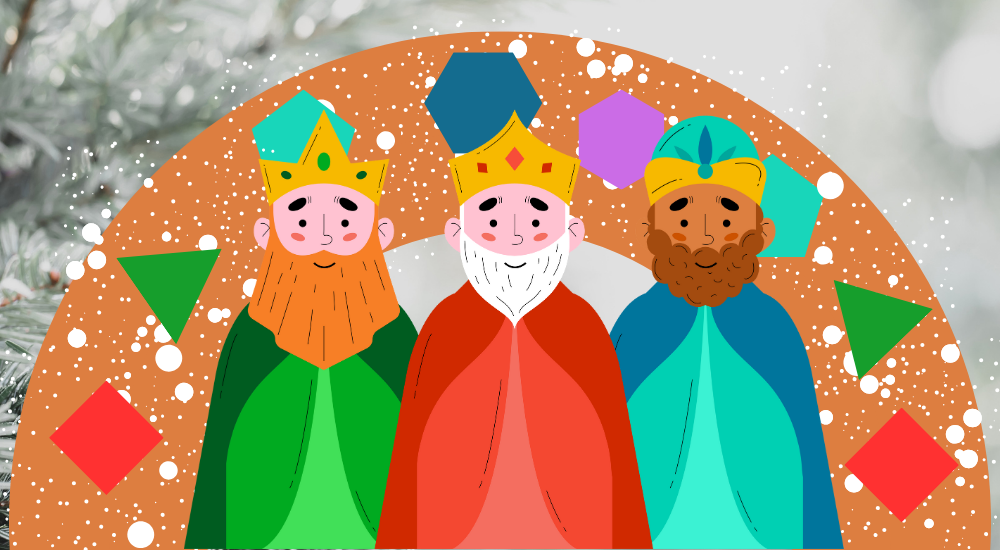
“Here is the Roscón de Reyes, a great banquet tradition which conceals two surprises for those who are lucky. In it, very well hidden, there is a bean and a figure; whoever is going to cut it must do so without mischief. Whoever finds something a bit hard in their mouth, may have the bean, or they may have the figure. If you have found the bean this dessert you will pay, but if it is the figure, you’ll be crowned and King for a day”.
The Roscón de Reyes is a traditional sweet brioche-like bun which is eaten at the end of the Christmas season, usually on the evening of January 5th and on the following day, January 6th, Epiphany, when the Three Kings came to visit the baby Jesus in Bethlehem.
Supermarkets and bakeries across the country will have stocked up on the roscón and you’ll normally find them piled up in the freezer section.
It is traditionally made from bread flour, sugar, milk, butter, eggs, fresh yeast along with orange and lemon zest, shaped into a ring or crown and covered in frosted fruits which imitate the precious stones of a crown. The inside is often filled with cream, chocolate or other fillings.
Hidden inside the roscón is a small figure, often one of the kings, and a roasted bean. The person who finds figure will be crowned king for the day – a cardboard crown is often included in the box – whilst the person who finds the bean will have to pay for the roscón. It’s rather similar to the UK tradition of hiding a silver coin in the Christmas pudding.
Another tradition in Spain is that whoever finds the figurine in their slice of cake will have the honour of hosting dinner on ‘el Día de la Candelaria’, known as Candlemas, on February 2nd, the Christian feast day that formally brings to Christmas period that began with Advent to a conclusion.
The Origins
The origin of the roscón is shrouded in mystery. Some historians claim that it originates from the Roman festival of Saturnalia which was celebrated every December and during which round cakes were often handed out, inside which was a dry bean, a symbol of prosperity. Whoever found it was crowned ‘king for a day’.
Fast forward a few centuries and these cakes had become popular throughout Europe during the 18th century, the dry bean having been replaced by a gold coin, and they reached Spain during the reign of Felipe V. During the 19th century, the gold coin was replaced by the figure and the bean, the latter now having a negative association as whoever found the bean having to pay for the cake, the ‘tonto del haba’, the bean fool.
However, there is evidence that the origin of the roscón actually dates back to an 11th century Christian festival known as ‘the king of the bean’ during which a child was chosen from amongst the poorest of the town to be crowned as ‘the King of Epiphany’. In their homes, the people ate a large roscón inside which was hidden a surprise and whoever received it in their slice was crowned king and got to preside over the table.