
The Origins of Spain’s “El Día del Trabajador“
May 1st is known as Día del Trabajador in Spain. It originated in May 1889 when two different largely peaceful demonstrations – one socialist and the other anarchist – took place in Madrid to support workers’ rights. Elsewhere, there was violence; Valencia and Barcelona saw noise protests and scuffles whilst a state of war was even declared in the Pais Vasco, the tensions eventually calming down on May 21st.
Despite the violence, it was accepted that the working class needed attention and, although the Spanish authorities prohibited demonstrations the following year 1890, the socialists changed their tactic to focus on fighting for workers’ rights in celebration rather than revolution; the anarchists, faced with an inability to cause chaos through protest, loss interest.
El Día del Trabajador was officially declared a national holiday in 1931 with the emergence of the Second Republic of Spain. Over 300,000 people marched in Madrid to hear president Niceto Alcala-Zamora declare what he called ‘the end of social antagonism’.
The official celebration didn’t last long. In 1937, as civil war raged across the country, General Francisco Franco, leader of the Nationalist forces who had been formally recognised as Caudillo of Spain a few months earlier, abolished it, replacing it with the Fiesta de la Exaltacion del Trabajo – “Labour Praising Day” – which would be held every year on July 18th, his birthday.
In 1955, Pope Puis XII declared May 1st as the feast day of San José Artesano, who was also known as San José Obrero, the patron saint of workers, and Franco incorporated it into the national calendar othe following year. In 1957, the Union Organization of Education and Rest organised a demonstration of arts and sports by selected groups of “workers” to be performed for Franco in Madrid. During the 1960s, there was a rise in peaceful protests by workers on May 1st but the Francoist State cracked down on those involved and participation in protests fell markedly.
After the death of Franco in 1975 and throughout the transition to democracy, the celebration of May 1st as a day to express working class complaints was tolerated by the authorities until finally, in 1977, thousands of members of Spain’s trade union groups were able to protest once again on the streets of Madrid, calling for fair wages, stable jobs and increased social protection.
In 1978, it was re-legalized as a national holiday in Spain and a chance for trade unions to organise demonstrations or organise meetings and rallies to discuss strategies and objectives for the following year. They remain a peaceful and effective method for the representatives of Spain’s working class to present their concerns and demands to both their employees and the Spanish Government.
Las Cruces del Mayo in Xàbia
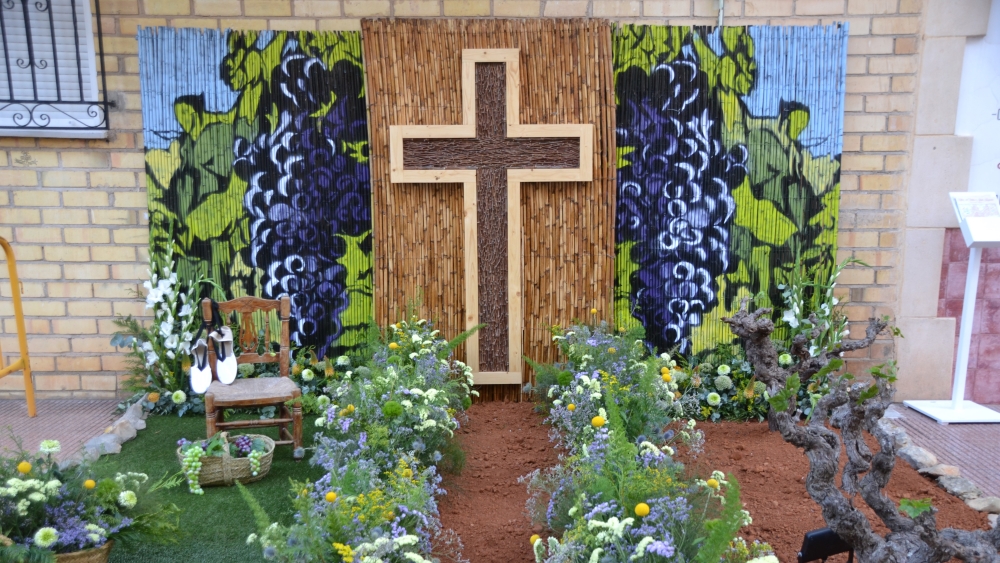
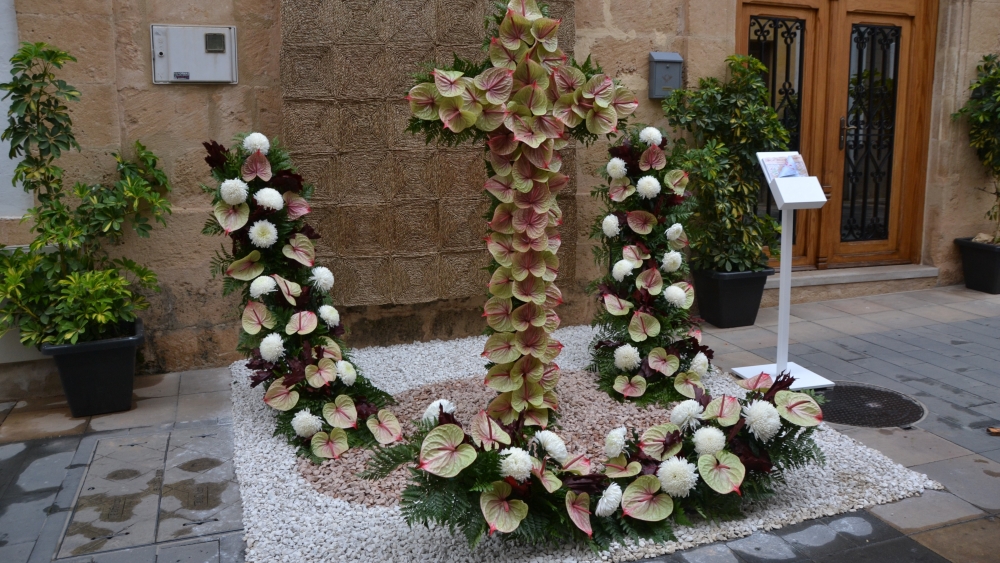
In Xàbia, the arrival of the first day of May sees several decorated crosses appear through the historic centre, its surrounding neighbourhoods and in Duanes de la Mar (the port zone) – a location map can be picked up from the Tourist Office or from one of the crosses – many of which made from colourful flowers and natural materials.
Although anyone can place a cross in the streets and balconies (subject to following the regulations), it it the mayorales, who are residents selected to represent the fiesta, who place the main crosses outside their homes or somewhere in their street. Until 2025, these representatives were exclusively male, but a change to the policy of the Brotherhood of Jesús Nazareno has allowed female residents to be selected and Martina Roselló, María Roselló, Marta Domenech and María Tur would become the first females to represent the fiesta and place their own crosses.
Planning takes months; professional designers are often tasked with creating a stunning visual image to outdo others. The cost is phenomenal, usually more than 2,000 euros, and the dedication to put together such beautiful creations is admirable, although quite often neighbours muck in to help out, spending hours sticking on flowers and plants so that the cross is ready for its reveal on May 1st.
During the late morning of May 1st, a small informal procession visits those crosses which have been installed in the streets around Duanes de la Mar accompanied by music from the Colla Portitxol.
And then in the evening of the same day, another informal procession visits the crosses which have appeared in the historic centre and the surrounding neighbourhoods. In recent years, the fabulous Tuna de Xàbia have provided the music, playing a few melodies in acknowledgement to their creators who, in turn, provide suitable refreshment in the form of cakes and drink.
Anyone can join in. The evening procession usually begins at the cross which is placed outside the town hall before walking around the town, stopping at each cross, consuming a glass of mistela – or maybe something stronger – and munching on traditional sponge cake. Don’t stand by and watch. Everyone is invited to join in. And it lasts long into the evening as there can be as many as a dozen crosses placed around the town; that’s a lot of mistela and sponge cake!
The Origin of the Flower Crosses
The origin of such a tradition seems to be another adoption of ancient festivities by the Christian faith during the conversion of Europe. Amongst the many rituals, the festival of Flora, the Roman Goddess of flowers and the season of spring was celebrated between April 28 and May 3 and symbolized the renewal of the cycle of life after a long winter.
Such traditions were brought to the Iberian peninsula during occupation by the Romans and quite possibly adapted after the conversion of Emperor Constantine I in the 4th century and the supposed discovery of the ‘True Cross’ in Jerusalem by his mother Saint Helena. She is said to have died praying for all Christians to commemorate the day that the ‘True Cross’ was found whilst other sources suggest that the tradition celebrates the rescue of the ‘Cross’ from the Persians in 628AD.