
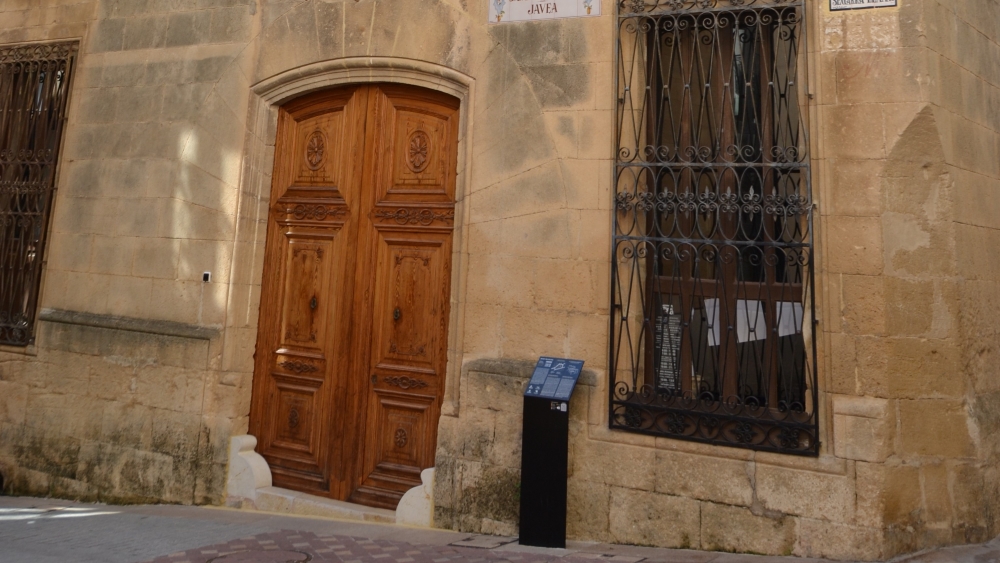
In the heart of Xàbia’s historic centre stands one of the town’s most iconic architectural treasures: the stately building that today houses the Municipal Archaeological and Ethnographic Museum “Soler Blasco.” Its thick stone walls and elegant Renaissance façade whisper of a time long before its current role as guardian of local heritage. In the early 17th century, this edifice was not a museum but a noble residence, one of the most distinguished palaces in the town. It belonged to Antoni Banyuls, a man of considerable stature who served as butler to Spanish monarchs Felipe III and Felipe IV.
The building’s transformation from aristocratic dwelling to cultural institution reflects Xàbia’s evolving identity, where layers of history are preserved not only in artifacts but in the very stones of its architecture. Today, the museum invites visitors to explore centuries of archaeological finds, ethnographic exhibits, and stories that trace the region’s journey from prehistoric settlements to modern-day traditions—all within the walls of a palace once shaped by royal proximity and local prestige.
Antoni Banyuls: From Xàbia to the Spanish Court
Born in 1582 in Xàbia, Antoni Banyuls came of age in a region governed by the powerful Marquisate of Dénia. At the helm of this dominion was Francisco Gómez de Sandoval y Rojas, the 5th Marqués de Dénia and 1st Duke of Lerma, a man whose influence reached the very heart of the Spanish monarchy as the trusted valido, or royal favourite, of King Felipe III.
It was under the Duke of Lerma’s patronage that Banyuls began his ascent. Starting as a provincial servant within the marquisate, he demonstrated the discretion, loyalty, and administrative acumen that would eventually earn him a place in the royal household. By the early 17th century, Banyuls had risen to the prestigious position of butler to King Felipe III, and later continued his service under Felipe IV, a role that placed him at the epicentre of courtly life during a pivotal era in Spanish history.
His journey from local service to royal stewardship marked him as one of Xàbia’s most remarkable historical figures. Banyuls was not merely a functionary; he was a trusted figure in a court shaped by intrigue, ceremony, and shifting power. His legacy endures in the very stones of his former residence, the grand Renaissance palace which is now home to the municipal museum. Within its walls, the echoes of Banyuls’ life still resonate, linking local heritage to the broader narrative of Spain’s Golden Age.
Pelota, the King, and the Palace
Though the archival record is sparse, local legend offers a vivid account of how Antoni Banyuls’ grand residence came to be. During a spirited game of pelota – the traditional handball sport still beloved in the region – Felipe III and the Marqués de Dénia faced off in friendly rivalry. Among the spectators stood Banyuls, then a servant in the marquis’s household. When the king committed a fault, the crowd fell silent, no one dared to speak. No one, that is, except Banyuls.
With calm conviction, he pointed out the royal error, an act of honesty that could have cost him dearly. Yet rather than rebuke, he received admiration. Felipe III, impressed by Banyuls’ integrity, rewarded him with a position at court and made a remarkable promise: “Build your house in Xàbia as grand as the fault I committed.”
While the tale remains part of local lore, the historical record confirms that the palace was built around 1630 and completed by 1636, a gran building that Valencian historian Roque Chabás described as being “so fine that His Majesty the King could be lodged there.” This endorsement not only affirms the palace’s grandeur but also its suitability for royal accommodation, a fitting tribute to the man who earned his place at court through bold honesty.
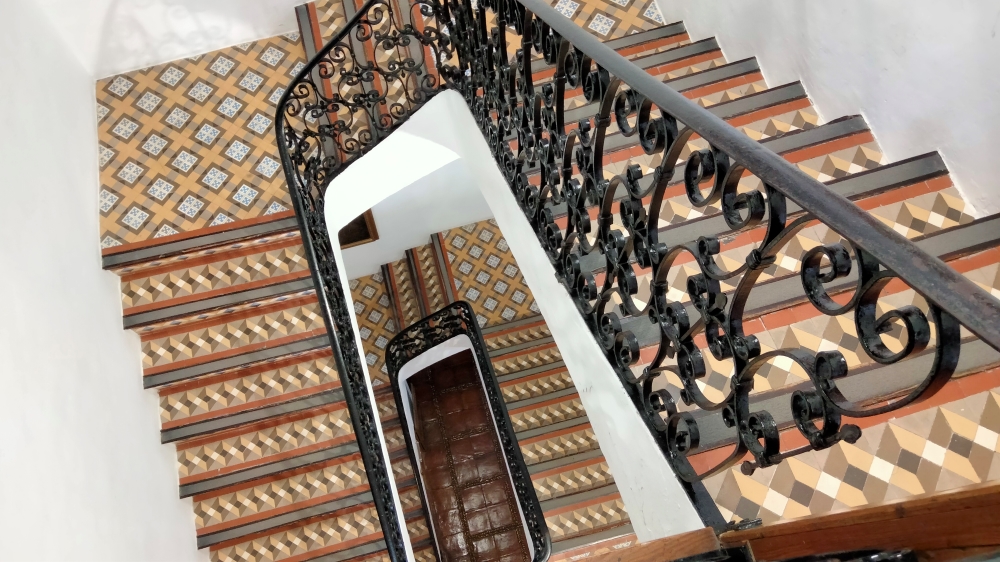
Today, the building stands as both museum and monument, where legend and legacy meet beneath its carved lintels and vaulted ceilings. The museum preserves not only the region’s archaeological and ethnographic heritage, but also the story of a man whose courage once echoed across a pelota court and into history.
Built to Impress: The Strategic Grandeur of Banyuls’ Palace
Antoni Banyuls’ residence was never merely a home, it was a declaration, reflecting a sophisticated fusion of civil Gothic design from the Crown of Aragon with the emerging Renaissance style that was reshaping Spain’s architectural identity. This architectural blend is evident in its off-centred entrance and the elegant arched gallery crowning the façade, features shared by other noble residences of the period, such as Valencia’s 15th-century Palacio de la Borgia and Xàbia’s Palau dels Sapena.
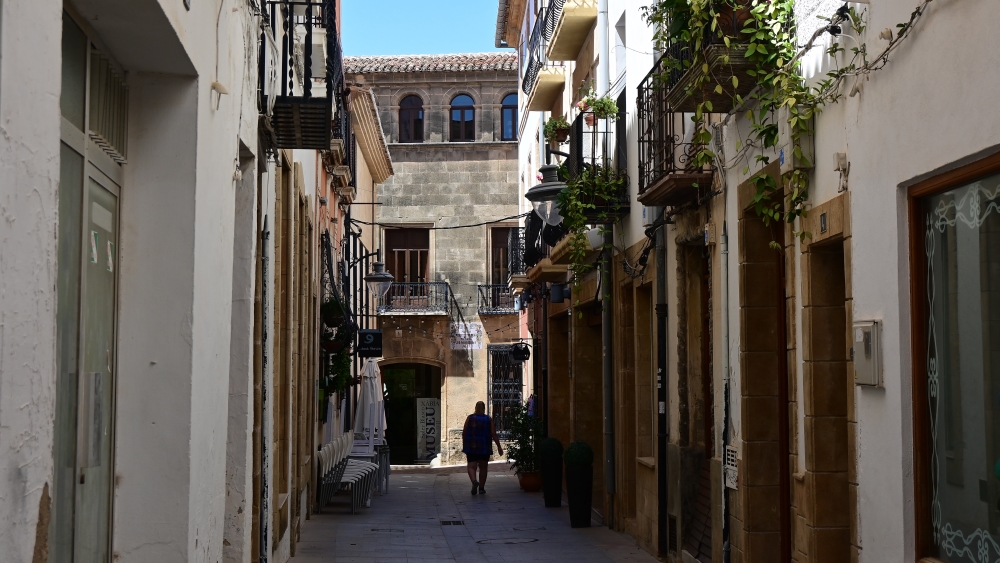
Yet what truly sets Banyuls’ palace apart is its deliberate dialogue with the surrounding urban landscape. The main entrance, notably misaligned with the building’s façade, breaks from Renaissance ideals of symmetry and proportion. Instead, it faces Calle San Buenaventura, a street that leads directly to the Plaza de la Iglesia, Xàbia’s most important civic and religious space. This orientation was no accident. It ensured that anyone approaching from the church square would see the palace and its entrance from afar, amplifying its visibility and prestige.
In embracing this urban sightline, the building adopted a modern concept of architectural prominence, one that used spatial positioning to assert social stature. This strategy extended beyond the structure itself. A small, regularized plaza emerged directly in front of the façade, creating an open stage for the palace’s grandeur. Though absent from early public records and of uncertain origin, its alignment with the building suggests it was likely conceived as part of the palace’s construction, a calculated move to enhance its civic presence. Through these choices, Banyuls’ residence became more than a private dwelling. It was a landmark of influence, designed to be seen, remembered, and revered.
Where History Found a Home
The transformation of Antoni Banyuls’ palace into a public museum began not with royal decree, but with local passion. In 1969, a group of historians and heritage enthusiasts, led by Juan Bautista Soler Blasco and J. Celda, assembled a modest collection to preserve Xàbia’s archaeological and ethnographic legacy. What started as a small civic initiative soon grew into a cultural cornerstone.
By 1977, the collection had found its permanent home in Banyuls’ historic palace, acquired by the town hall through the determined efforts of Soler Blasco, then mayor of Xàbia. His vision ensured that the building’s grandeur would serve not only as a monument to the past, but as a vessel for its preservation.
In 2008, the museum expanded with a modern annex, adding two new exhibition halls and a conference room to accommodate growing interest and improve facilities. Today, the Soler Blasco Archaeological and Ethnographic Museum spans three floors, offering a rich tapestry of local history and artistic expression.
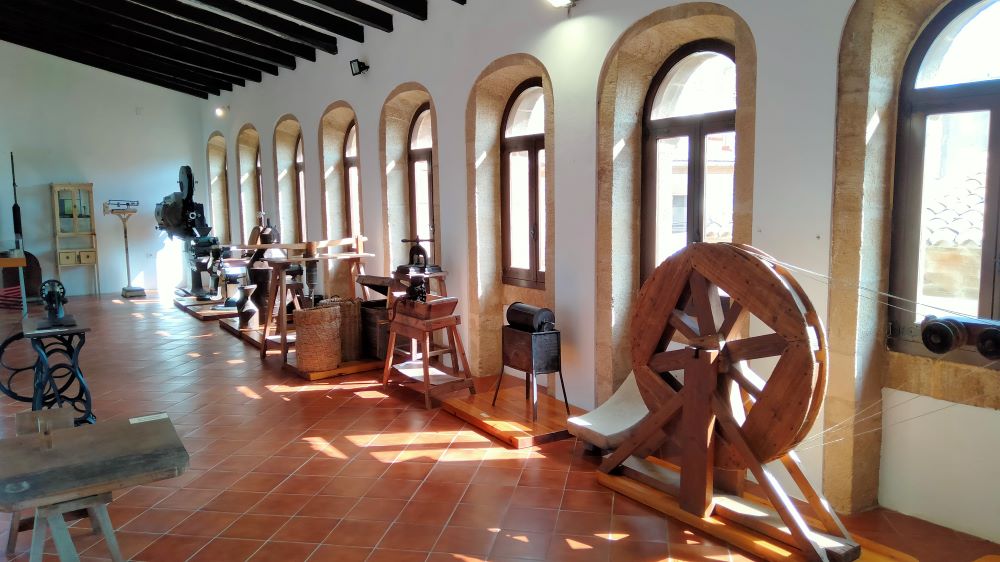
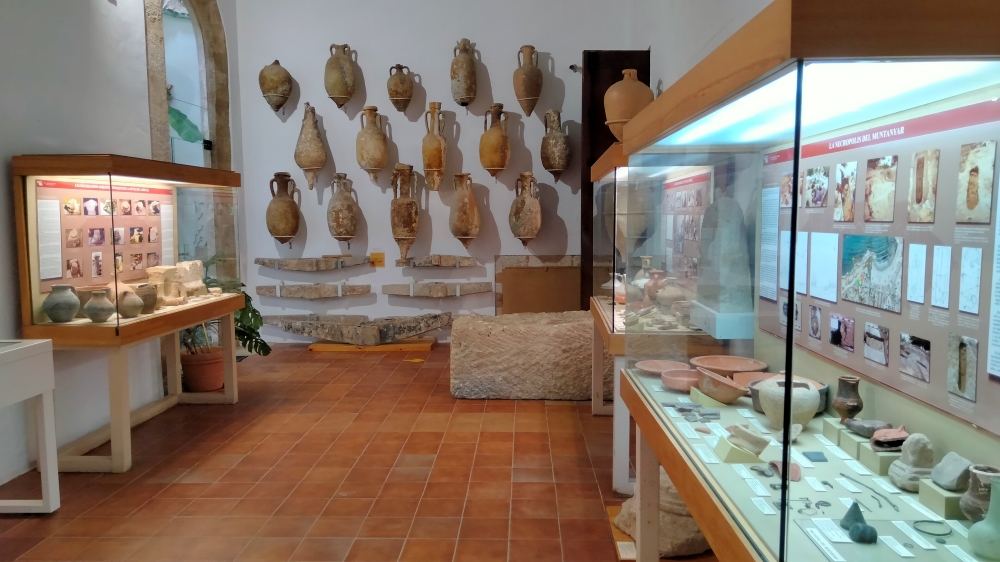
Its permanent exhibitions tell the chronological story of Xàbia: prehistory and Neolithic farming communities; Eneolithic and Bronze Age settlements; Iberian culture (from the 8th century BC); Roman occupation (from the late 3rd century BC); Medieval periods, including Andalusian and Modern eras; and contemporary heritage.
These materials were recovered from key archaeological sites across Xàbia and its surroundings, including the Cova de la Mina, Cap Prim, Punta de l’Arenal-Muntanyar, and the burial caves of Montgó and Barranc.
There is also a selection of works by JB Segarra Flames (Xàbia, 1916–1994), alongside personal items that illuminate the painter’s life and legacy.
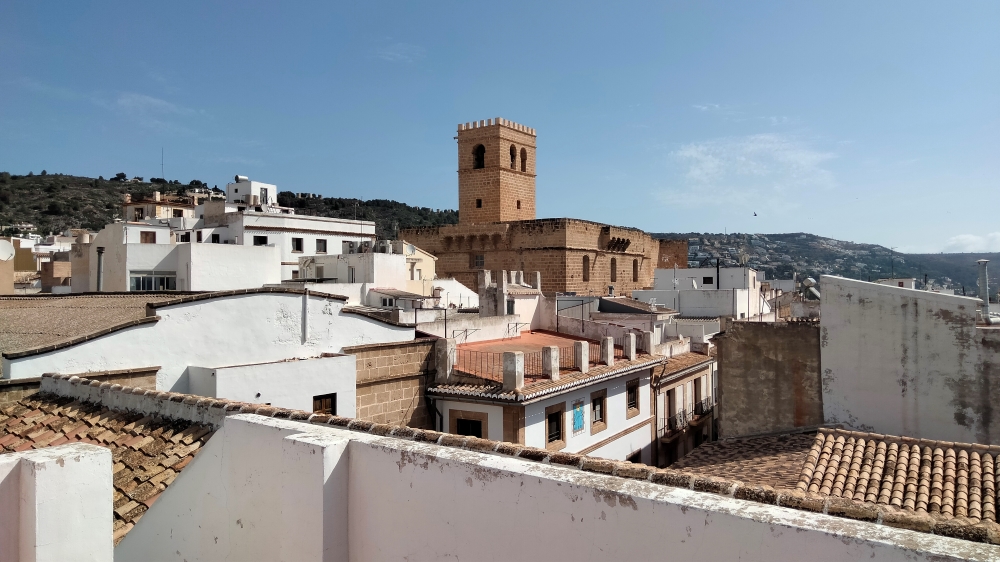
Crowning the museum is a small rooftop platform offering panoramic 360° views of Xàbia, a final reminder that this institution, rooted in the past, remains firmly connected to the landscape and community it serves.
Opening Hours
Normal Schedule (October to June)
Tuesday to Friday: 10:00–13:30 and 17:00–20:00
Saturdays, Sundays, and public holidays: 10:00–13:30
Closed on Mondays
Summer Schedule (July, August, September):
Tuesday to Friday: 10:00–13:30 and 18:00–21:00
Saturdays, Sundays, and public holidays: 10:00–13:30
Closed on Mondays
Only closed on Mondays, December 25 (Christmas Day), and January 1 (New Year’s Day).
Sources:
Xàbia al Día – The Palace of Antoni Banyuls
Tourism Portal of Xàbia – Soler Blasco Museum
Friends of the Museum of Xàbia (AMUX)