TRAM Line 9 Marks One Year of Full Service Between Benidorm and Dénia
More than 1.4 million passengers underline the success of the line’s major modernisation.
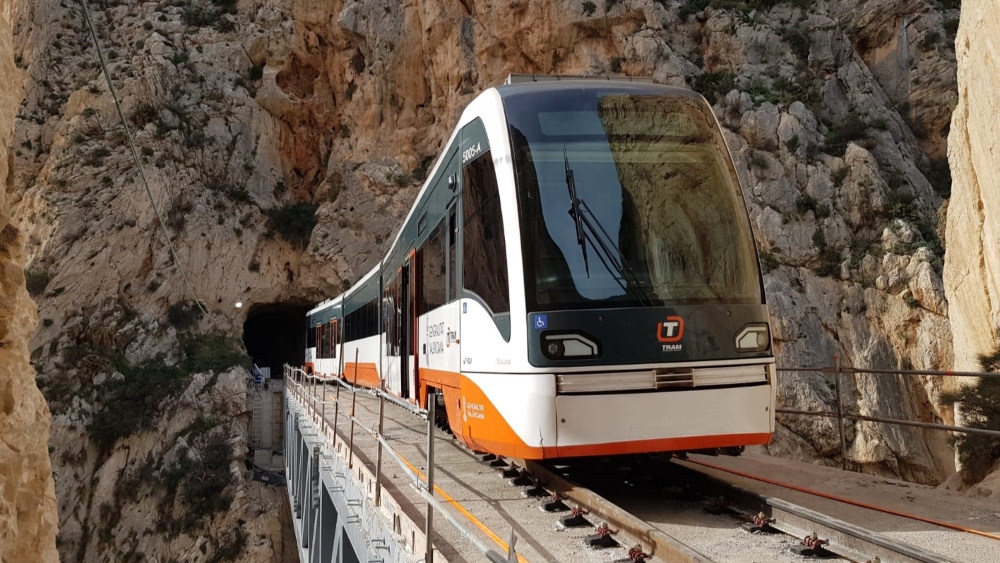
TRAM d’Alacant’s Line 9 (Benidorm–Dénia) has marked its first year back in full service following its reopening on 28 January 2025, after the completion of extensive modernisation works along the entire route. The project, which spanned several years, culminated in the opening of new viaducts over the Algar River and at Mascarat.
According to data analysed by Ferrocarrils de la Generalitat Valenciana (FGV), more than 1.4 million passengers have travelled on the line during this first year of operation across its 17 stations. This represents an increase of over 19 percent compared with the previous year, when parts of the route required transfers by bus or train due to the modernisation works.
The busiest stations during this period were Benidorm (counting Line 9 passengers only), with more than 305,000 travellers, followed by Altea with 290,000, Calp with 240,000 and Dénia, which recorded over 185,000 passengers.
By month, October saw the highest number of journeys, with more than 167,000 users, almost double the figure recorded in October 2024, when around 88,000 passengers were counted. Other standout months included November, with 134,000 passengers, September with 126,000 and August with 117,000.
The renewal and modernisation of Line 9 included upgrades to tracks, viaducts, platforms, signalling and communications systems, as well as the introduction of new dual-powered trains. Overall, the regional government invested more than 150 million euros in the project, partly funded through various European Union programmes.
The reopening of the line also led to the retirement of the Series 2500 diesel units, manufactured by MAN and originally acquired by FEVE in the mid-1980s, before the creation of FGV.
The dual-powered trains currently operating on the line combine electric and diesel propulsion and were built by Stadler Rail Valencia at its Albuixech plant. FGV awarded the contract for the manufacture of six units to the company for a total of 43.3 million euros. These trains are more sustainable, fully accessible, more comfortable and offer greater capacity than the former diesel units.
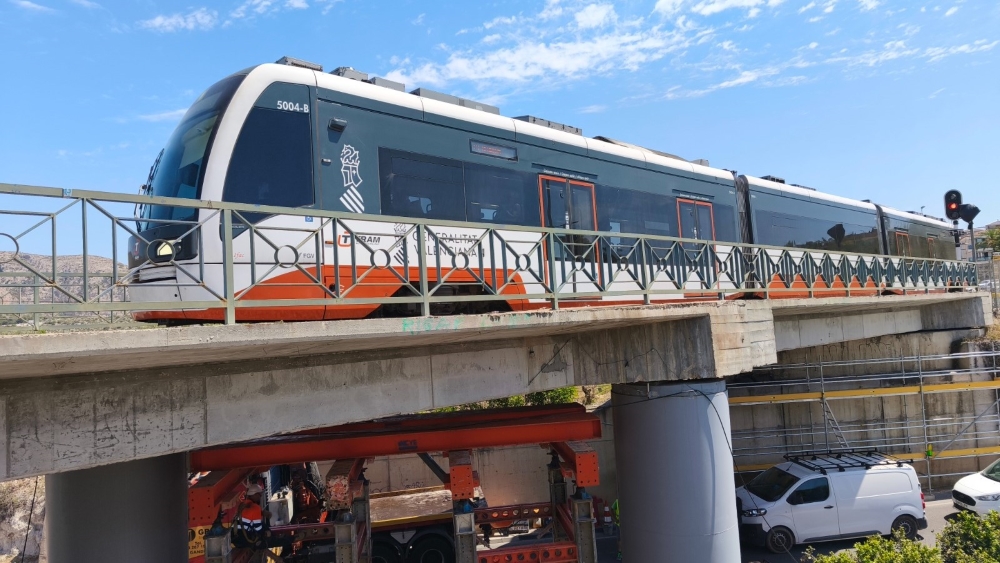
As part of the modernisation programme, new viaducts have been built at Algar, Mascarat, Ferrandet and Quisi, while the remaining structures along the line, such as the bridge at Gata de Gorgos, have been rehabilitated to ensure a more comfortable, reliable and sustainable service.
The project at the Algar River involved the construction of a new bridge parallel to the original structure, built between 1913 and 1915, which has been preserved as a pedestrian walkway in line with its designation as a protected local heritage asset. The new viaduct features a concrete deck measuring 226 metres in length and six metres in width.
The new Mascarat viaduct is a straight-axis steel structure weighing 114,000 kilograms and measuring 43.2 metres in total length. It spans the ravine in a single isostatic section and mirrors the characteristics of the original PRATT-type steel deck. The Mascarat works also included the replacement of approximately 1.5 kilometres of track superstructure, upgrading ballast track to slab track, slope protection measures and the installation of 12,475 square metres of reinforced triple-twist mesh along the slopes of the three tunnels on this section of the line.
Meanwhile, the new Quisi viaduct in Benissa, which opened in July 2023, retains the original bridge over the Quisi ravine, built between 1913 and 1915, as part of the historic railway line linking Alicante and Dénia.