
Researched and written by Mike Smith – November 2025
Cova Tallada
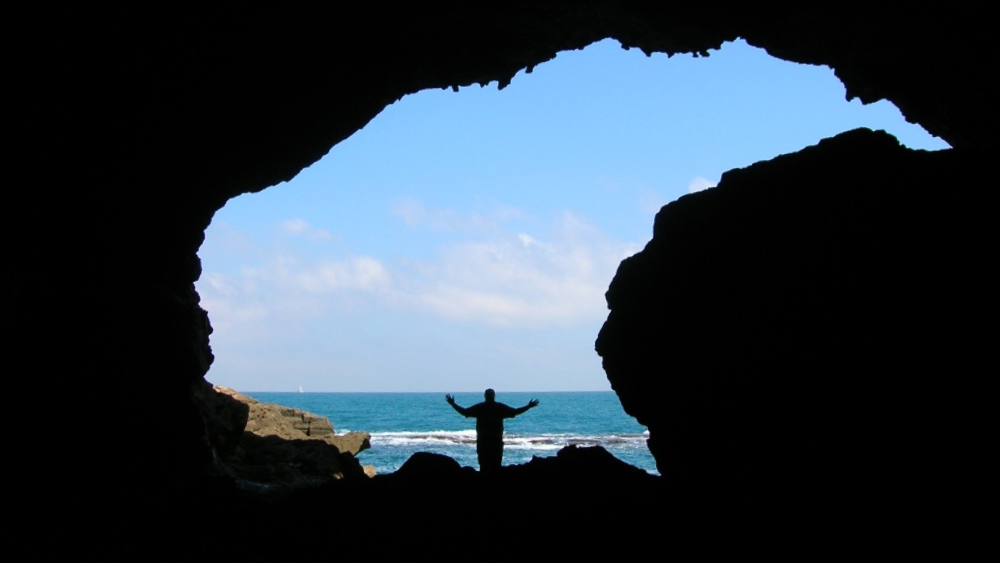
Perched at sea level on the dramatic cliffs of Cap de Sant Antoni, Cova Tallada is a place that feels both timeless and engineered by human hands. Carved from tosca stone and hollowed out over centuries, this great quarry opens into a series of galleries and chambers, some dry, some lapped by the Mediterranean, where natural forces and human industry have left an unforgettable mark.
Stretching roughly 75 metres across and rising to an average height of about 15 metres (with vaults that reach nearly 40 metres), the cave’s scale is immediately striking. Its honeyed tosca walls tell the story of an 18th-century quarry whose stone shapes many of Xàbia’s traditional buildings, while the partly natural, partly excavated passages invite exploration and wonder.
Cova Tallada sits inside the Cap de Sant Antoni marine reserve, a protected extension of the Montgó Natural Park, and offers more than geological spectacle: the surrounding waters are a hotspot for marine life and even the occasional large cetacean sighting. History, sea, and sheer limestone theatre combine here, which is why thousands make the pilgrimage each year.
Today the cave lies within Xàbia’s municipal limits, just a stone’s throw from Dénia, though older documents show it once belonged to both towns. Whether you come for the geology, the history, or simply the wild beauty of the Mediterranean cliffs, Cova Tallada rewards every visit with a sense of discovery.
Layers of human hands, from Muslim traces to wartime secrets
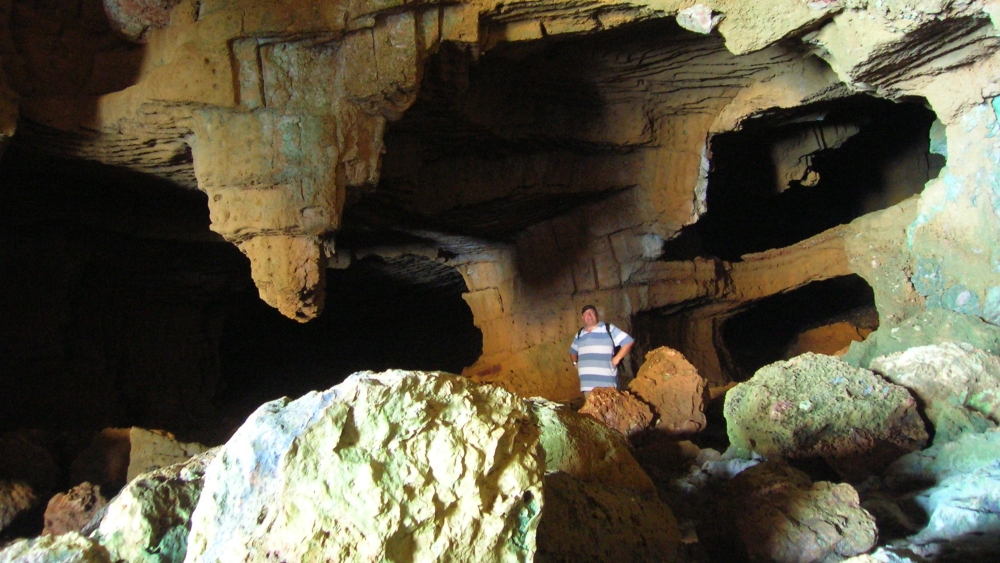
Cova Tallada reads like a layered tapestry: its walls are a record of human visits that stretch back centuries. Archaeological traces from the Muslim period show it was already used between the 10th and 12th centuries, while the chiselled marks of generations of stonecutters recall Roman work and the long history of tosca extraction that may have begun as early as the sixteenth century.
An inscription once claimed that King Felipe III entered the cave in 1599, and more recent chapters include its use as a clandestine marine refuge during the Second World War, when a large iron tank was reported near the cave entrance and submarines are said to have used the spot for supplies. In every groove and gallery there is a story – of industry, royalty, wartime secrecy, and the people who lived off this cliff-side stone – and that mix of mystery and memory is what makes Cova Tallada so compelling to visit.
Piedra Tosca – The honey-brown rock that gives Xàbia its soul
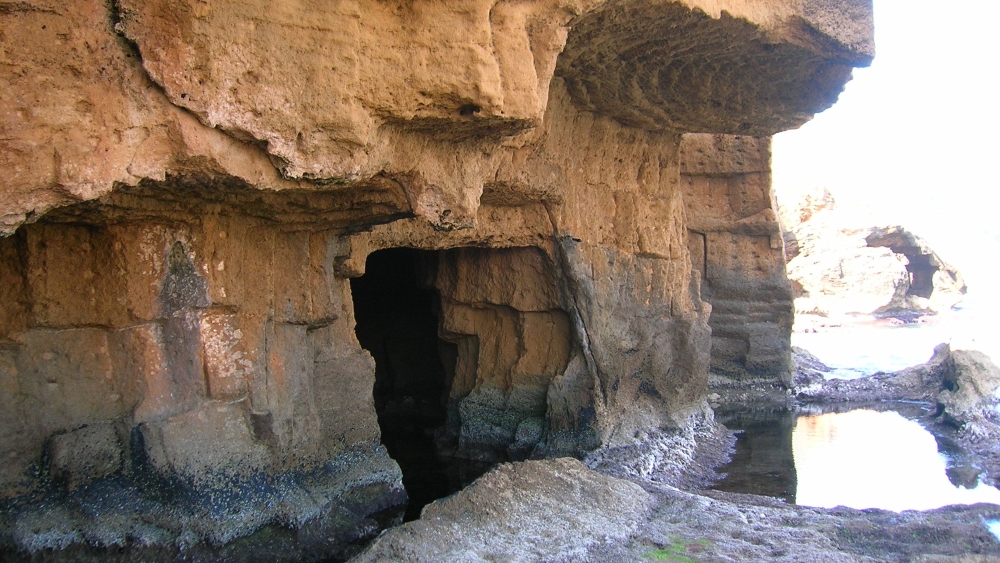
If Xàbia has a signature stone, it’s the warm, honey-brown piedra tosca, a calcareous sandstone born from ancient coastal dunes roughly 100,000 years ago. Its porous, rough texture and unique colour give the town’s façades their unmistakable character, shaping everything from humble walls to landmark sites like the Pont del Llavador and the fortress-church of San Bartolomé in the Plaza de la Iglesia.
Piedra tosca is both material and memory: a rare geological treasure found in few places worldwide and an essential thread in Xàbia’s architectural identity. It was quarried not only at Cova Tallada but also along the Muntanyar stretches of coast, and its blocks have also been used in Dénia castle’s towers. Mid‑20th-century chalets added a modern chapter to its use, yet mining was banned in 1972 to protect the landscape, making the stone increasingly precious today, usually reclaimed only from buildings scheduled for demolition. The result is a town whose streets feel like a living museum, where geology and history meet in warm, textured stone.
Wild beauty with real edges: what to know before you go
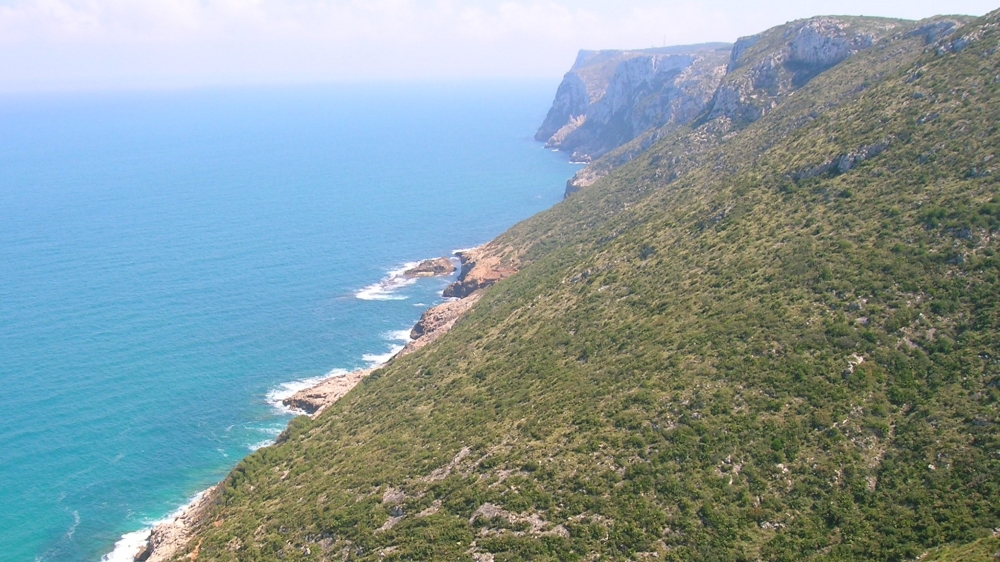
Cova Tallada is thrilling to explore but it sits squarely in wild coastal terrain, so a sense of adventure comes with real responsibilities. The route on foot is of medium–high difficulty and the cave’s rocky ledges, sudden drops, and sea‑lapping chambers present genuine hazards – there is no lifeguard service and no mobile coverage – so visits are undertaken at the visitor’s own risk.
Access is free, but during the busy spring and summer months those who want to visit this special place must reserve a timed authorization through the Generalitat Valenciana’s official form; bookings open only a limited number of days in advance and the permitted visit time is capped (typically 1 hour 30 minutes from your start time). You can reach the cave on foot or by kayak, either independently or with an active‑tourism operator; both approaches reward you with spectacular coastline views.
Practical tips: bring sturdy footwear, sun protection, and plenty of water; carry your printed or electronic authorization plus ID; avoid visiting in bad weather; and if you’re not used to mountain hiking, consider joining a guided trip. Respecting these precautions keeps the place safe for everyone and preserves the magic of this extraordinary cliffside cave. No caving gear is needed, but bring a strong torch and consider a helmet; caution pays off when you’re moving through shadowed galleries and over uneven floors.
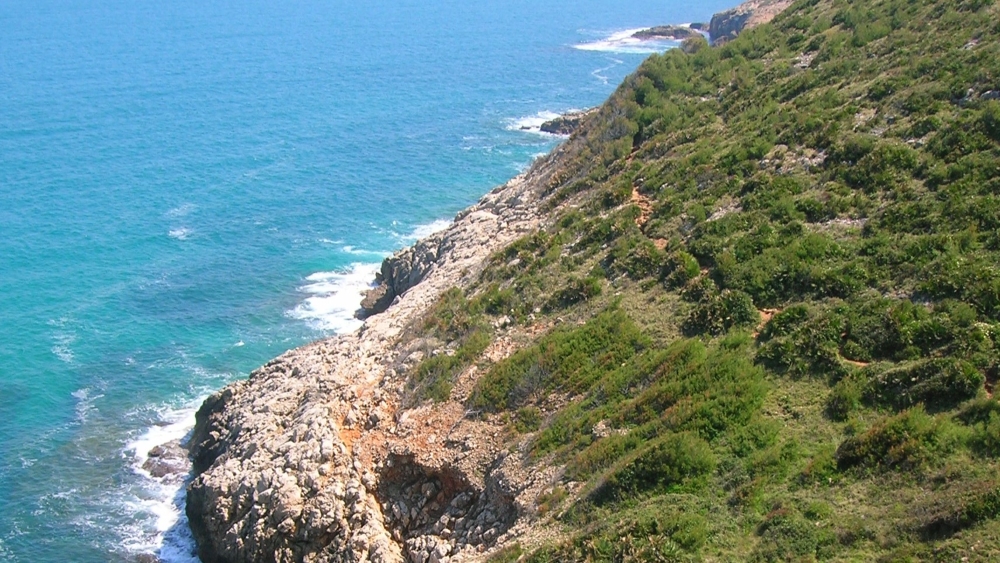
Route from Dénia: A scramble that rewards every careful step
The shortest walk to Cova Tallada starts in Les Rotes, on Calle Vía Láctea, and quickly climbs toward the cave’s information and reservation point where staff check your booking and give final directions. From there the trail runs along the wild cliffs of the Cap de Sant Antoni marine reserve: a 4 kilometre round trip (about 2 kilometres each way) that most people cover in 45–75 minutes.
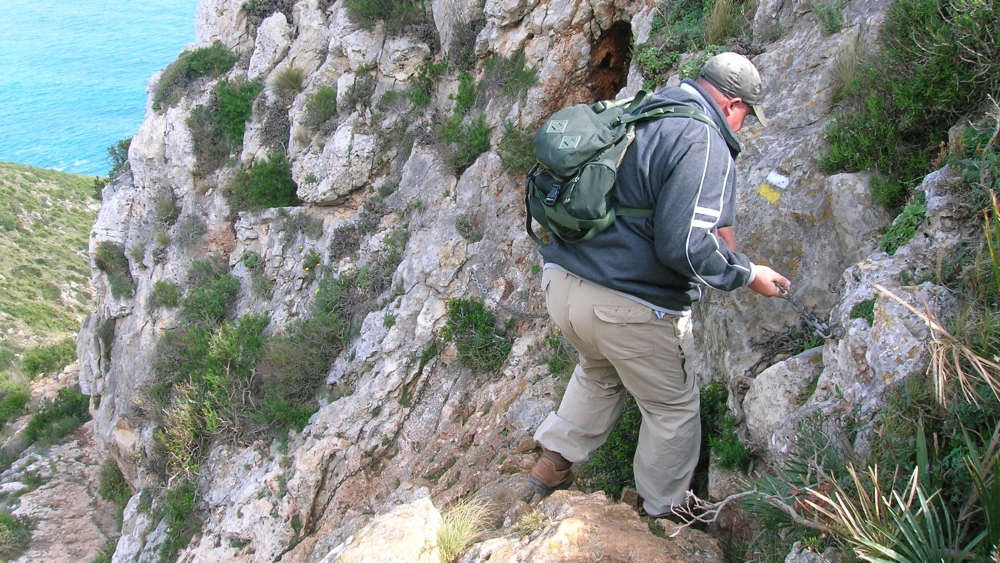
This is a medium–high difficulty coastal hike across rocky, steep terrain, so sturdy hiking shoes are essential. The path is signposted and straightforward to follow, but a navigation app such as Wikiloc can be useful for extra reassurance. Near the cave entrance the trail becomes very uneven and requires a short scramble using hands and a fixed chain installed on the rock, which adds a touch of adventure to the last stretch.
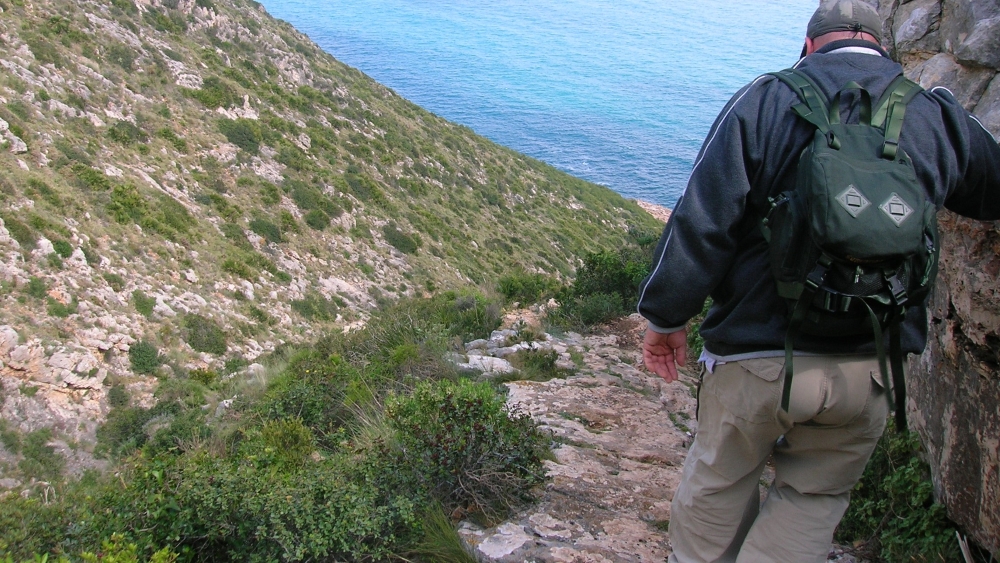
Route from Jávea: The long option that feels like earned solitude and sea views
The Jávea approach to Cova Tallada is the tougher, wilder option, and for that reason, one of the most rewarding. Unlike the shorter path from Dénia, this trail feels like a true coastal expedition with long ridge walks, vast sea views, and far fewer people. But remember that if you go during the regulated season, remember you still need to book your visit in advance.
The standard start is from Jávea’s port following the PR‑CV 355 waymarks up to the Cabo de Sant Antoni lighthouse and then along the ridge toward the cave. Expect a long, demanding day: the round trip runs roughly 16–20 kilometres and is best suited to very fit walkers used to mountain terrain and sturdy boots. Summer temperatures can soar, so bring plenty of water and sun protection to avoid dehydration.
For a shorter day you can cut the distance: park beside the sanctuary on the Carretera del Cap de Sant Antoni and join the PR‑CV 355 from there. This reduces the overall kilometres while keeping the route’s dramatic scenery and challenge.
Technical sections include a steep, tricky descent before the cave and the final climb aided by fixed chains. Those features add adventure but require confidence on exposed, rocky ground. GPS/Wikiloc tracks that follow the PR‑CV 355 are useful for navigation.
In short: choose the Jávea route for solitude, spectacular coastal panoramas, and a genuine sense of achievement, but only if you’re prepared for a long, hot, and physically demanding trek.
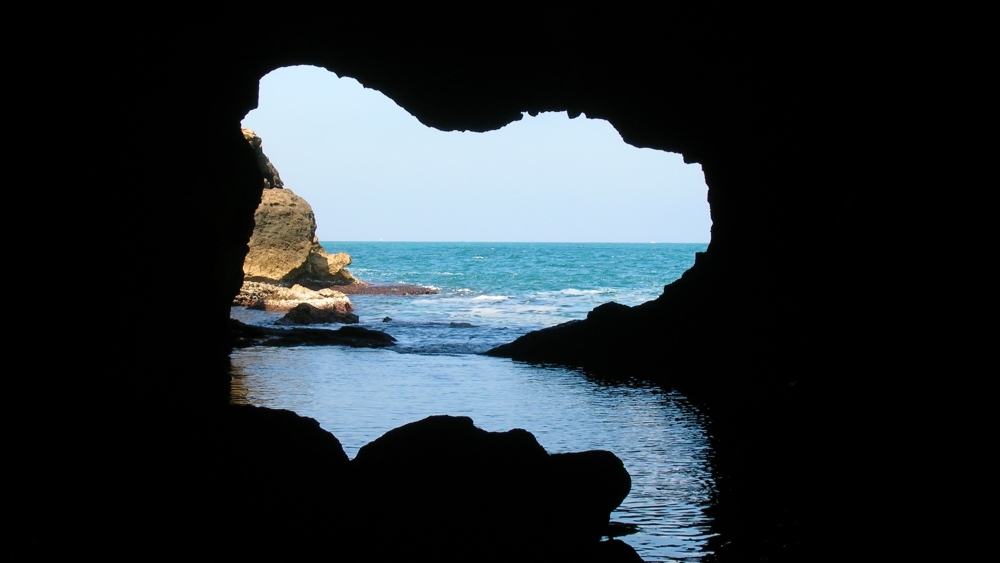
Route by Kayak: The sea’s introduction to the cave
Paddling to Cova Tallada is considered one of Alicante’s most beautiful sea-kayak adventures, a short, scenic glide along crystalline water that finishes with the thrill of landing inside an ancient quarry. The approach is gentle from the Dénia side: roughly one nautical mile (about 2 km) round trip, so the paddle itself is easy and ideal for most people with basic kayaking experience.
You disembark at the old quarry jetty onto the tiny rocky beach tucked inside the cave and then explore on foot. Plan on about three hours for the whole outing, paddle out and back plus time for the cave visit, a swim, and snorkelling.
Because Cova Tallada lies within a protected marine reserve, book with a registered operator that follows safety and sustainability rules. A local company makes the trip more sustainable and usually knows the best landing spots and sea windows. Guided tours take care of logistics, equipment, and permits, so you can relax and enjoy the water, the cave, and the spectacular coastline.
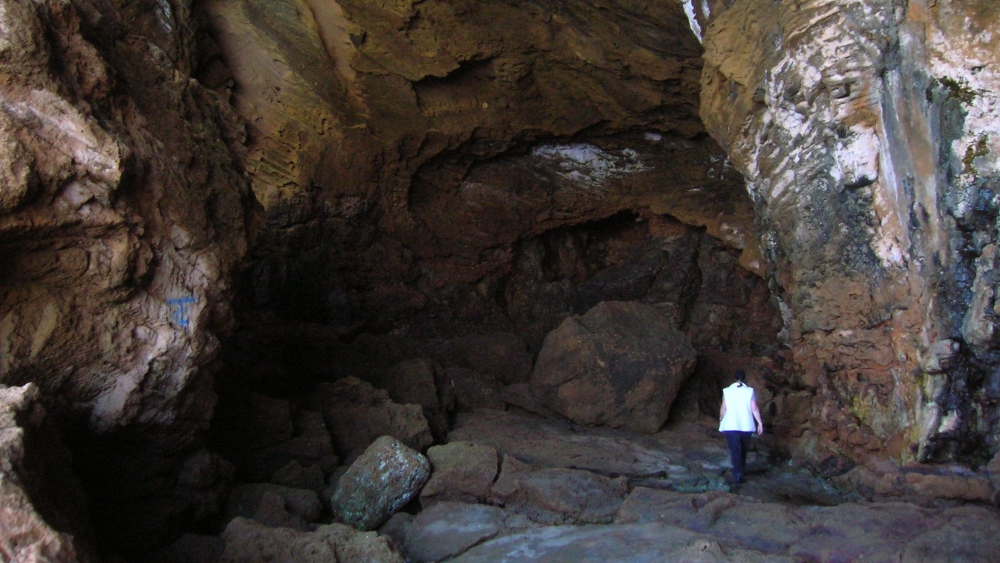
Cova Tallada: A Personal Experience
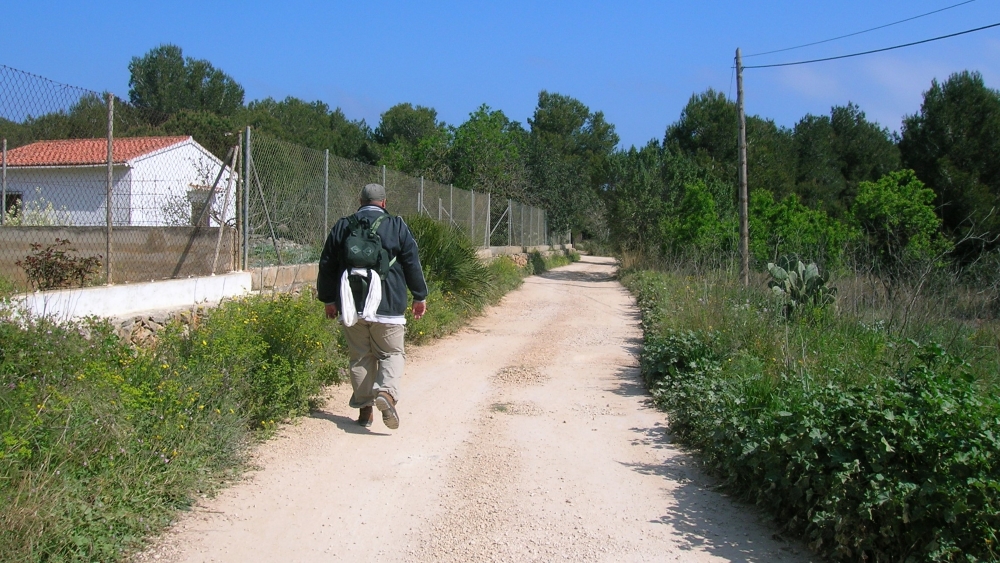
It was a cool, sunlit morning in mid-April when we left the car by the Santuario de Nuestra Señora de los Ángeles. At just after nine there was space enough to breathe and a hush over the lane that felt like the beginning of something secret. We walked back along the road for a few hundred metres, then turned right onto the PR‑CV 355 and, almost at once, the ordinary world fell away into scrub, stone and sky.
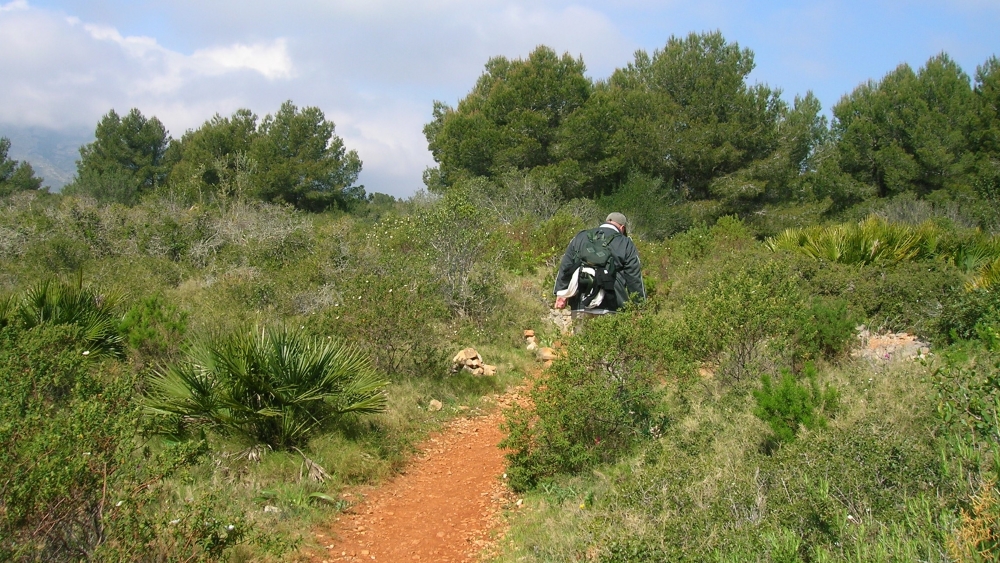
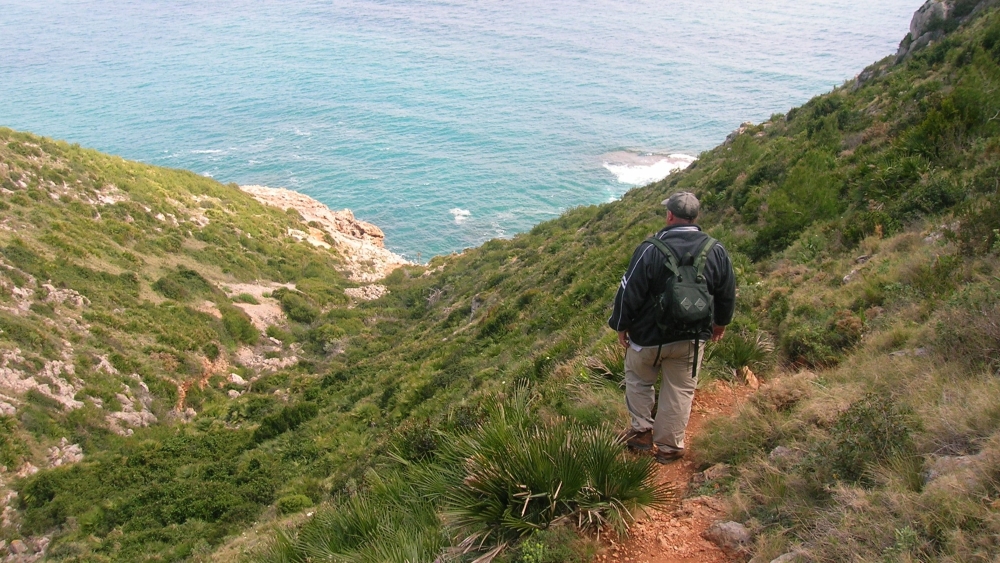
The rough track soon braided into many small paths; we had to watch for the yellow‑and‑white paint to keep us honest. Knee‑high undergrowth slapped at our shins, then the Mediterranean opened ahead of us, a first glitter of sea that sharpened the promise of the day. We crossed around the head of one of the northern flank’s deep ravines, the Barranc de la Foradada, and passed through a ghost of a circle made from a low stone wall, its original purpose lost to time but its presence somehow insisting we were on the right route.
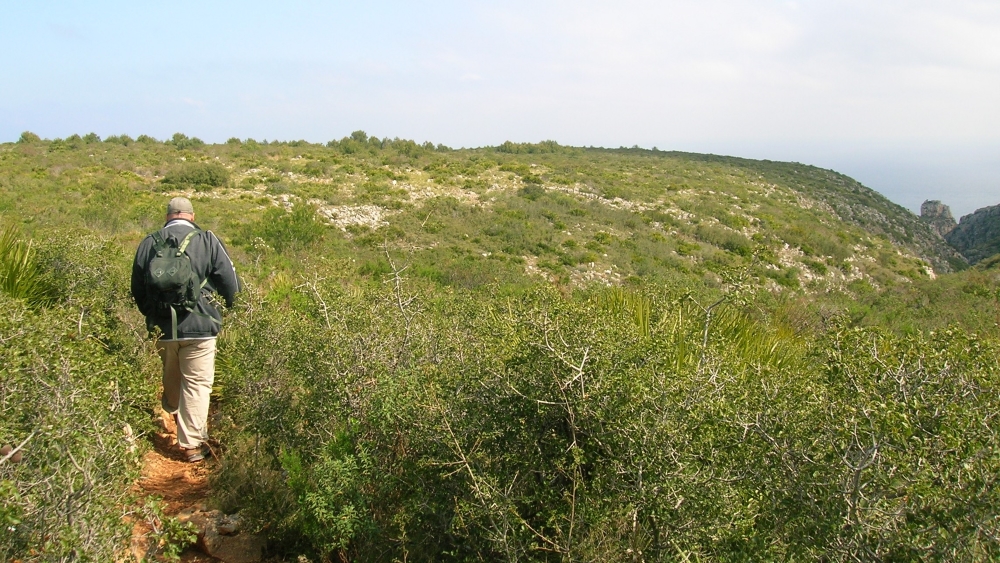
The path began to drop. At first the slope felt manageable, then suddenly steep enough that you questioned the logic of gravity and local cartography. Where the route seemed to simply end in rock, a thick chain was bolted into the face, a lifeline and an invitation. With the chain as our guide we picked a line through the boulders and eased down a short scramble to a narrow platform. The section that followed hugged sheer drops; for a few metres the trail was little more than a ledge with an obliging void on the left. There were moments of on‑your‑knees manoeuvring, hands burrowing into grooves in the stone, laughter mixed with the quick beat of adrenaline.
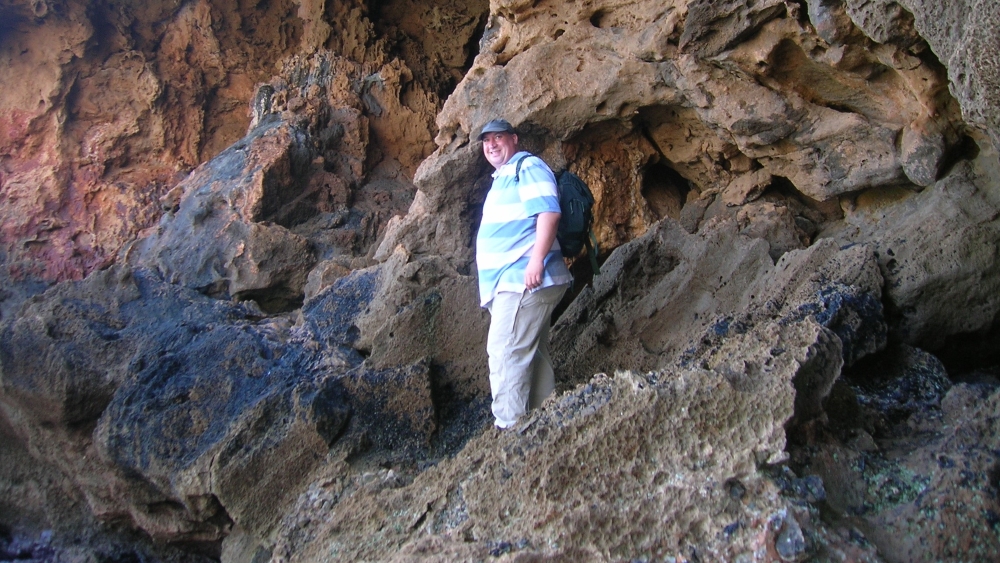
When we reached the cave, the space swallowed noise and light in the most generous way. The chamber was vast, carved by ancient tides and human hands, and the effort of getting there suddenly felt like a rite of passage rather than a hike. We dug out the torch – the small, sensible triumph of remembering to bring it – and began exploring the excavations and tunnels that burrowed inward. Clear pools mirrored the ceiling and required a careful step; every splash of reflected blue made us hold our breath and smile. We spent at least an hour inside, moving slowly so time would slow with us and the cave could reveal itself in fragments: a rib of basalt here, a scalloped arch there, the smell of salt and stone.
For the return we chose the route past the Torre del Gerro, a loop that gave us a different view of the cliff’s stubborn geometry. The trail alternated between relaxed walking and short, sharp scrambles; there were drops so sudden you found yourself instinctively leaning into the hillside. The loop stitched the day together – the calm at the sanctuary, the wild throat of the descent, the cathedral hush of the cave – into a single, satisfying loop of memory.
This route to Cova Tallada rewards a small measure of courage: the scramble is engaging rather than dangerous if you take it steadily and keep your wits about you. Come with a torch, comfortable shoes with good grip, and a willingness to hug the rock when the path narrows. Mostly, bring time. The cave doesn’t hurry and neither should you; the place is best enjoyed slowly, with pockets of silence to let the sea and stone speak for themselves.
Research Sources:
- covatallada.org – Cova Tallada, un lugar con historia entre Xàbia y Dénia
- covatalladadenia.com – Cova Tallada
- cuevasalicante-espeleocv.org.es – Cova Tallada Nº 115
- javea.com – La Cova Tallada de Jávea: ubicación, accesos, historia e imágenes
- lascavernas.blogspot.com – La Cova Tallada
- sendasyleyendas.com . Cova Tallada, ruta, consejos y cómo llegar
- valenciabonita.es – La Cova Tallada, una antigua cantera de piedra tosca que sirvió como refugio marino