Fake V-16 emergency lights flood the Internet ahead of new Spanish law
Authorities remind drivers that only DGT-approved lights with geolocation are valid and to beware of cheap fakes from online shops.
With just over a month to go before the new V-16 emergency light becomes mandatory in Spain, authorities are warning drivers about the surge of fake and unapproved versions being sold online.
The Dirección General de Tráfico (DGT) has emphasized that only officially approved V-16 lights are valid. These lights must include a geolocation system connected to the DGT 3.0 platform, which allows other road users to see your vehicle’s real-time position when the device is activated.
Authorities have also cautioned against buying lights from platforms such as Temu or AliExpress, as most of these models are not certified and therefore cannot be used legally.
The DGT has published an official list of approved V-16 models, which can be safely purchased by drivers, in this link.
Meanwhile, the well-known Facebook page N332, run by traffic experts, has issued a similar warning. They report that they haven’t found a single legal V-16 light priced under €34.99, urging motorists to be suspicious of cheaper options and always verify that the product appears on the official DGT list.
The new rule will make the V-16 light mandatory on all vehicles, replacing traditional warning triangles and aiming to improve road safety by making stopped vehicles more visible and traceable in real time.
The light beam from an approved V-16 device makes you visible from up to one kilometre away. If the beacon has built-in connectivity, other vehicles will automatically receive information about your breakdown or accident through navigation systems, mobility apps, or onboard computers. Drivers of older vehicles or those without such technology will still be alerted to the incident via Variable Message Panels on Spanish roads.
The V-16 unit contains all the necessary components inside its casing, including communication systems, meaning no external apps or mobile devices are required for it to function. As for connectivity, the law requires a minimum service duration of 12 years, and this connectivity cost is already included in the sale price of the light — so there are no subscription fees or extra payments.
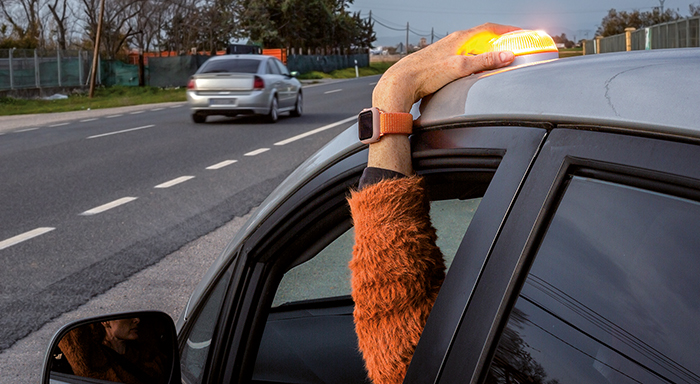
When using the light, it must be placed as high as possible on the immobilized vehicle, always ensuring maximum visibility. The design specifications require that it should remain stable on a flat surface. However, if the vehicle’s height makes it difficult to reach the roof, the V-16 device must include a feature such as a magnet that allows it to be securely attached to the driver’s door instead.