
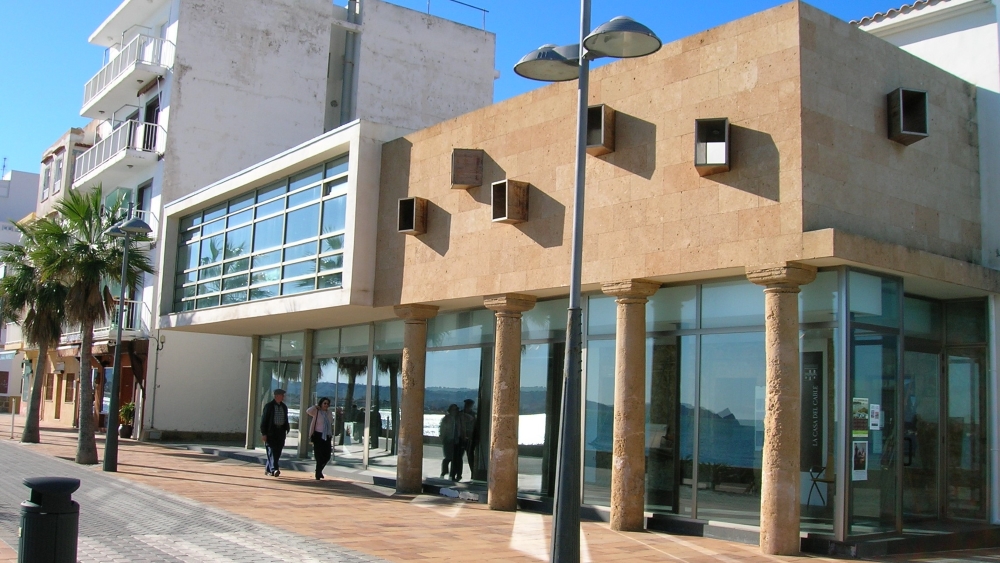
Set along the seafront in Jávea’s port zone, the Casa del Cable is a building that quietly bridges centuries of change. Once the nerve centre of Spain’s first submarine telegraph connection, it played a pivotal role in linking the country to the wider world. Though largely rebuilt in a sleek, modern style, the structure retains key historic features that nod to its illustrious past. Today, it serves as a contemporary exhibition hall, welcoming visitors into a space where art and memory converge, and where the spirit of innovation still lingers in the walls.
A Cable That Changed Everything
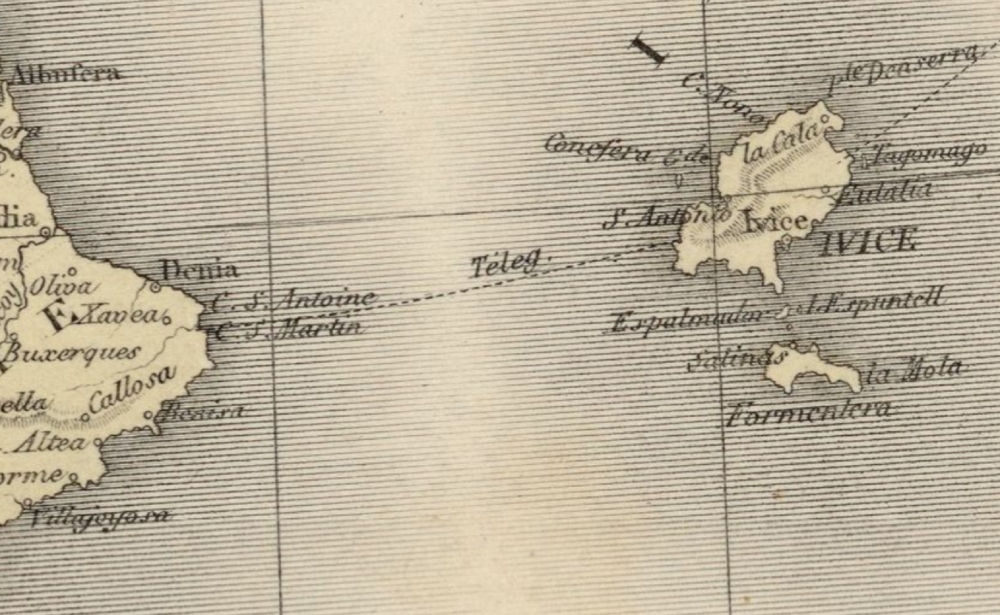
On 16 January 1861, submarine telegraphy reached a milestone in Iberian communications history with the activation of a cable linking Ibiza to the Valencian coast. This pioneering installation, Spain’s first underwater telegraph connection, was laid in September 1860 by the vessel Stela, assisted by the schooner Bonavetura, spanning from Porroig Beach (Sant Josep de Sa Talaia, Eivissa) to Grava Beach (Xàbia), the shortest maritime distance between the Balearic Islands and the mainland.
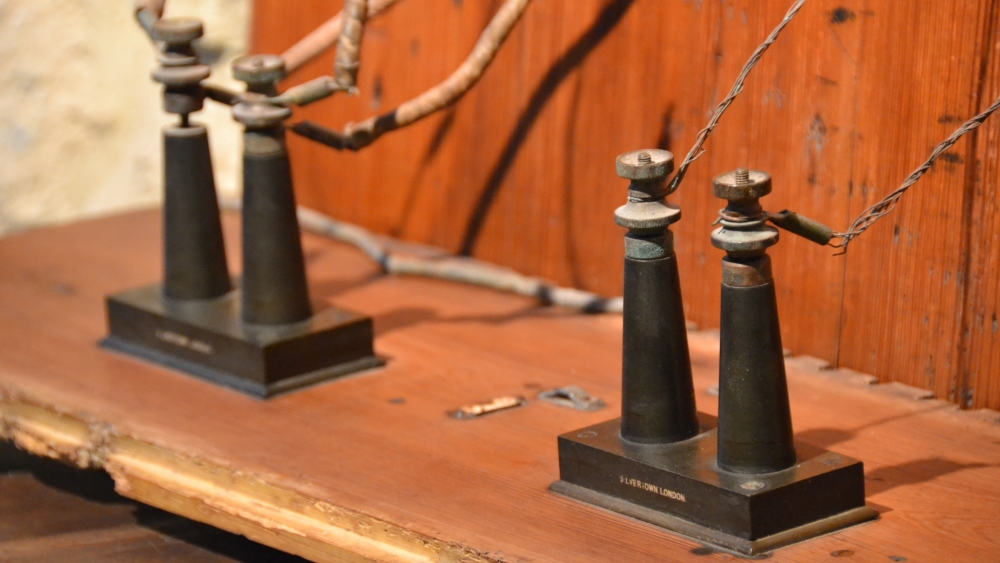
To manage the new connection, a telegraph station was constructed in Xàbia, later known as the Casa del Cable. The original cable, manufactured in Liverpool by Henley, remained operational until 1878, when it failed. In 1882, the Italian ship Città di Milano installed a replacement cable along the same route. This second cable, produced by Pirelli in Milan, was more robust and remained in service until 1886. Pirelli commemorated the achievement with a presentation box inscribed: “Pirelli C Milano speziz Jávea-Iviza 1888.”
In 2023, a local heritage initiative acquired a rare artifact, a box containing sections of the 1882–1886 cable, through crowdfunding. This object now serves as a material witness to the technological ambition that once linked two shores beneath the Mediterranean.
Although a second submarine cable was installed in 1870 between Barcelona and Mahón (Menorca), the Xàbia station retained strategic primacy. Its location in the Aduanas del Mar neighborhood enabled real-time transmission across the Mediterranean, significantly improving administrative and military coordination. The station’s strategic value was underscored by periodic military deployments tasked with safeguarding communications.
But the Casa del Cable was more than a technological hub. Between the final decades of the 19th century and the early 20th century, it also served as a chapel, providing religious services to the fishing district of Jávea. It housed the image of Nuestra Señora de Loreto, becoming a modest but meaningful centre of devotion for the local maritime community until 1914 when a new church was built nearby.
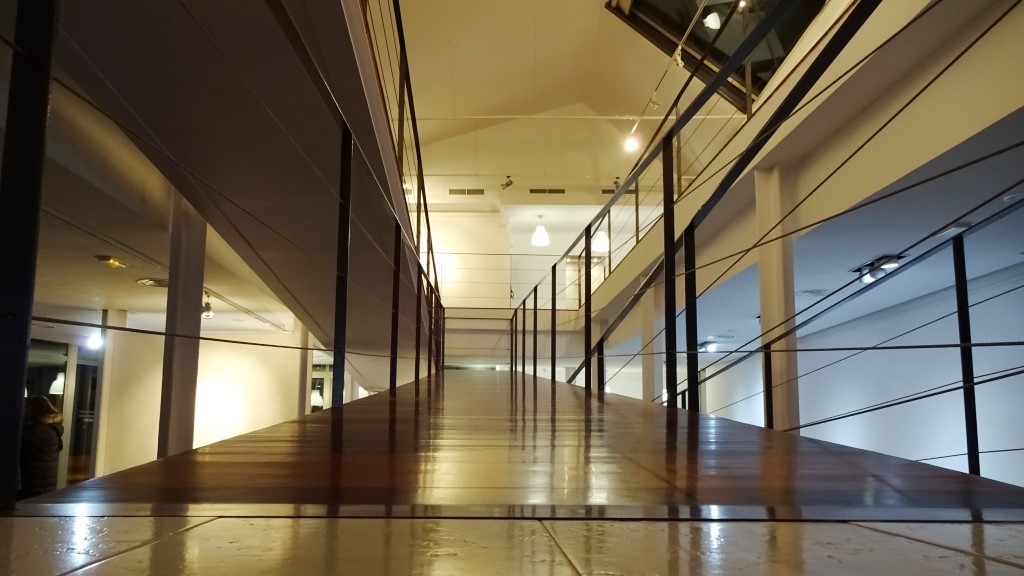
Following the decline of submarine telegraph communications, definitively ceasing in the 1950s, the building fell into disuse and remained abandoned for several decades. Recognizing its historical and architectural value, the municipal government undertook a restoration project to repurpose the site. The renovation preserved key structural elements, including the original tosca sandstone columns, while adapting the interior for cultural use. Today, the Casa del Cable functions as a contemporary exhibition hall, hosting temporary and itinerant art shows in a space that blends modern design with echoes of its telegraphic past.
Wireless Frontiers at Cap de la Nau
The legacy of telegraphic innovation in Xàbia extended beyond submarine cables. On 29 December 1903, engineer Julio Cervera Baviera achieved one of Spain’s earliest wireless telegraphy transmissions, establishing contact with Ibiza from Cap de la Nau. Using a 60-metre wooden mast built without metal nails, Cervera’s experiment marked a new chapter in Mediterranean communications, transforming Xàbia once again into a strategic node at the forefront of technological progress.
Architectural Legacy and Adaptive Reuse
The original Casa del Cable was a compact, two-storey structure with a square footprint of approximately 9 × 9 metres and a pitched roof. The ground floor housed the telegraph office, while the upper level contained residential and service rooms. Auxiliary single-storey dependencies with gabled roofs extended from the south side, serving as warehouses and domestic spaces. Later architectural reforms introduced four rough columns supporting a terrace and forming a naia, a shaded gallery that became a defining feature of the building. Although the naia itself no longer survives, the columns have been preserved and integrated into the current structure, maintaining a visual and symbolic link to the original telegraph station.
Opening Hours
- October to May:
Tuesday to Saturday: 10.00am to 1.00pm and 5.00pm to 8.00pm
Sunday: 10.00am to 1.00pm - June and September:
Tuesday to Saturday: 10.30am to 1.30pm and 6.00pm to 9.00pm
Sunday: 10.30am to 1.30pm - July and August:
Tuesday to Saturday: 10.30am to 1.30pm and 7.00pm to 11.00pm
Sunday: 10.30am to 1.30pm
Sources:
- Xàbia Tourism Board
- Museu Arqueològic i Etnogràfic Soler Blasco
- Fundación Telefónica archives on telegraphy in Spain
- Red Eléctrica de España historical documentation