
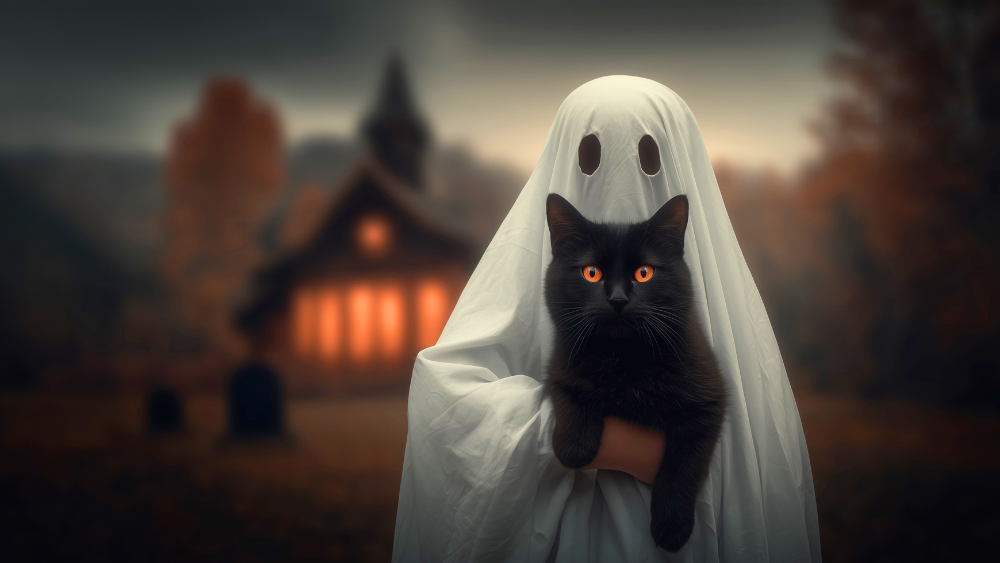
When the autumn air turns crisp and the scent of roasted chestnuts fills Spanish streets, a curious blend of ancient ritual and modern revelry awakens. In Spain, Halloween is no longer just an imported American affair, it’s a patchwork of haunting folklore, sacred remembrance, and pumpkin-fueled fun that’s growing eerily fast.
Traditionally, Spaniards have marked 1st November as El Día de Todos los Santos, ‘All Saints’ Day’, a solemn time to honour those who have passed. Families visit cemeteries, cleaning graves, leaving flowers, and sharing quiet prayers. The following day, El Día de los Difuntos, remembers departed souls with church bells tolling and the aroma of buñuelos de viento (light, sugar-dusted fritters) and huesos de santo (marzipan “saints’ bones”) wafting through kitchens.
But in the last two decades, a new spirit has taken hold. Halloween – La Noche de Halloween – has crept into Spain’s cultural calendar with growing enthusiasm. What began as a novelty in big cities like Madrid and Barcelona now spreads across small towns: children in ghostly costumes knocking on doors, bars hosting “fiestas de disfraces,” and even theme parks turning into horror zones.
Critics call it la americanización, a commercialization of death’s dignity. Others see it differently, a joyful, creative outlet that coexists with tradition rather than replaces it.
Regional Rituals: Spain’s Haunted Heritage
Spain’s relationship with the supernatural runs deep. Long before plastic pumpkins appeared, fear and folklore were woven into the land’s history.
- In misty northwestern Galicia, Halloween coincides with Samaín, a Celtic-rooted festival that predates Christianity. Villages light bonfires to ward off spirits, and locals perform ancient queimadas, flaming rituals accompanied by a witch’s incantation to banish evil.
- Further east, in Catalonia, the same night is devoted to La Castanyada, a feast of roasted chestnuts, sweet potatoes, and panellets (almond sweets). Though more nostalgic than spooky, it’s a comforting contrast to the horror-movie hype, celebrating family, warmth, and the cycle of life.
- Down in Andalusia, All Saints’ Day is observed with processions and solemn masses, yet whispers of old legends, of ghostly monks and Moorish curses, still linger in the narrow, historic alleyways of cities like Cádiz and Seville.
- Across the sea, in the Canary Islands, the celebration of Los Finaos once filled the night with storytelling, song, and remembrance, an island echo of Mexico’s Día de los Muertos, where the living danced and laughed in honour of those who came before them.
Spain’s Spookiest Corners
Beyond the fiestas and folklore, Spain is also home to real-life locations steeped in history and tragedy, places where the past lingers, and the shadows of the restless dead still seem to roam.
- Belchite (Zaragoza) was destroyed during the Spanish Civil War. Intense fighting between Republican and Nationalist forces reduced much of it to rubble, and instead of rebuilding it on the same site, a new Belchite was constructed nearby. The original ruins remain largely untouched, a ghostly skeleton of bombed-out buildings, crumbling churches, and shattered streets. The supposed haunting is said to be caused by the traumatic energy of the war, with spirits of soldiers, civilians, and children lingering, unable to rest. Some of the most common stories include soldiers reliving their last moments, sometimes appearing in full uniform, ghostly children playing among the ruins, seemingly oblivious to death surrounding them and shadowy figures appearing at night in the Plaza Mayor or near the ruined churches, vanishing when approached.
- The Parador de Cardona (Catalonia) is a 9th century medieval fortress-turned-hotel near Barcelona. Guests and staff have long reported strange occurrences that contribute to its haunted reputation, including silhouettes of knights or medieval residents wandering the halls or staircases, mysterious noises such as echoing footsteps, the clinking of armour, and the sound of doors opening or closing on their own are commonly reported, and cold spots and sudden chills, sudden drops in temperature in certain rooms, particularly late at night. There is also a supposed “cursed tower” and one legend tells of a forbidden love affair between a young noblewoman and a soldier, ending in tragedy. Locals say the woman’s spirit, along with her lover, still roams the castle’s upper floors and towers, especially the one known as the “cursed tower.”
- And in Murcia, the abandoned Sanatorio de Sierra Espuña, once a tuberculosis hospital, stands as a crumbling magnet for ghost hunters and thrill seekers. Visitors and urban explorers have reported numerous strange phenomena, including shadowy figures and apparitions with many claiming to see former patients or nurses wandering the hallways, sometimes staring silently from windows or empty corridors; unexplained noises such as echoes of footsteps, coughing, moans, and doors slamming are frequently reported; cold spots and sudden chills with certain rooms said to be unnaturally cold, even on warm days, a common feature of reportedly haunted sites; and the feeling of being watched with urban explorers often describe an oppressive presence, particularly in the old patient wards and the morgue.
Legends from the Shadows
Spain’s folklore brims with tales to rival any Hollywood horror.
- In Galicia, the Santa Compaña (literally “Holy Company”) is said to be a procession of the dead or wandering spirits that roams villages and rural paths at night. It is usually led by a living person who has been cursed or chosen to carry the burden. This person, often called the “cursed walker”, is said to wear a hooded cloak or a long dark robe and carries a cross or a candle, guiding the spectral procession of souls behind them. Folklore enthusiasts and ghost hunters often seek out the rural paths of Galicia, hoping to glimpse the spectral procession, or at least soak in the eerie atmosphere that inspired it.
- In Aragón, the Lovers of Teruel – Diego de Marcilla and Isabel de Segura – loved each other deeply but it was a love complicated by social class differences; Diego came from a poorer family, while Isabel was wealthy. Diego asked for Isabel’s hand in marriage, but her father demanded ten years of financial stability before approving the match. So Diego left Teruel to make his fortune, promising to return for Isabel. After ten years, Diego returned only to find Isabel married to another man. Heartbroken, he visited her one last time to kiss her farewell, but tragically died at her feet. Isabel, overcome with grief, is said to have died shortly afterward, and the two were buried together. On certain nights, particularly foggy or stormy evenings, visitors or residents report strange cold spots or an unexplainable feeling of being watched near the tombs or historic streets. Some suggest it is the spirits of Diego and Isabel walking hand-in-hand through the old town, eternally reenacting their love story and the heartbreak that defined it.
- In Seville, the Headless Rider roams the Guadalquivir River, seeking revenge for his betrayal. Locals claim to see a headless horseman riding along the riverbanks or bridges. He is usually depicted wearing tattered armor or a dark cloak, sometimes carrying a sword or torch, and sometimes appearing searching for his lost head or seeking revenge on those who wronged him in life. Encounters are said to bring bad luck, fear, or, even worse, death, though most stories were told as warnings for children and travellers not to wander alone after dark.
- And from the misty forests of Cantabria comes the story of the Child of the Well. The tale tells of a young child, sometimes described as a boy, sometimes a girl, who drowned in a well, either through an accident or, in darker versions, through neglect or malice. The child’s death was tragic and sudden, and because their life ended violently and unfairly, the spirit could not rest. Locals say that the ghost haunts wells, springs, or nearby rivers, often crying, calling for help, or appearing as a pale, small figure. The child may appear to lure passersby closer to the water, sometimes as a warning, sometimes as a trick of vengeance. Those who encounter the spirit are said to feel an icy chill, overwhelming sadness, or even fear of drowning.
Between Reverence and Revelry
Spain’s Halloween is neither fully American nor purely traditional, it’s a fascinating hybrid. In the plazas and bars, costumes and sweets rule the night. But come dawn, the candles still flicker on cemetery headstones, and Spain remembers its dead in silence. Perhaps that’s the real magic of Halloween in Spain: a dance between joy and sorrow, ancient faith and modern fright. A festival where the living and the dead – just for one night – meet halfway.
And as final note, it seems even destiny approves of the season: 31 October just happens to be the birthday of Princesa Leonor, the future queen of Spain. Her father, King Felipe VI, has already begun the delicate task of blending old traditions with modernity, a fitting prelude for a young royal whose reign may carry forward that very balance, much like Halloween itself.