
Researched and written by Mike Smith
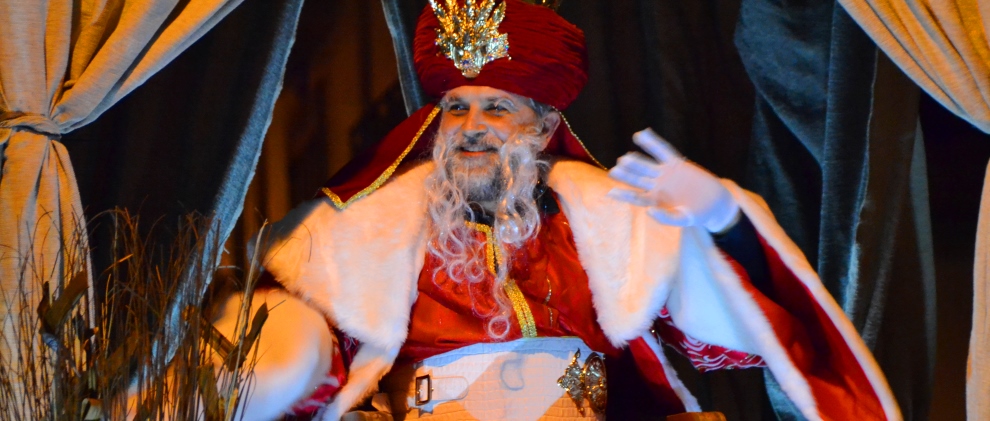
After weathering the lavish whirl of Christmas and New Year, many people are ready to return to a normal life, heading back to work and preparing for another term at school. Yet in Spain, the festivities still have one last, shimmering chapter: Epiphany, crowned by the arrival of Melchior, Gaspar and Balthazar, the Three Kings gliding in from the East with gifts and pageantry.
La Epifanía falls on January 6, the day after the twelve days of Christmas come to an end. It marks the revelation of Jesus as the Son of God and remains, despite the rising influence of Father Christmas, the most eagerly awaited moment for children across Spain.
Before the dawn of Epiphany itself comes La Cabalgata, the great procession that sweeps through towns and cities on the evening of January 5. Each community gives this parade its own personality: some are modest and homegrown, others grand enough to feel like travelling carnivals of light and music. What they all share is the same crackling anticipation, the collective held breath of children waiting for their first glimpse of the Kings who will transform the night.
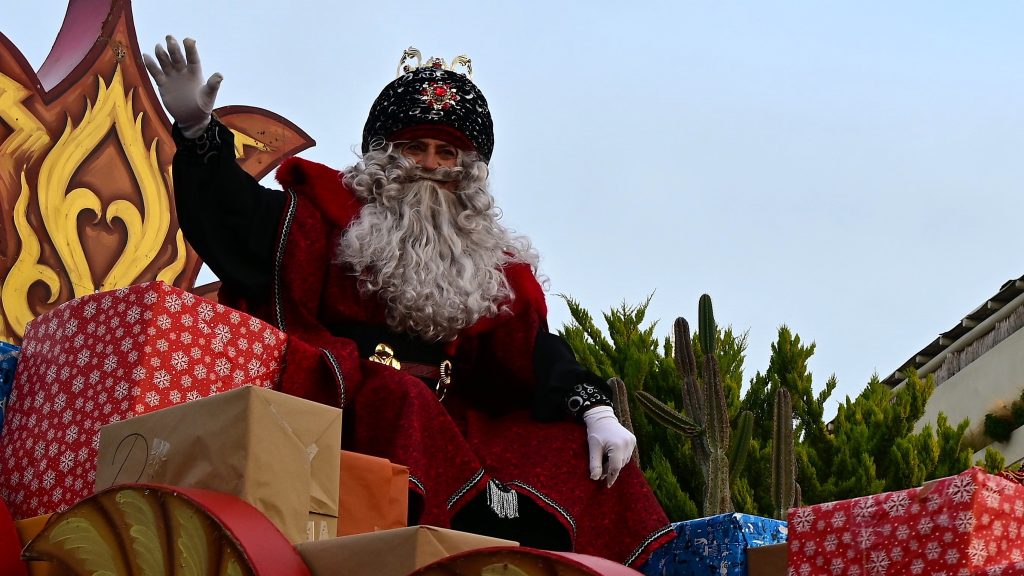
Seville, for instance, stages a legendary display. Its procession lasts around six hours and unfurls across the city with an astonishing 33 floats accompanied by bell-ringers and lively Bedouin hosts. Before the parade begins, the Heraldo Real ceremonially requests the keys to the city from the mayor to ensure the Kings may enter every Sevillian home. Alcoy celebrates the oldest Three Kings’ Parade in Spain, first held in 1885. There, Balthazar’s pages, known as els negres, scale the façades of buildings along the main streets to deliver gifts directly to children. The spectacle involves around a thousand participants and is recognised as a Festival of National Tourist Interest. Madrid offers another dazzling epic, weaving its way through some of the capital’s most emblematic spaces, from Plaza de San Juan de la Cruz along the Paseo de la Castellana to Plaza de Cibeles. Eleven floats glide by in a tide of music, lights and airborne sweets, and anyone attentive enough can hand their letter directly to the Kings. Early arrival and a measure of stoic patience are essential, as the parade is cherished by crowds that fill the streets long before the first drums sound. And in Málaga, the grand finale of the season brings ten thousand kilos of sweets cascading from the floats, a sugary crescendo that follows the city’s renowned Christmas light displays on Calle Larios.
The Three Kings in Jávea
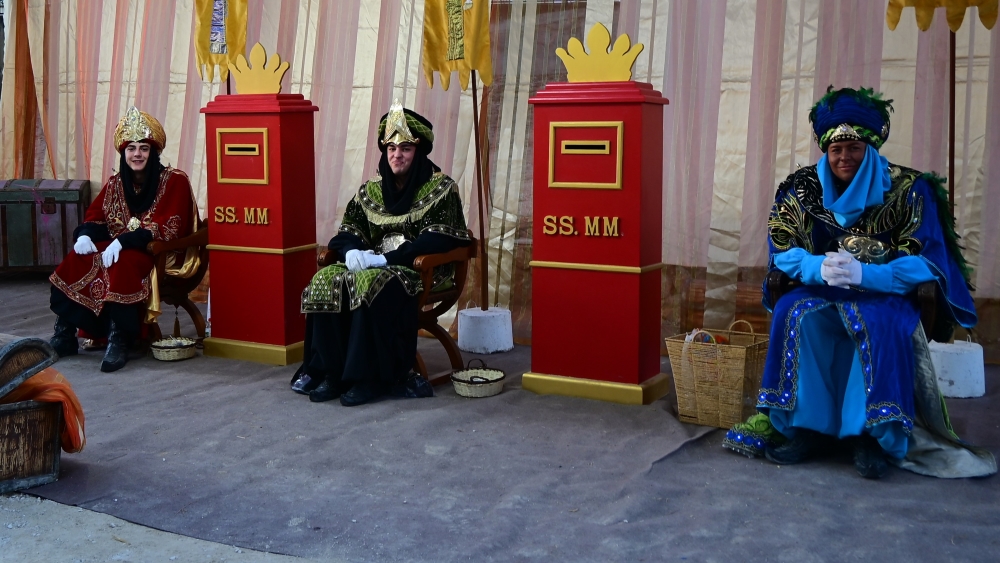
In Jávea, the celebrations take on a more intimate glow, beginning several days before the big moment. Special envoys of the Kings arrive to collect carefully written letters in which children declare, with solemn sincerity, how impeccably they behaved throughout the year and what treasures they hope to find in the royal sacks. Families gather in the port as the emissaries parade through the streets, escorted by one of the town’s excellent traditional bands, until they reach the courtyard of the church of Mare de Déu de Loreto. There, an eager crowd waits. Once the envoys take their seats, children step forward to explain the finer points of their letters before posting them into decorated boxes and receiving a small token, often a sweet. Afterwards, hot chocolate and snacks warm hands and spirits.
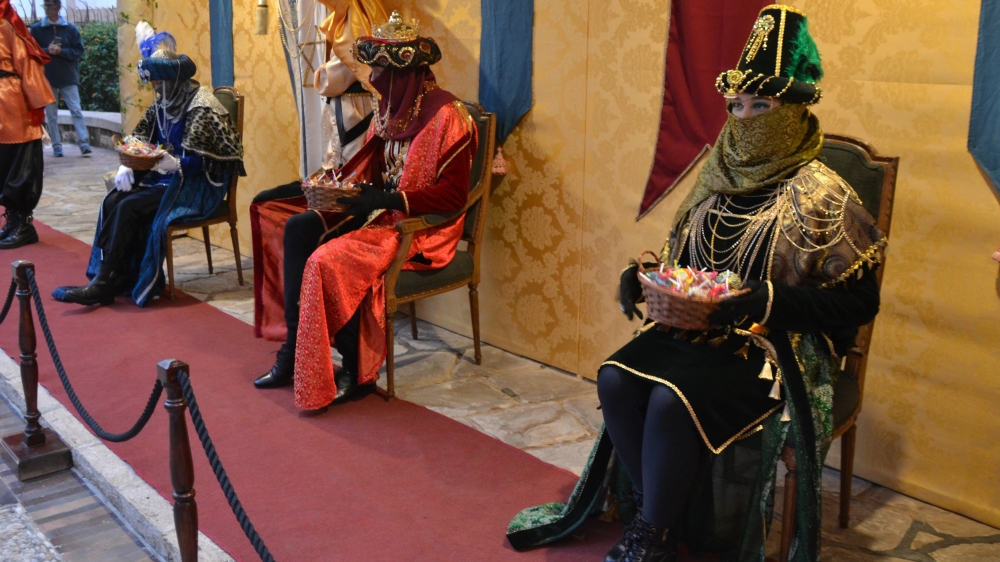
Up in the village, the excitement grows into a little world of its own. A Royal Camp rises in the grounds of the Ruirau d’Arnauda among the trees of the Parque Montaner. Tents bustle with activity: emissaries consulting with helpers, presents being wrapped, workshops alive with crafts, storytellers gathering bright circles of listeners, snacks sizzling at the bar, and often a live nativity scene adding a soft glow to the evening.
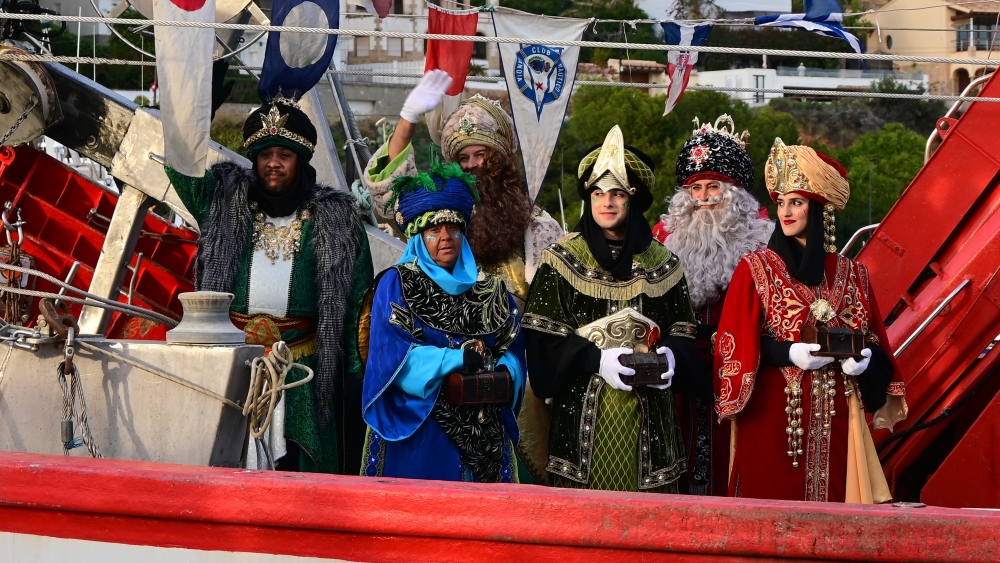
Then comes the great moment: the evening of January 5, Twelfth Night. The Three Kings sail into Jávea aboard a decorated fishing boat, accompanied by pages and escorts carrying baskets of formidable boiled sweets. Bands strike up, crowds press forward, and the port glows as the first procession winds through the streets in a joyful storm of colour. Sweets arc through the air in cheerful volleys, and although the barrage is famously exuberant, everything unfolds under careful supervision so families can revel in the spectacle with ease. Along the route, the Belén Viviente adds its quiet poetry, with local teenagers portraying Joseph and Mary as they await the Kings’ arrival or accompany the parade itself.
Jávea, like Alcoy, offers an added flourish of wonder: a select group of pages carry ladders through the streets, stopping at predetermined balconies where fortunate recipients lean out to receive small bags of treats directly from the Kings’ own helpers. The moment is brief, theatrical and cherished, a whispered secret in full view.
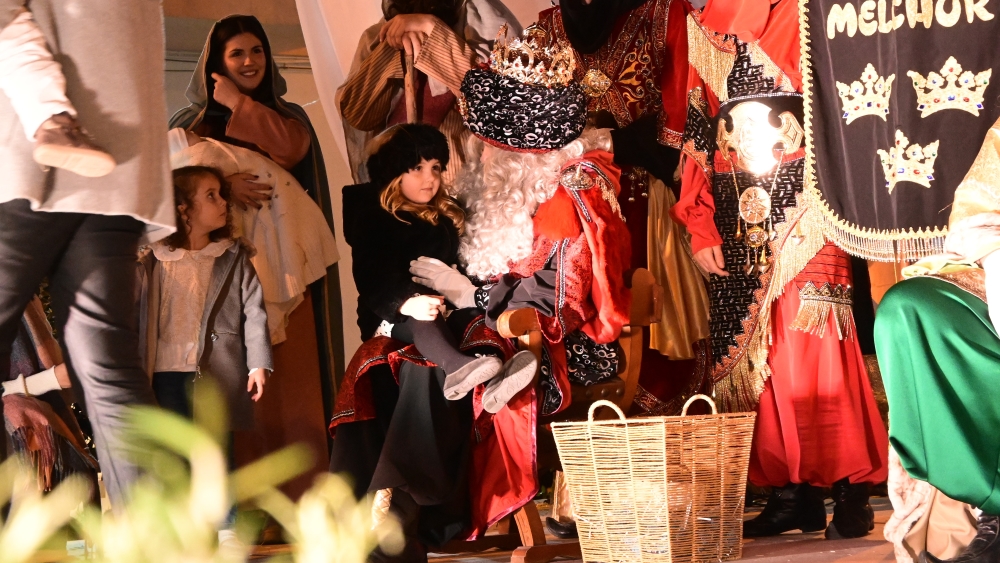
But the town’s fortune doesn’t end there. Once the port festivities draw to a close, a second procession begins its ascent toward the historic centre, a companion parade that threads its way from the Asilo Hermanos Cholbi to the Placeta del Convent. Another wave of pages, music and airborne sweets sweeps through the village streets before arriving at a second stage prepared for the occasion. The sun has long set and the evening chill has crept in, yet children remain wide-eyed as the Kings take their places once more and address the crowd. Fireworks flare overhead, more gifts are distributed, and the night gathers a soft, celebratory glow.
As the festivities settle, families drift home or seek dinner in one of the town’s restaurants, where reservations are a wise precaution on such a lively evening. After the meal, many households exchange gifts, and the sight of new bikes and skates darting through the streets long past bedtime is hardly unusual. Younger children, however, keep a devoted watch for the hour when the Kings will visit their homes. Tradition calls for leaving milk or sweet wine and biscuits beside the tree, perhaps even turrón or polvorón, along with water and hay for the camels. In more traditional homes, polished shoes rest by the window to guide the Kings to the right spot. And, as always, the ancient rule stands: good behaviour earns presents, and poor behaviour earns coal.
How long these traditions will endure rests in the hands of the younger generations. Many families still view Santa Claus as a red-suited newcomer with no real roots in Spain’s long tapestry of Christmas lore, a genial but foreign figure carried in with tourism and consumer culture. The Three Kings, by contrast, are woven into centuries of story and devotion. To each their own, the argument goes, but Spanish balconies are not quite ready to receive Santa. Not yet. For now, the Kings still hold the bright and beating heart of Christmas in Spain.
Pon tu mano derecha en tu hombro izquierdo y tu mano izquierda en tu hombro derecho. Ahí te mando mi regalo: Un abrazo enorme. ¡Feliz Noche de Reyes!